My Personal Evolution into the World of Hi-Fi
Shôn Ellerton, January 27, 2026
A personal journey into my world of hi-fi and an account of some of the most iconic pieces of hi-fi I’ve ever come across.
If you’re not into hi-fi equipment, not an audiophile, nor want to be bored to death with metal boxes containing beautiful capacitors, toroidal transformers, and military-grade resistors, you may want to skip this quite long piece.
So, that being said!
This is my personal journey into the world of hi-fi and becoming a stalwart audiophile. In this piece I run through my favourite pieces of kit, some of which I own, some of which I wish I own, and a few oddities that struck my attention for some reason or another.
This piece was inspired after talking to an old friend of mine called Steve, the son of my then piano teacher back in Colorado Springs. Interestingly, I spoke to him recently and he divulged his nerdish hobby of restoring old amps, cassette decks, and other bits of hi-fi paraphernalia, which, piqued my interest as an audiophile.
I dedicate this piece to my mother and sister who have great taste of music and also to some of my best friends, one being Basil, who, with his brother, bravely set up a hi-fi business in the UK, and the other, Darren, who sadly passed away during my years in Cardiff.
And finally, I also dedicate this to all whom I worked with at Graham’s Hi-Fi.
It all started with my mother! I blame her for having a great collection of albums which I played on her stereo system. She had a reasonably good one. One can make fun of Radio Shack and their Realistic range of stereo separates, but some of them weren’t half bad at all. What we both didn’t know, or, at least I didn’t, was that the sound would have been quite a bit better if we knew about positioning the speakers on a proper stand then directly on the soft shag carpet.
Yes, those 70’s shag carpets!
In the beginning in the early 80s
As a twelve-year-old, I inherited her Panasonic RE-8015 music centre, which is an all-in-one receiver, cassette deck, and turntable rolled into one. I had it in my bedroom and used it a lot! The turntable was one of those automatic multi-stack jobs which you can place several records on top and when the first record finished, the tonearm would withdraw and the next record would drop and the tonearm re-positioned on the first track.
At the time, I did not realise how much damage this does to vinyl records!
My first two records, Foreigner’s 4 and Kraftwerk’s Computer World became irreparably scratched.
Steve brought his somewhat overly lively mate, Andre, to my room and we became obsessed with TDK blank cassette tapes. It was at this point, I came across a real difference between bog-standard normal bias tapes, high bias chrome tapes and the holy grail of all, the metal tape. There was something innately satisfying when unwrapping a new TDK MA-90 metal tape. It felt so solid and heavy.
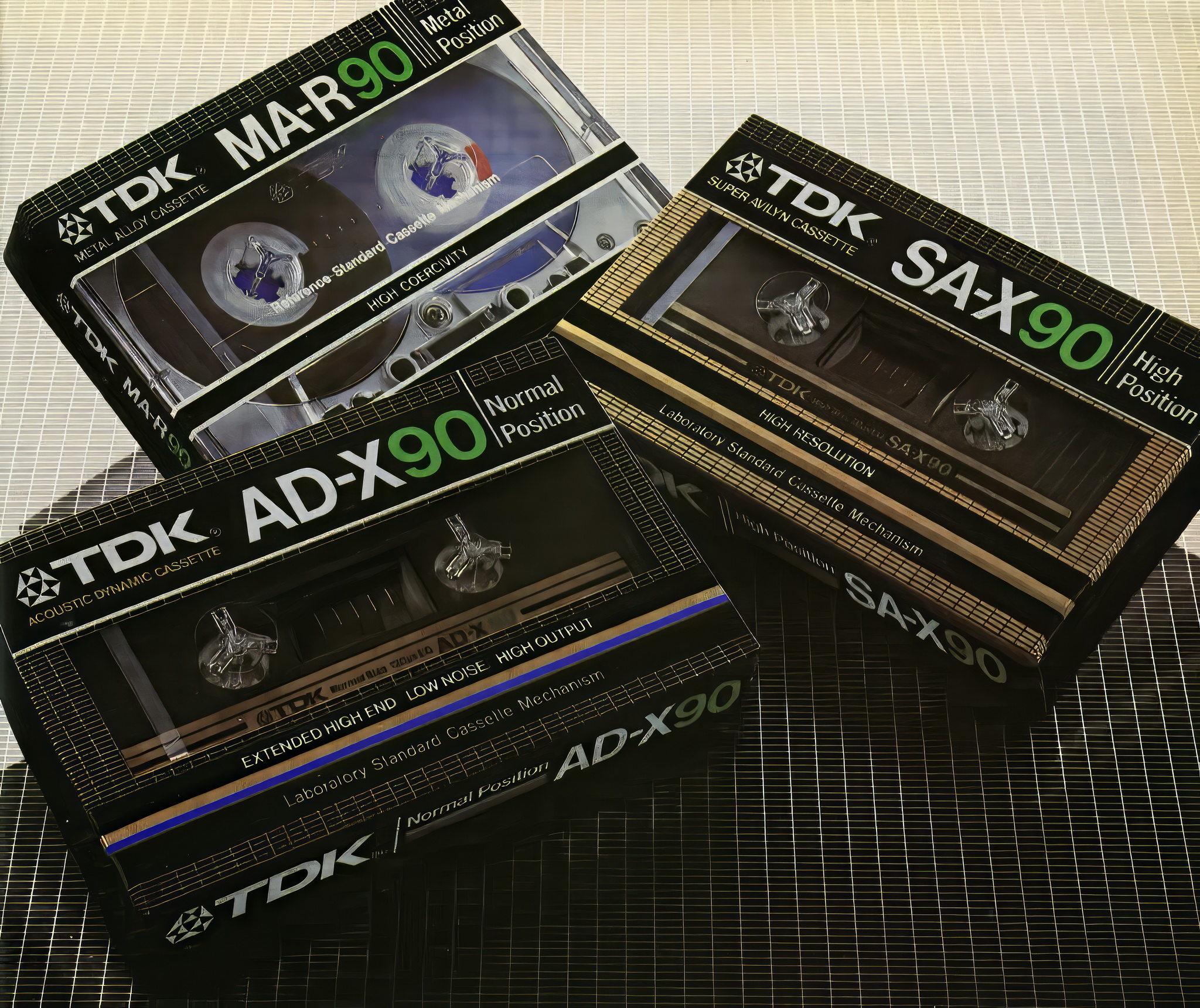
TDK blank tapes from Normal Bias to Metal Bias
While other kids were in their bedrooms playing dungeons and dragons, we had this audio thing going on. Steve introduced me to Earth, Wind and Fire and Andre, Kraftwerk, a band so weird that I got hooked on it. And of course, that lovely cover of Diana Ross on her album, Diana, with tracks like Upside Down and My Old Piano.
By the way, throughout this piece, I have many photos, but most are not mine. Unfortunately, I did not have the foresight to photograph my own equipment at the time!

My bedroom as a kid with my trusty Panasonic RE-8015 music center
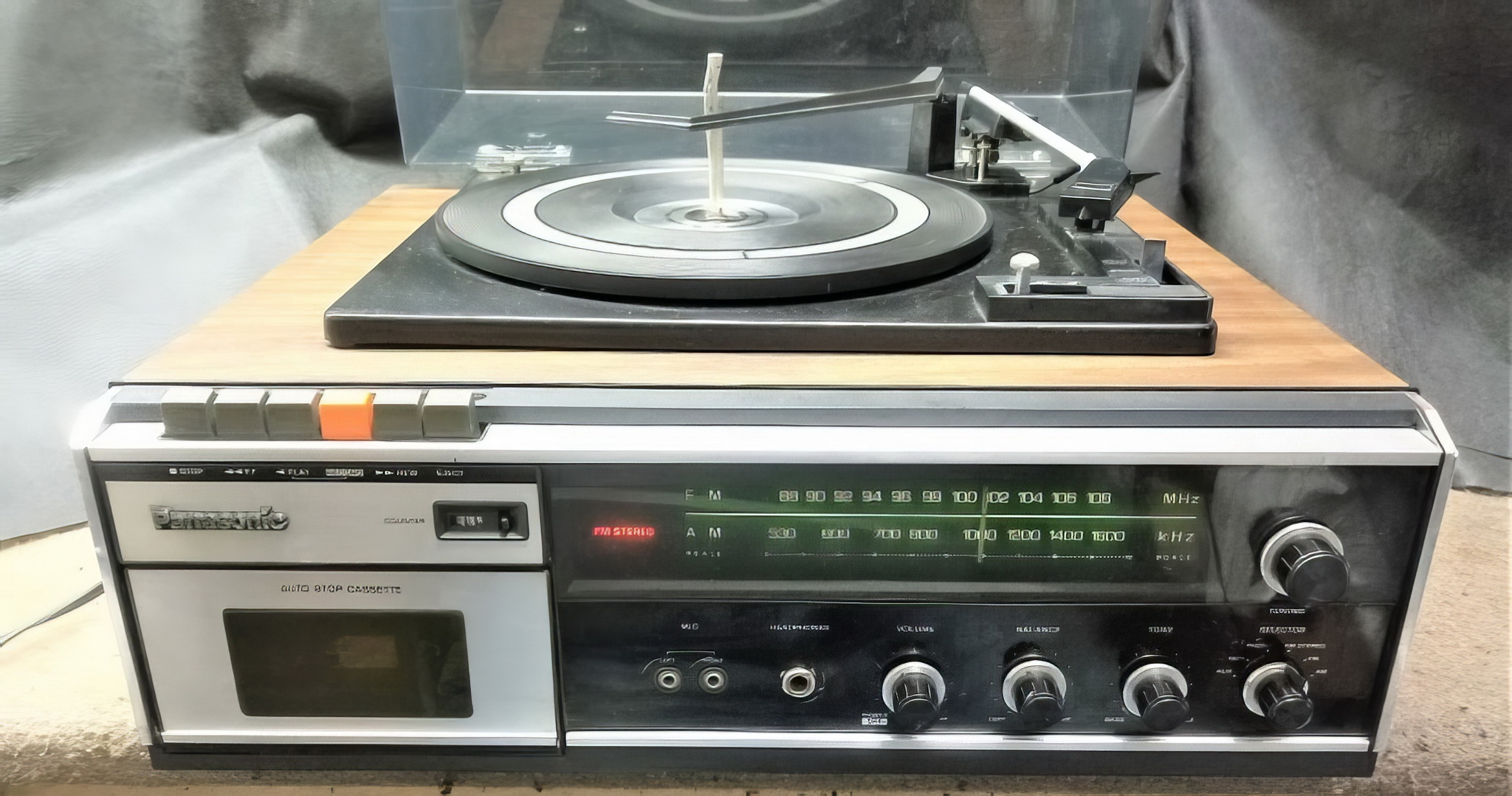 The popular Panasonic RE-8015 music center
Today, I doubt that many kids are immersed into good sound quality hi-fi systems. In a world where most kids and adults use their smart phones, portable devices, and TV systems for listening to music, stereo separates are now retro luxury items.
Now, this Panasonic piece was a hand-me-down, because my mother upgraded to a better bit of kit.
She went to her local Radio Shack and got herself a brand new Realistic STA-960 receiver along with a separate turntable and separate cassette deck. As mentioned earlier, I wish we knew about the speaker stands. We certainly could have used better speaker wire as well.
But never mind, we didn’t know.
The sound was much better on her system than my Panasonic and any opportunity she wasn’t in the house, I would be there to use this system rather than mine. I just had to make sure that I left everything as it was before she got home!
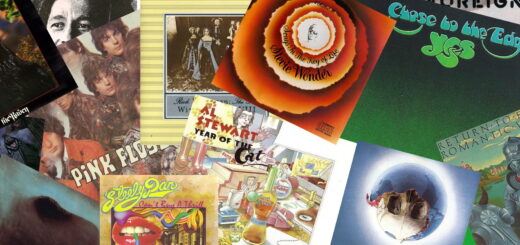
But secretly, I think she felt proud that I became attached to her record collection, a collection comprising of Steely Dan, The Beatles, The Police, Pink Floyd, Rick Wakeman, Yes, Moody Blues, singer/songwriter types like Joni Mitchell and Colin Blunstone, and lots of jazz.
My sister wanted none of it.
Her taste was equally good, but not in tune with my mother’s. She was into The Cure, The Damned, Billy Idol, Prince, Ministry, The Stranglers, and a lot of other primarily industrial, new wave, glam rock, and goth alternative stuff.
Other friends got me into mainstream 80s rock which neither my sister or mother particularly liked. Primarily Foreigner, Van Halen, Def Leppard, and Bon Jovi, the stuff that the so-called rock jocks liked back in school days.
I contributed later in life by getting my friends into obscure electronica, IDM (intelligent dance music), ambient, techno, and a mish-mash of other curious sounds. Meanwhile, my sister continued to share some quite interesting stuff with me including Coil, Loop Guru, Meat Beat Manifesto and a load of stuff that most people have never heard of.
My father got me onto the old rock stuff like Led Zeppelin and Deep Purple, but oddly, he got me into Reggae starting with Third World and Bob Marley during the mid-80s.
Being a classical pianist, I loved my classical music, but strangely, didn’t listen to it much on the stereo except the pieces I really wanted to learn. Steve’s mother lent me a vinyl record of Leonard Pennario’s Favorite Classics for Piano which inspired me to play some quite difficult pieces.
Armed with a very wide repertoire of music to listen to, I wanted the best playback possible to enjoy it.
Sneakily, Steve, Andre and I would use my mother’s system to record stuff onto TDK chrome and metal tapes. I can’t even remember if we had Walkmans back then but somehow we wanted to record everything! We wanted crystal clear sound quality and it got us hooked with hi-fi.
My mother always found out when we boys were using her system. Mothers make the best detectives you know!
‘Oh!, that Andre!’ she used to say. He always got the blame for some reason.
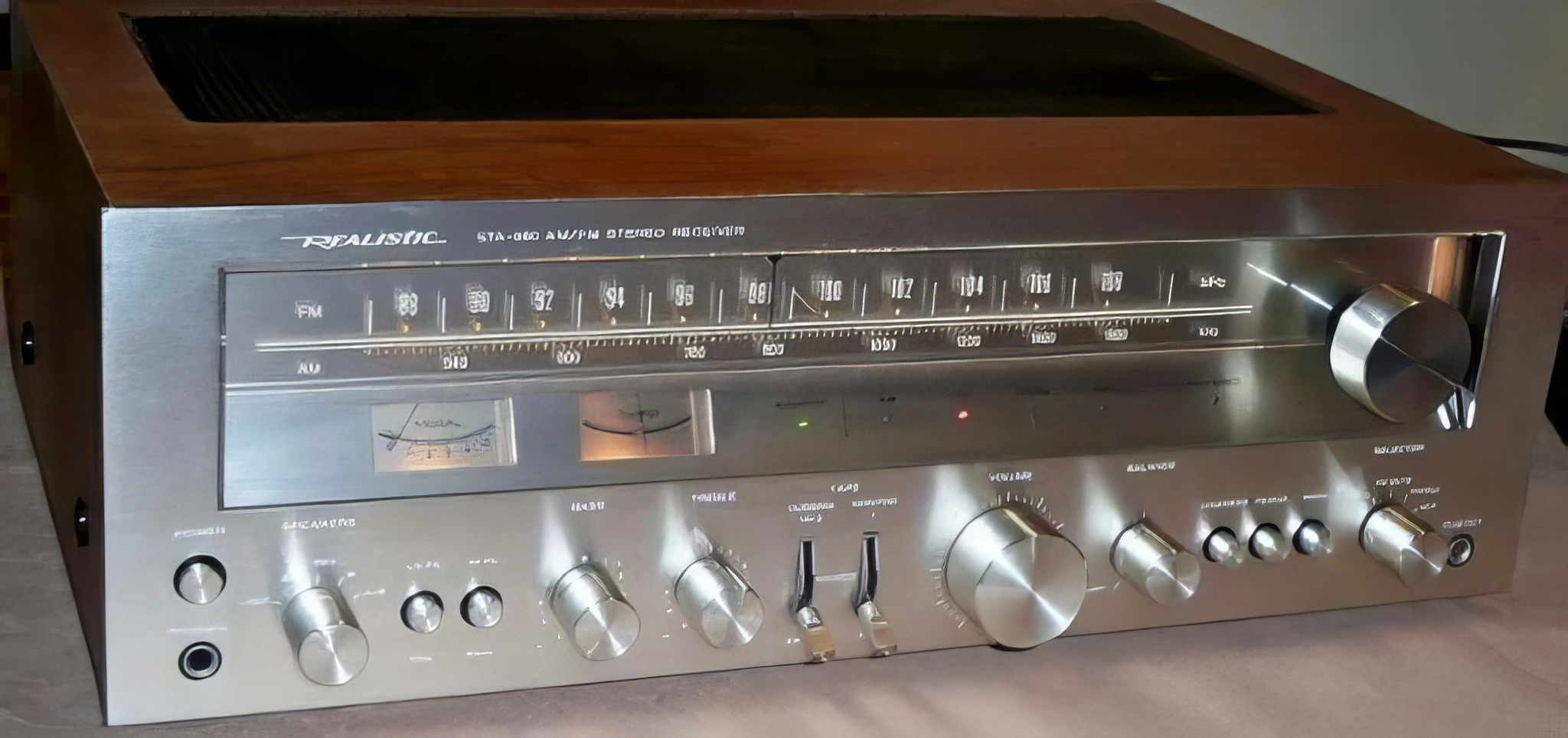
The trusty Realistic STA-960 receiver that my mother had. It was a good all-rounder for many and it felt chunky and nice
The Cardiff years in the late 80s
During the late 80s, I moved to the UK where my father lived. I went to college in Cardiff in Wales but very shortly after, missed listening to my favourite records which I left behind in the US.
I stayed in a room in a YMCA in the middle of Cardiff. Small as it was, it didn’t prevent me from wanting to own a complete separates system. I met a new friend there called Darren, who tragically died later in 2011 of acid ketosis being misdiagnosed for his Type 1 diabetes. He was one of my best friends and instrumental in my quest to hunt down suitable bits of hi-fi.
He introduced me to second-hand vinyl stores and markets and also got me into new music I’ve never heard of including that from Gary Numan, Blancmange, and Ultravox, neither of which, didn’t really gain much traction in 80s America.
My grandparents lived on the other side of the UK in Essex and it was there, I discovered in the loft, a strange but beautiful looking turntable, which, apparently belonged to my father. It was the Transcriptor Turntable, the predecessor to the iconic Michel Gyrodec. It needed a bit of TLC, but I took it back to Cardiff with me.
Apparently, my father was into hi-fi at some stage in his life. Being an enigma as he was, he went through more phases than the moon does in a century. I asked him about it and his response was oddly muted and downplayed.
‘Oh. That’, he muttered with no enthusiasm whatsoever.
Clearly he wasn’t into hi-fi anymore. During this time, he was exploring the world of trying to be a modern-day Rick Wakeman or Jean-Michel Jarre by purchasing a gamut of pro-audio kit including Yamaha DX-7s, Korg M1s, Akai Voice Vocoders, Yamaha TX81Zs, and Yamaha QX1 sequencers.
To be fair, despite the horrible sound quality due to the lack of decent recording capture devices, his material was decidedly good and original.
So, here I was with a Transcriptor turntable which Darren and I repaired in my dorm room. We borrowed someone else’s amp and speakers, but somehow or another, we could never get it quite right and it often didn’t track properly. But when it did, it sounded pretty nice.
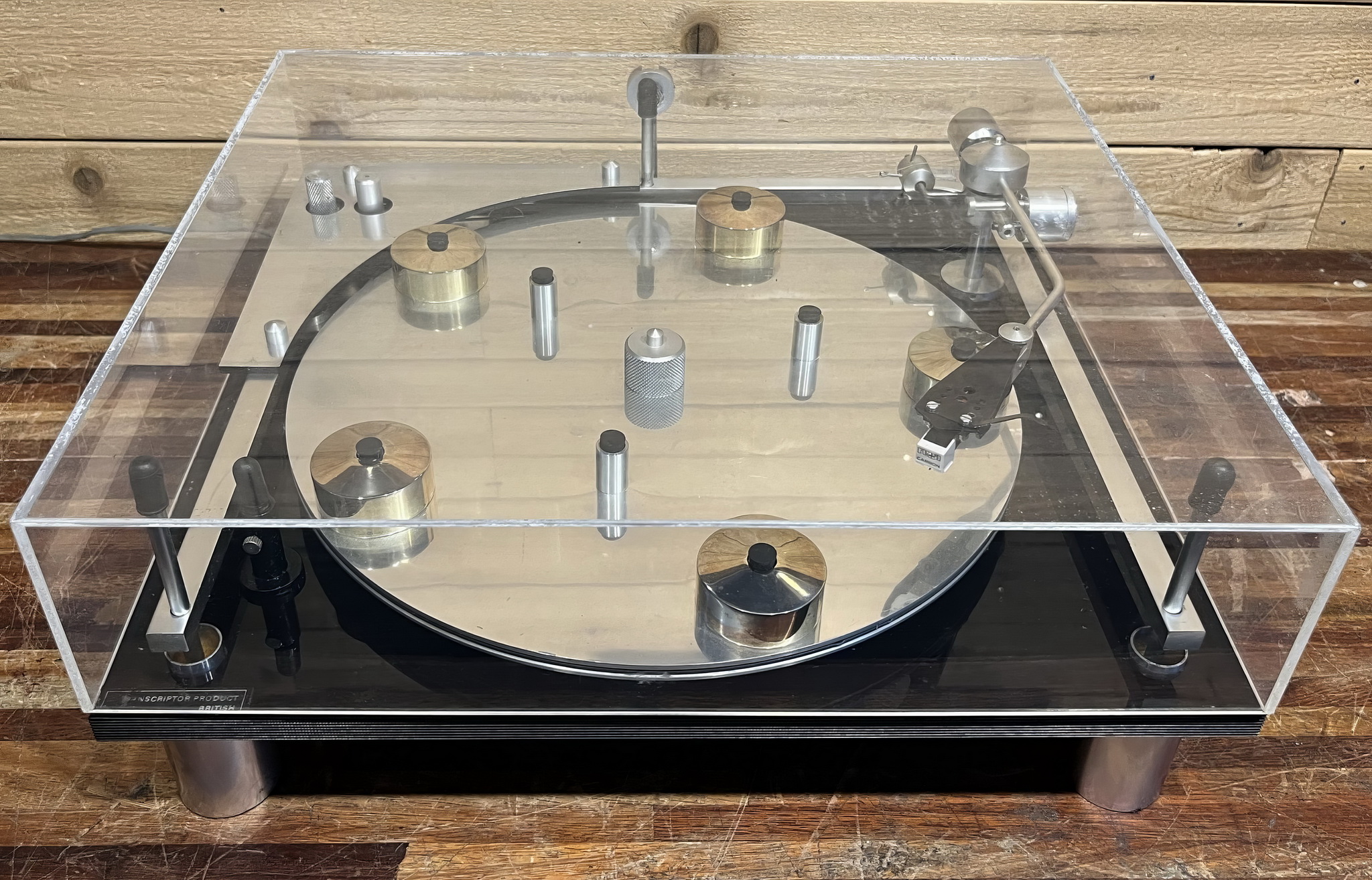
The Transcriptor turntable
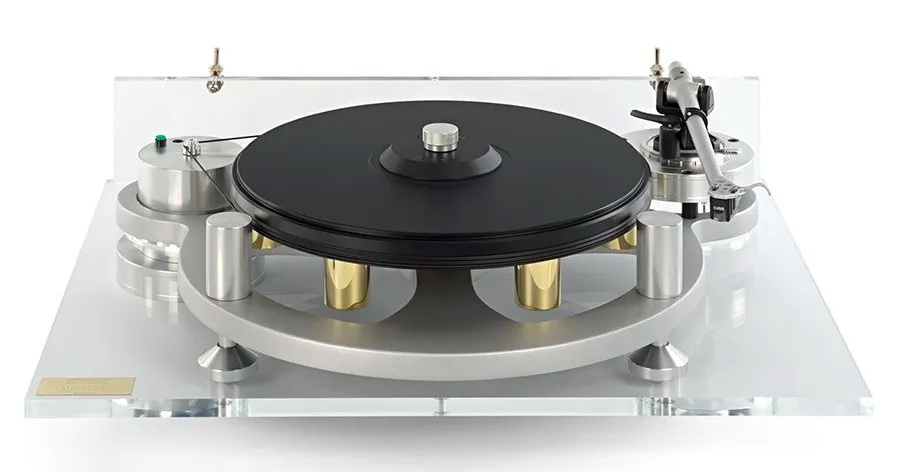
The strikingly beautiful and relatively affordable Michel Gyrodec turntable based on the earlier Transcriptor
I had to borrow someone else’s amp and speakers to test it out and amazingly, it worked. During this time, I had accumulated several vinyl records from the markets with artists ranging from Blancmange, New Order, and Gary Numan, to The Commodores, Greenslade, and Steely Dan.
Being familiar with receivers like my mother’s, I looked around for something similar or better.
I went around the high streets of Cardiff and came across the Technics range of their so-called Class AA amplifiers. Turned out that Class AA doesn’t really exist in amp language, but rather, it was a marketing gimmick made up by Technics to highlight their new range of amps. Most hi-fi amps are Class AB because they’re compromising performance with efficiency, whereas Class A amps are ‘always on’ reproducing the entire signal wave, often using tubes or valves, making them very hot, and often impractical, when running. These days, there are also a number of Class D amps, some of which are very good and very efficient, but they have their own unique challenges.
High street shops like Dixons had shiny glistening integrated amps and one that caught my eye was a Technics SU-V90 integrated amplifier. Unlike receivers, integrated amps don’t have the radio tuners, which meant purchasing a separate one, which I did. It was the inexpensive Denon TU-260 and, for the price, it was really good.
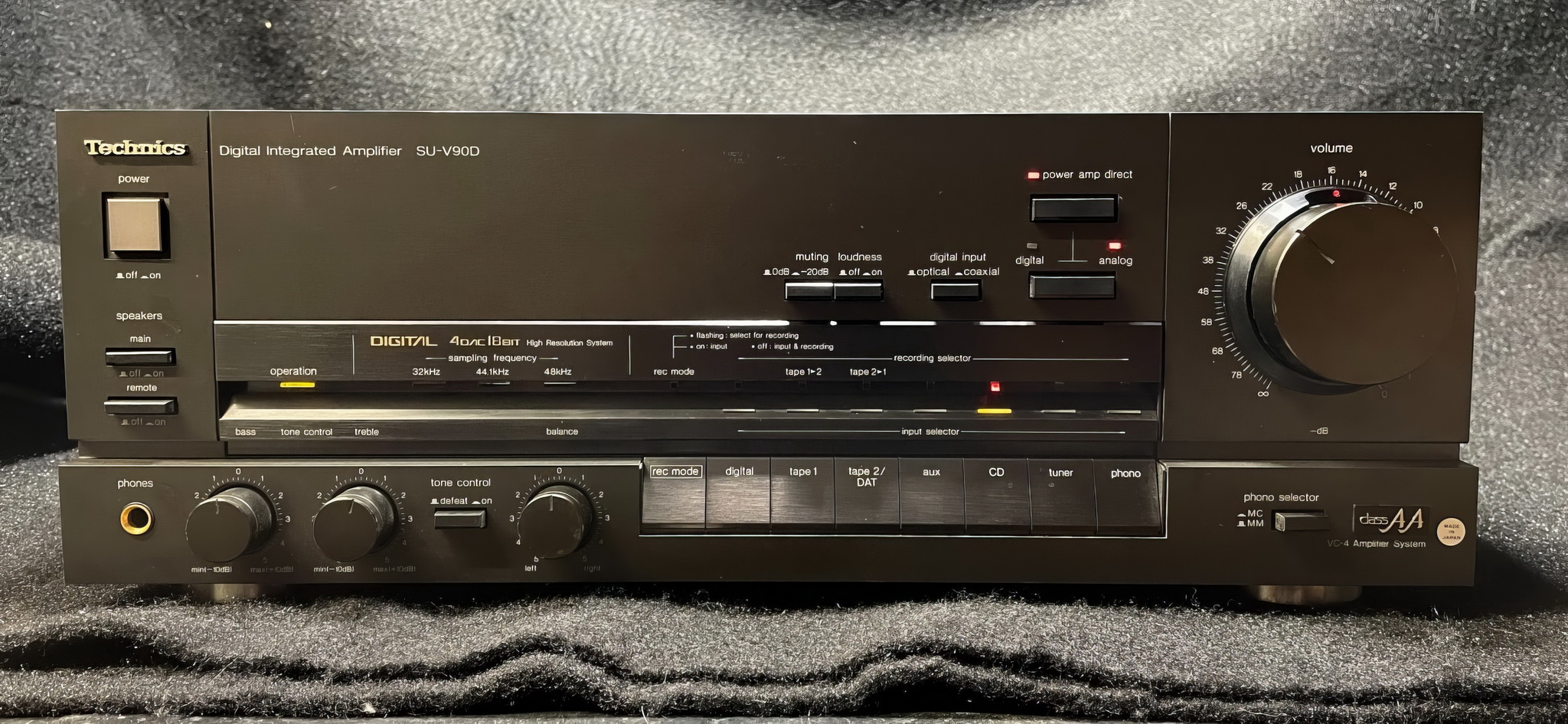
Technics SU-V90 integrated amp
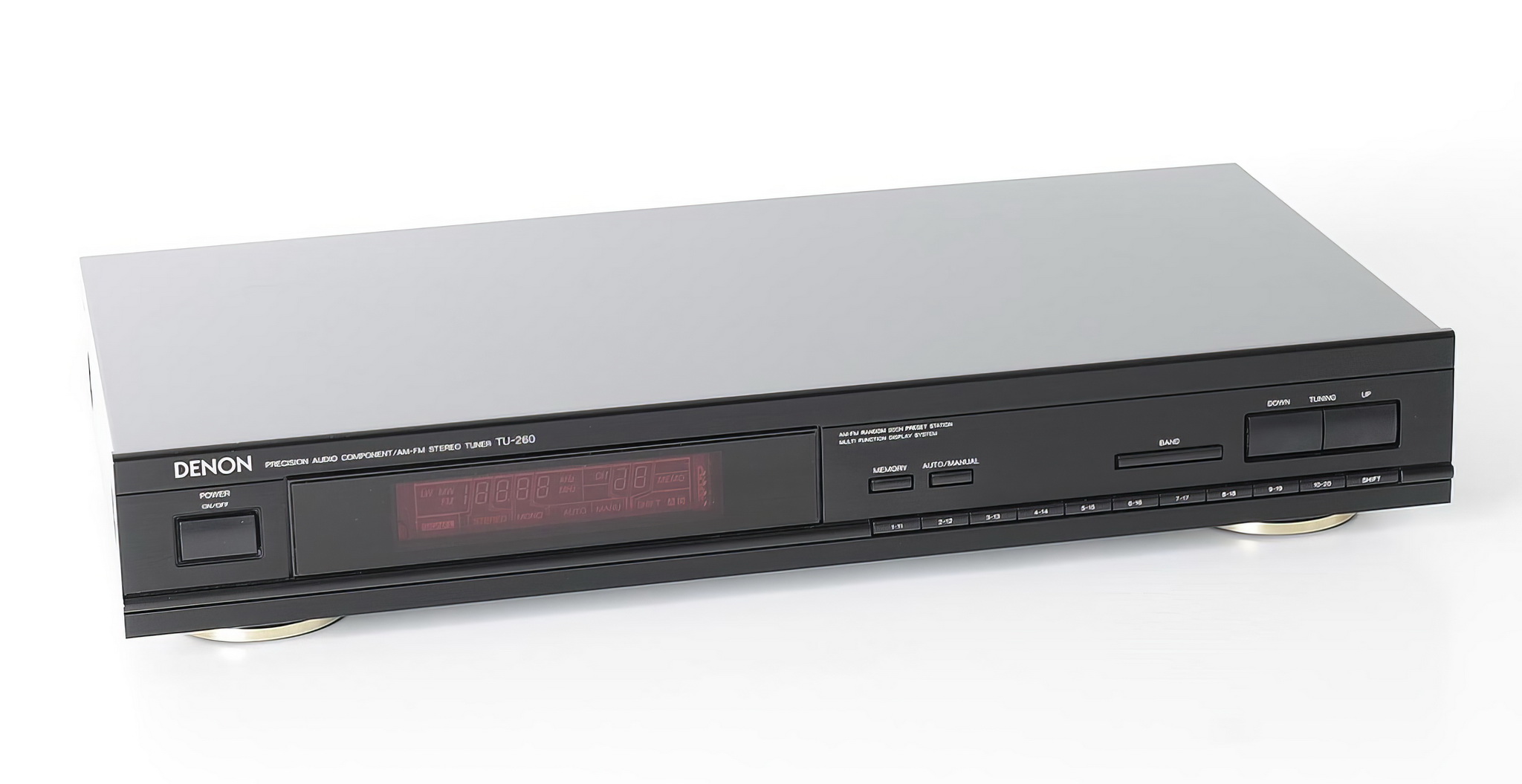
Denon TU-260 radio tuner
I studied the Technics brochure over and over and thought to myself. ‘Hey, that looks like a nice meaty amp!’
But then I looked at the Technics flagship amp range including a pre/power amp combination. The Technics SEA100 power amp and SUA200 pre amp.
What fresh hell is this? Pre amp and power amp? Why?
Then I started to buy hi-fi magazines trying to understand what pre and power amps are. This was the late 80s, so access to immediate info wasn’t as easy as looking something up in a smartphone. But I learned that the very best systems separate the pre-amplification circuits from the power-amplification circuits because of the amount of toroidal noise that creeps into the sensitive circuitry of pre-amplification resulting in more distortion and noise to the sound.
The pre-amp is supremely important because the signal has to be delivered to the power amp with as little distortion and crosstalk as possible. One immediately notices the clarity and ‘blackness’ of the sound with a good pre-amp.
I looked at the specs of this powerhouse combination and I really wanted this. I didn’t even have loudspeakers yet! But then I looked at the price and backed down to the much cheaper integrated amp which had plenty of grunt to pump most conventional speakers.
However, I didn’t want to purchase it until I was sure I explored other options.
My friend, Darren, who had once worked at a hi-fi shop called Audio Excellence on Whitchurch Street in the suburbs of Cardiff, told me that most of the stuff sold in high street shops relied on mainstream names like Technics, Sony, and Yamaha. He said that there was a whole amazing world of hi-fi manufactured on our doorstep here in Britain. Much of this stuff was sold in boutique shops in premises cheaper to rent than those in the city centre high street. But there were exceptions like Julian Richer, who expanded his already successful chain of Richer Sounds outlets selling budget to mid-range British hi-fi. For example, the Rotel RC-850 and RB-850 pre-power combination which was elegantly simple and at a very good price indeed. You could even add another RB-850 power amp to bi-amp your speakers.
I lost interest in all that Japanese bling-bling amplifier design the likes of Technics, Onkyo, and Yamaha with all those unnecessary lights and gauges and instead, focussed on elegance, functionality, and sound quality.
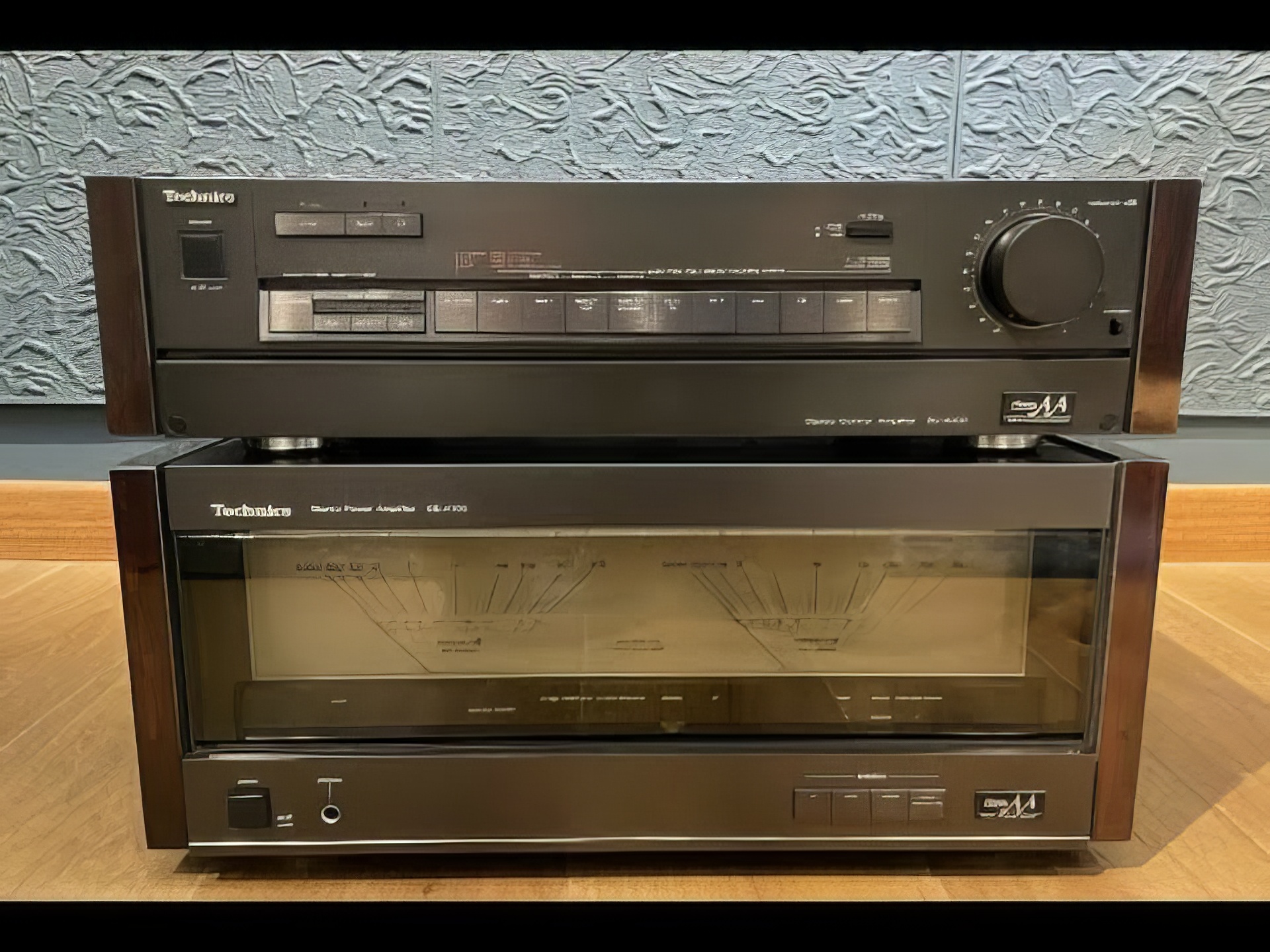
During the late 80s, this was Technics stunning flagship pre-power amp combo. The SEA-100 power with the SUA-200 pre.
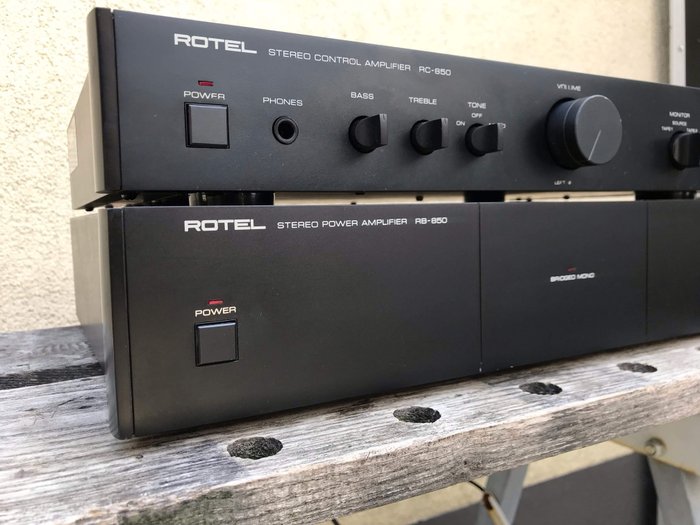
Rotel RC-850 / RB-850 pre-power amp combo
Thus my friend changed my thinking completely with respect to hi-fi equipment and implored me to visit Audio Excellence to have a look and a listen.
Armed with Frankie Goes to Hollywood’s Welcome to the Pleasuredome LP, I entered the shop and I was introduced into the world of proper hi-fi. It wasn’t like Dixons where everything had a price tag on it. There was stuff in the shop I’ve never seen before. But more importantly, there were demonstration rooms in which to test out the music you love with an experienced salesman.
It was here that I first heard, the potential what one could hear from an amazing hi-fi system.
Being a student, I was not made of money, so secretly had intentions of listening to stuff in the shop and then going to the second-hand market. However, later in life, I did work in a hi-fi shop in London called Graham’s Hi-Fi, and remembered all those young students like myself aspiring to get top-notch amazing systems. We were always polite with them because, it turned out, that those very same poor students could become very successful and then come back later to the store to buy big ticket items at a whim.
It was at Audio Excellence in Cardiff that I became familiar with perhaps one of the most iconic turntables ever. The Linn Sondek turntable fitted with an Ekos arm with a Troika cartridge. In those days, the entire cost was around a thousand pounds which, by today’s standards, is an absolute bargain. Linn lost the magic touch by replacing the Troika cartridge with its very lacklustre Linn Arkiv cartridge, because I did have one in later years and hated its lack of dynamics and drive. It was just too mellow. Today’s Linn flagship turntable combination is ridiculously pricey and out of touch with reality, the price now in the region of thirty to forty thousand dollars or so.

The best value for money at the time. The Linn Sondek, Ekos and Troika combination of the late 80s.
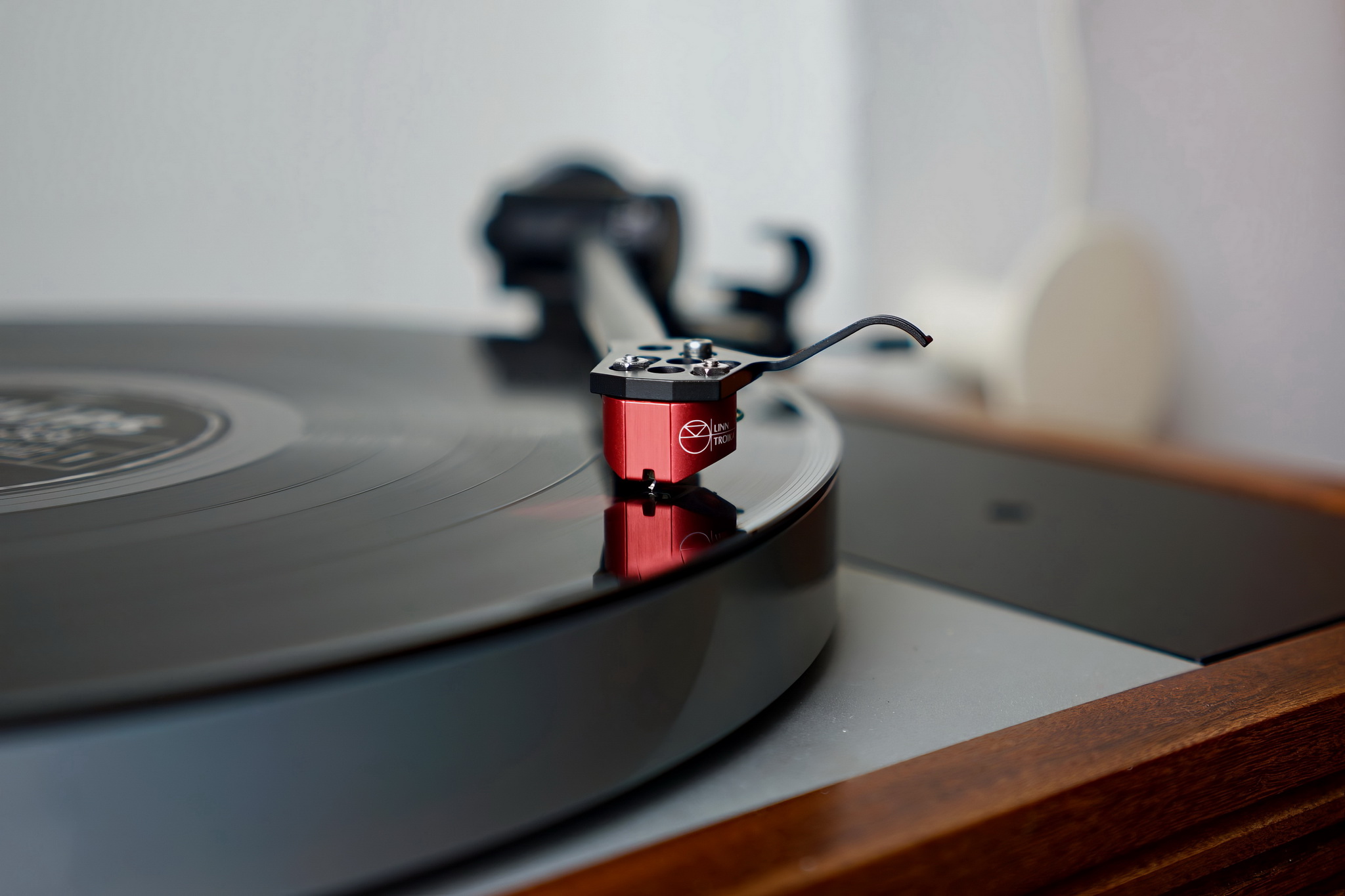
Perhaps one of my favourite cartridges of all time, the Linn Troika!
In Audio Excellence’s demonstration room, I listened to Welcome to the Pleasuredome and I was spellbound. Utterly spellbound. I then listen to Dire Strait’s Private Investigations shortly thereafter.
I think we were using an Audiolab 8000a amplifier, a product that Darren instantly took a liking to and bought. It was great value for money as well and felt really solid and nice. We listened through a pair of Gale 302 speakers, which were pretty good but not supremely magnificent. I was then taught into the philosophy that the most important part of the hi-fi system is the source, followed by the amplification followed by the speakers. Almost the reverse of what the 70s told us!
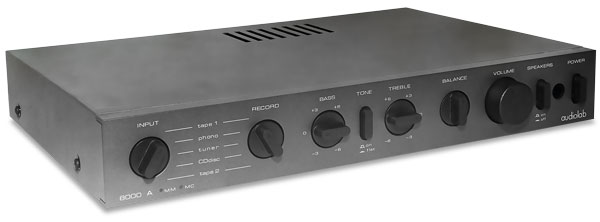
The excellent-value-for-money Audiolab 8000a integrated amp
My friend used to joke with me about the owner of Audio Excellence, a guy called Tony, who used to ask all his customers in a very posh and elongated way.
‘What’s your sooooooource?’
I was depressed that I’d never have enough money to buy any of this stuff, so I said my goodbyes to the shop and looked in the second-hand ads in hi-fi magazines for bargains. In those days, there were heaps of them in the back of the magazines. You made a phone call and drive across the country to someone’s house to hear it and make sure it works, hand over the cash, and go home.
After reading many a review in such magazines like Hi-Fi World, What HiFi and a myriad of others, I stumbled upon a company called Musical Fidelity. I can’t honestly remember what got me so particularly interested in them, but I saw an ad for a second-hand Musical Fidelity A100 amp on the other side of the UK in Southampton.
It seemed a bargain.
I was clearly committed because I had an aged Mini Clubman car which was half-rusted through and on its last legs. After making the phone call to express my interest, I got in the car in the middle of a rainy winter’s night and drove to some suburb on the outskirts of Southampton to pick it up.
This guy had a Roksan Xerxes turntable, made in Llandrindod Wells, the middle of nowhere in Wales, fitted with the ultimate of all tonearms, the Japanese SME Series V tonearm along with a beautiful Koetsu Rosewood Cartridge. He played the sublime Eurythmics 1984 album with his turntable running through the A100 amp which he intended to sell to me. He played the track, Julia, and honestly, I remember this occasion to this day. One of the most beautiful sounds I’ve heard.
I gave him the money and I took the A100 home with me.
It was my first serious bit of hi-fi kit I owned. It certainly ran hot because it ran in pure Class A mode with transistors, not tubes. I could have fried an egg on top of its grill-like topside! But it had the most beautiful and rich sound.
By then, I learned much about hi-fi and de-learned all that crap about it’s all about how many Watts and all that. I was really getting an understanding of the synergy of how everything works together and it’s not necessarily all about the specs.
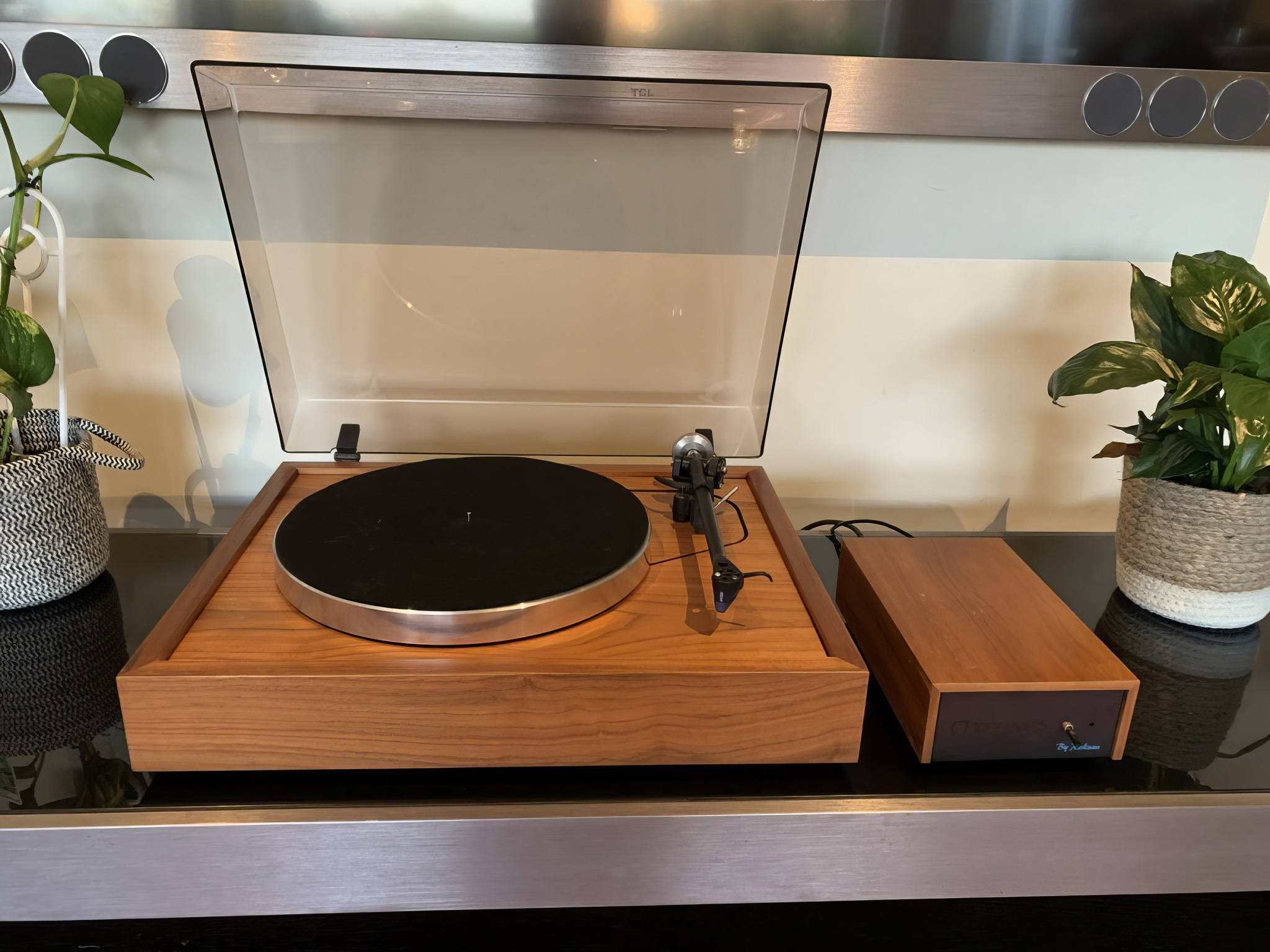
The iconic Roksan Xerxes table made in the middle of nowhere in Llandrindod Wells in central Wales. This one looks like it was fitted with a Rega RB300 tonearm.
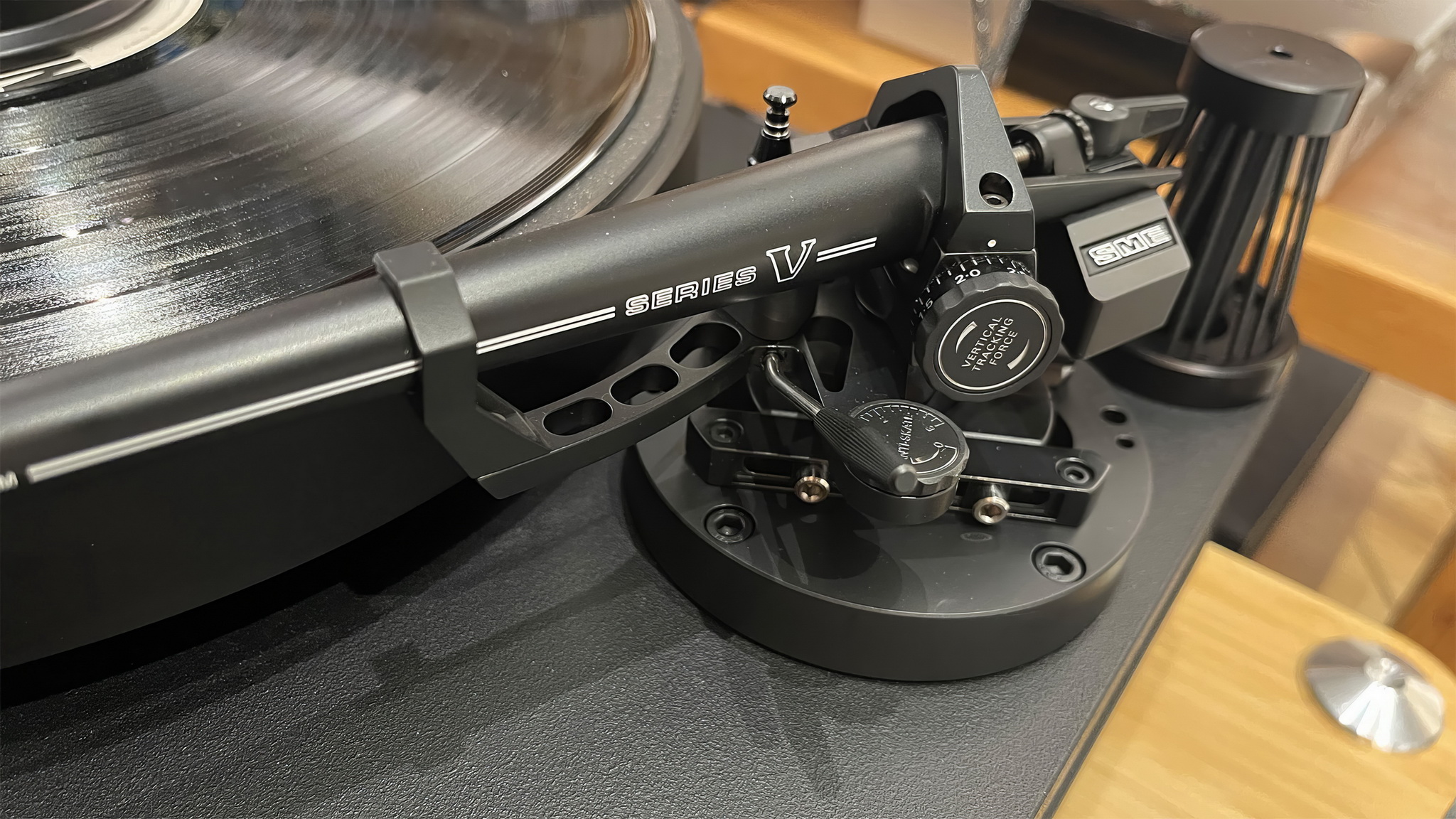
The best tonearm ever made in my view! The SME Series V.
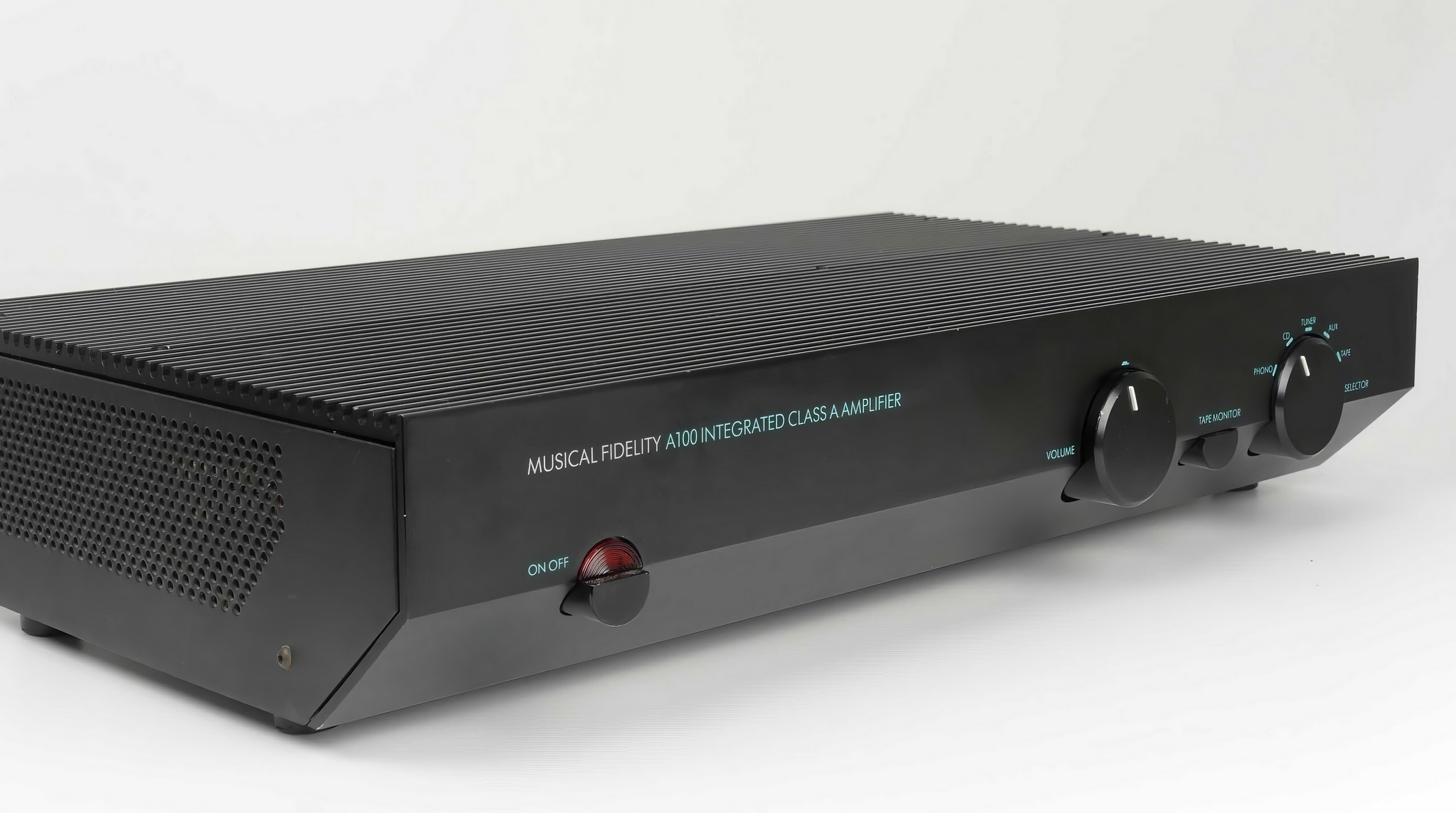
My first proper hi-fi amp, the Musical Fidelity A100 integrated amplifier.

Inside the A100 amplifier
As for loudspeakers, I am struggling to remember what I used during this time. I know I purchased a pair of Tannoy M20 Gold speakers but I can’t remember when and where. In any case, they were a good all-rounder, suitable for any amp, with perhaps, an overly warm sound, but I liked them.
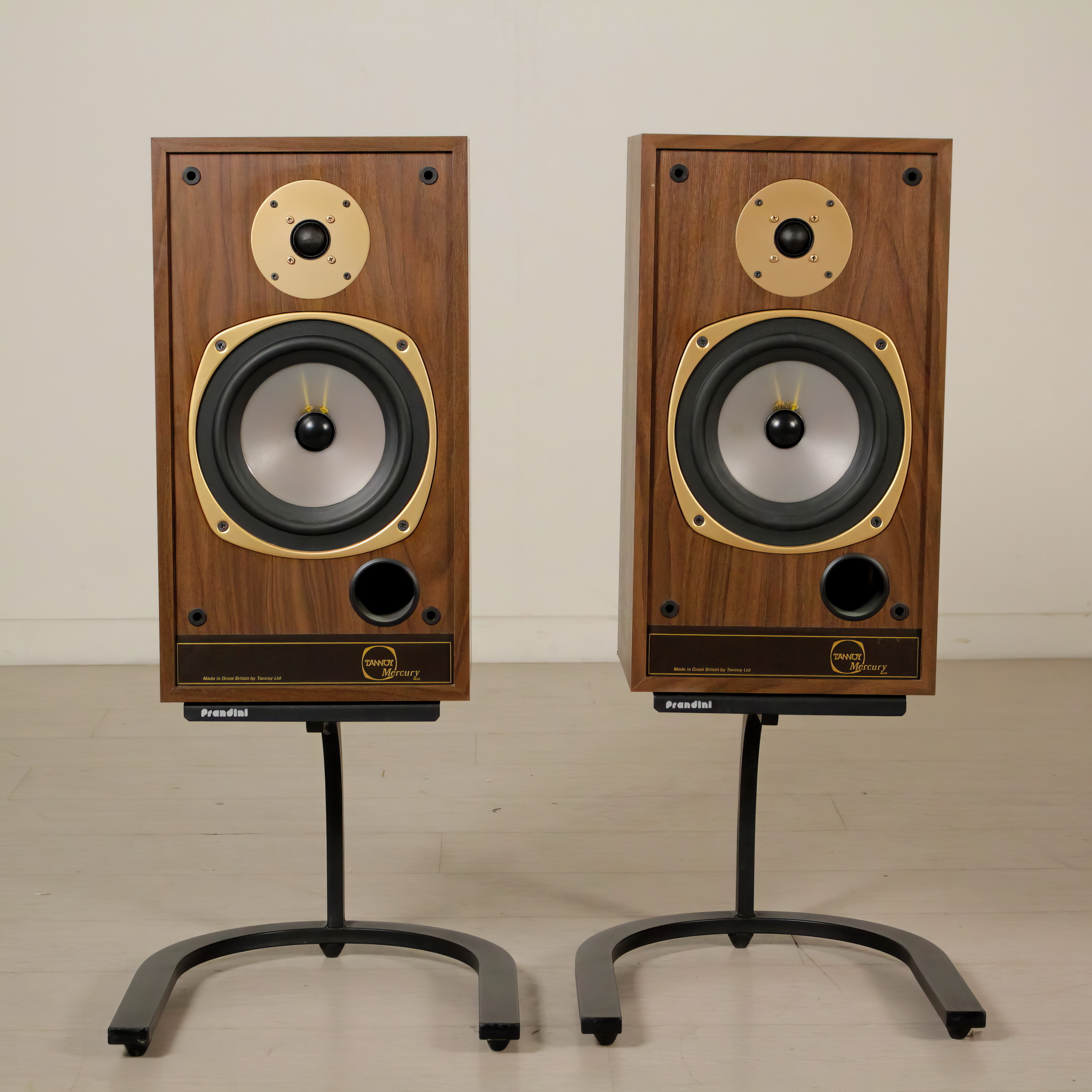
Very trusty Tannoy M20 Gold speakers which served me well
The Transcriptor turntable caused too many issues and became wholly unreliable. So, I stumbled upon a second-hand Rega Planar 3 in a pawn shop on Cowbridge Road in Cardiff and found a Rega Planar 3 for sale in excellent condition for only fifty quid or so.
I don’t know if the pawn shop owner knew much about hi-fi, but I snapped it up. It was the original one with the heavy glass platter and the iconic Rega RB300 tonearm, and it was the one with the original extra heavy tungsten counterweight that became an expensive option in later years. Over the years, the Rega 3 turntable, whilst still going up in price, made economical cuts by replacing the heavy glass platter with a cheaper one and changing the tungsten counterweight to the larger and less-dense stainless steel one as standard. Whether it sounded better or not, I don’t know, but there’s something really nice about the feel of the original! I had to get a new cartridge, so I chose an Audio Technica OC-7 moving coil cartridge. The OC-9 was out of my reach but the OC-7 was a great lively cartridge and matched my A100 amplifier perfectly.
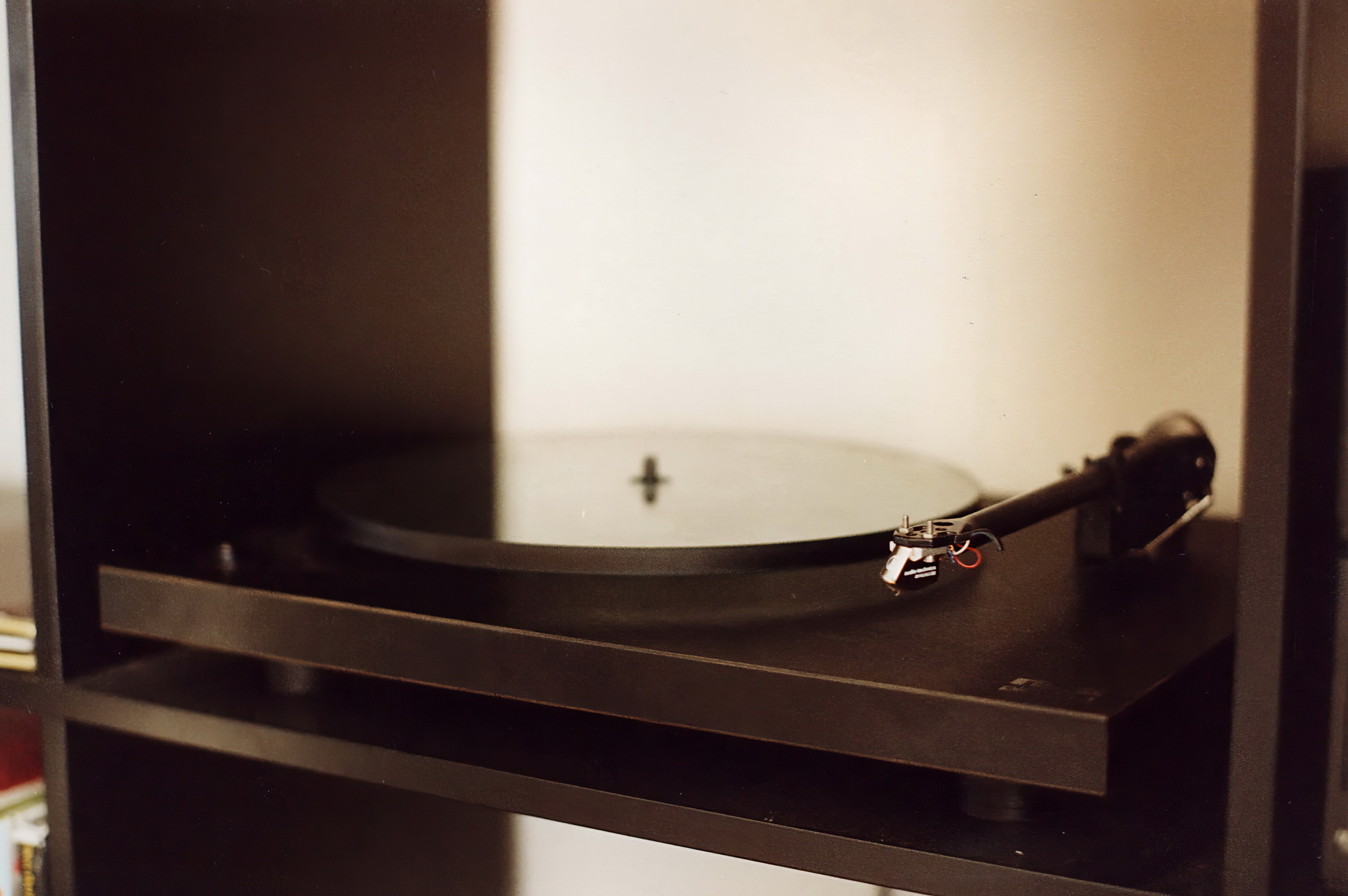
This was my actual Rega Planar 3 turntable with iconic RB300 tonearm and Audio Technica OC7 cartridge.
For many years, I enjoyed this supremely easy to set up and amazing sounding turntable. I later found out that Linn Sondek turntables were notoriously difficult to set up properly being suspension decks rather than hard plinth platters.
So, at this point, in the YMCA, I had Tannoy M20 Gold loudspeakers, a Musical Fidelity A100 amp and a Rega Planar 3 turntable. And a pair of Sony MDR V5 headphones which I still have to this day, albeit with a few replacement pads easily obtainable from Amazon and eBay.

My very reliable and trusty Sony MDR V5 headphones which I still have and use.
But I had the hi-fi bug and I wanted more! Apparently, during the time, the only other hobby which had more accessories and upgrades was fishing.
I entered competitions in magazines, one of which I remember quite well. It was a series of hi-fi related questions, some of which were quite difficult. No Internet in those days! The answers had to be mailed in. The prize was this crazy big system comprising pre and power valve-driven Audio Research amplifiers, a beautiful Oracle Delphi turntable, which is a better version of the Michel Gyrodec in terms of sound quality, and a pair of Martin Logan electrostatic speakers. It was a system worth ten thousand pounds new in those days. The equivalent if bought now would be at least ten times or even twenty times more!
But alas, I did not win. But if I did, where would I put them? I would have had to bring them to the family home. But the funny thing is this with hi-fi. Should I have won the system, it would still be as good and desirable unlike many of today’s throwaway digital electronics.

Audio Research pre-amplifer with separate power supply
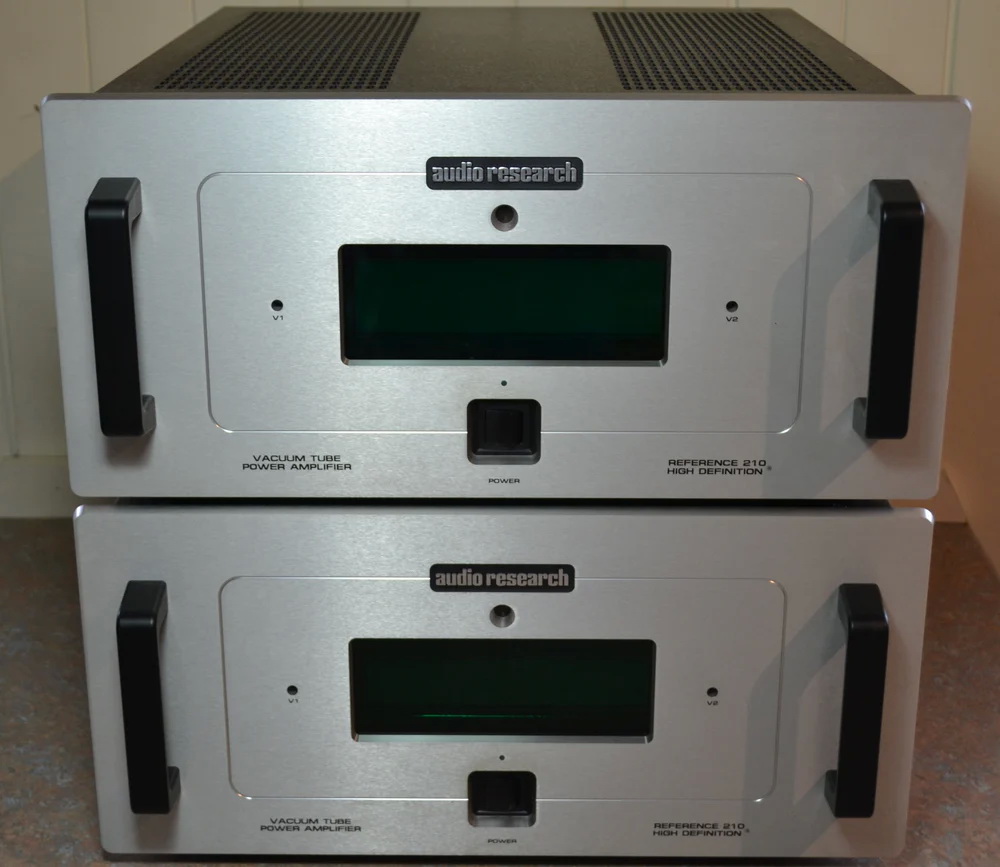
Audio Research valve-driven monoblock power amplifiers
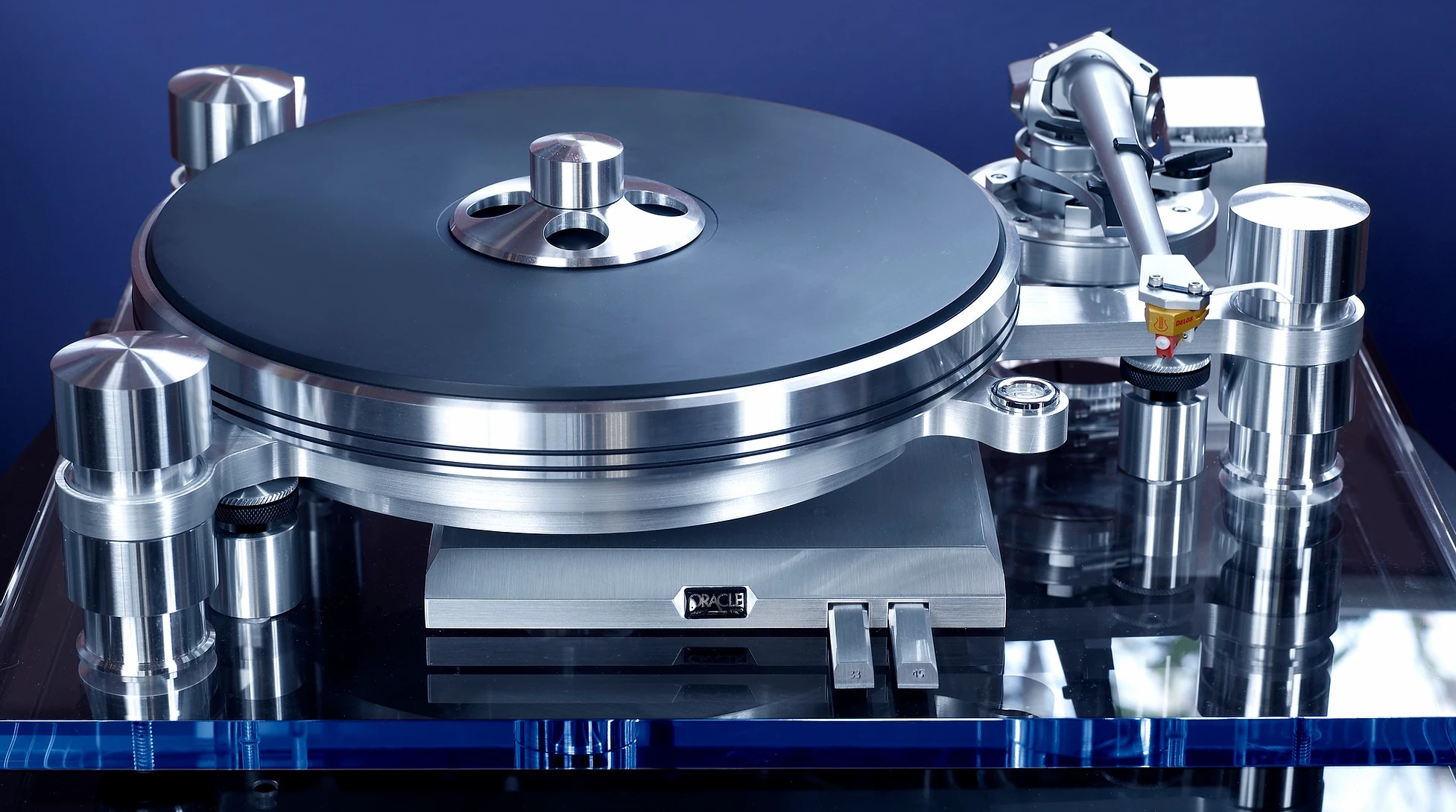
The supremely-beautiful Oracle Delphi turntable
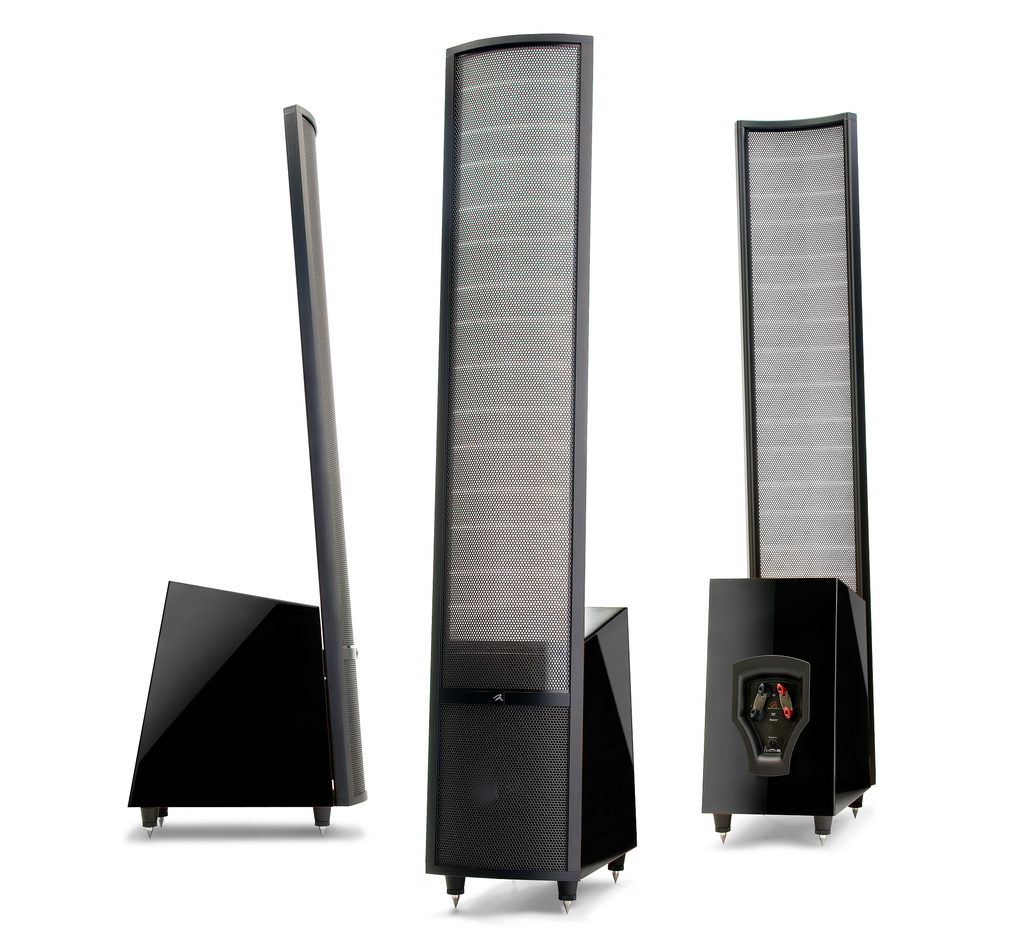
Martin Logan ESL electrostatic loudspeakers
Tube or valve-drive amps, lovely as they sound, have significant downfalls for me. I keep my amps on all the time because they sound best when fully warmed up and I don’t want to wait for them to do so every time I want to listen to music. Also, switching amps on and off all the time is probably not the best thing for them anyway, plus, the heat generated by tube amps is not welcomed in small rooms in the middle of summer! Another problem of tubes is that replacing them is a tremendously expensive affair these days, and tube amps need to be partnered carefully with speakers, preferring easier loads to drive with high-sensitivity speakers. Back in the ‘ole days, valve amps were often partnered with horn speakers, which are very easy to drive. Horn speakers still have a niche place in the world of hi-fi enthusiasts.
During my time in Cardiff, I had accumulated hundreds of second-hand vinyl LPs which, in those days, were fairly cheap unlike today, where collecting vinyl is more akin to collecting artwork. Not only that, in those days, if you wanted the best sound quality, it was a good turntable you opted for. It was the best and most accessible medium at the time. Prerecorded cassettes were awful unless you had a very good cassette deck, and even then, tapes deteriorate in time becoming functionally worthless. CDs were available but they weren’t great because many of them were not mastered very well from the original studio tapes. However, today, with digital high resolution lossless files coupled with high-quality streaming devices, I strongly disagree that vinyl records have better sound quality anymore. Functionally, they are now an anachronism, but they’re still satisfying to use and ‘forces’ one to listen to the entire record instead of flicking around from song to song.
The late 80s after college in Wales
After college, I brought all my stuff to my dad’s home and set it up there.
I decided to do an upgrade with the amplification. The A100 was a very good amp, and in a way, I kind of regret selling it, but I wanted something with more edge, drive, and transparency. The A100 had a lovely warm sound but sometimes, it was just a little too warm.
I became fond of the Musical Fidelity line-up during the late 80s and early 90s, but after the mid-90s, it didn’t appeal to me at all. It lost that gorgeous sleek, elegant, minimalistic and spartan look with all that brushed metal, the heatsinks and low-profile rackmount design for their pre-amplifiers. They became more conventional looking, some of them being curvy and effeminate. It just looked like so many others during that time.
What I really wanted was the Musical Fidelity’s MVX pre-amplifier coupled with the ever-so-scary colossal Class A transistor amp, the A370, weighing in at a whopping 40kg! Today, these items are considered a true rarity and very sought after. Coincidentally, the A370 was also the regular road route I took from Cardiff to North Wales!
Of course, the A370 is an absurdity for practical use. Imagine the electricity bill and all the heat that it would deliver into the room. Fine for cold days, but a disaster for summer. However, the next power amp down, the P270 would have been more than enough and I would have chosen this one anyway even if I could afford the A370. The A370 was just plain silly like owning a 2.3 litre Triumph Rocket III motorcycle.
Total overkill.
Later I was to learn, allegedly from some who work in the hi-fi industry, that one of the weaknesses of Musical Fidelity power amps was that they were often liable to short themselves unexpectedly leading to large and expensive repairs.
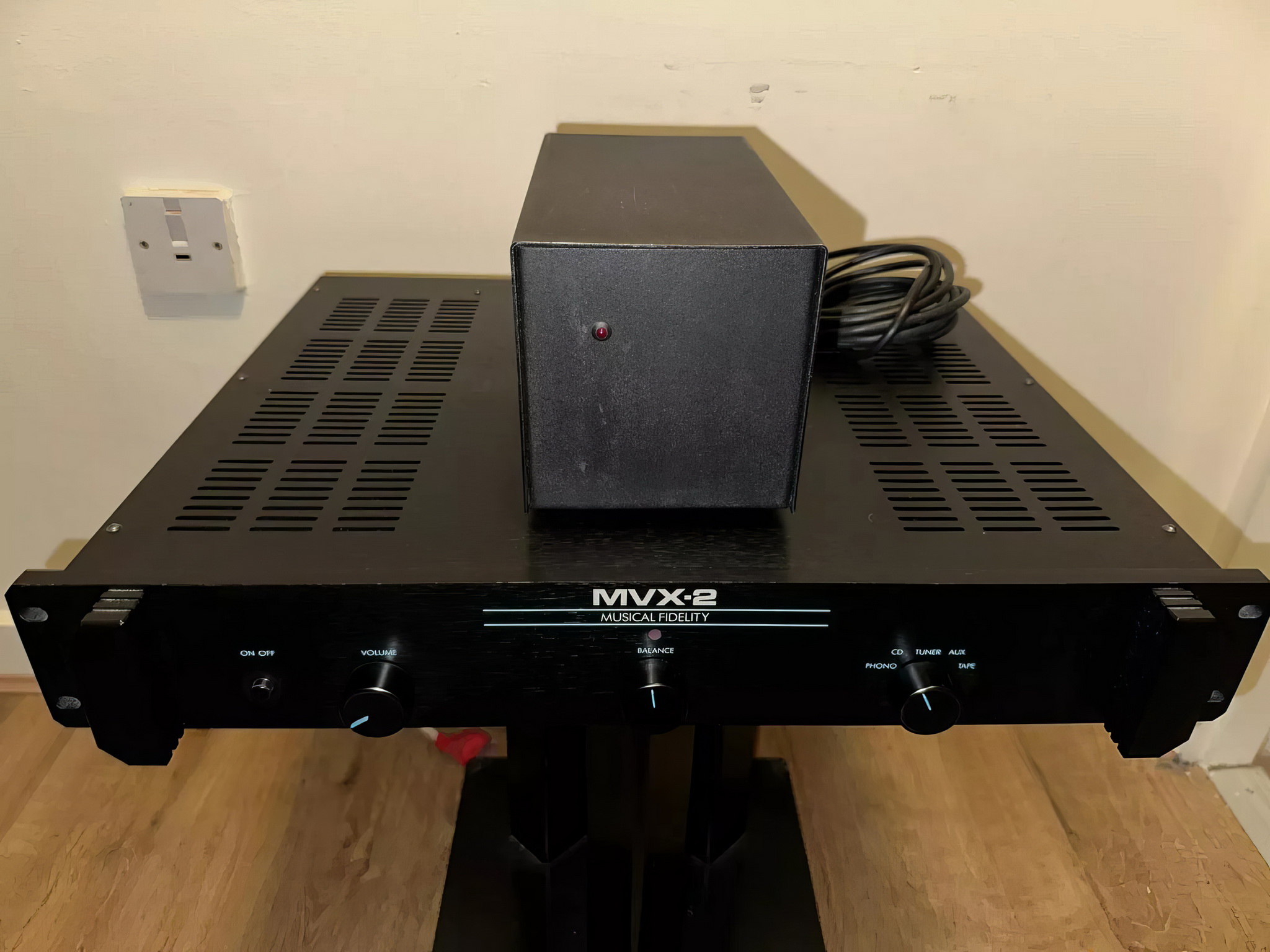
Musical Fidelity’s legendary flagship pre-amplifier, the MVX, their best pre-amp made and perhaps, one of the world’s best.

Musical Fidelity’s exceptionally meaty P270 power amp, which would have complimented the MVX perfectly.

Teetering on the absurd, this was Musical Fidelity’s flagship power amp weighing in at 40kg and running at Class A.
With a much smaller budget, I scoured the second-hand market as usual and found a great pre and power combination that worked perfectly with my system.
A Musical Fidelity 3B pre-amplifier coupled with a Quad 606 power amp.
I loved my 3B pre-amp. It was exceptionally transparent and neutral. While the Quad 606 delivered more than enough power, albeit, with a slightly soft poise which offset the slight brashness of the OC-7 cartridge.
One of the more unique features with the 3B is that it had active and passive outputs meaning you could switch the power off if using the passive outputs, albeit at a lower line output level.
The Quad 606, in my opinion, offered excellent value for money, even when bought from new. It was almost a steal.
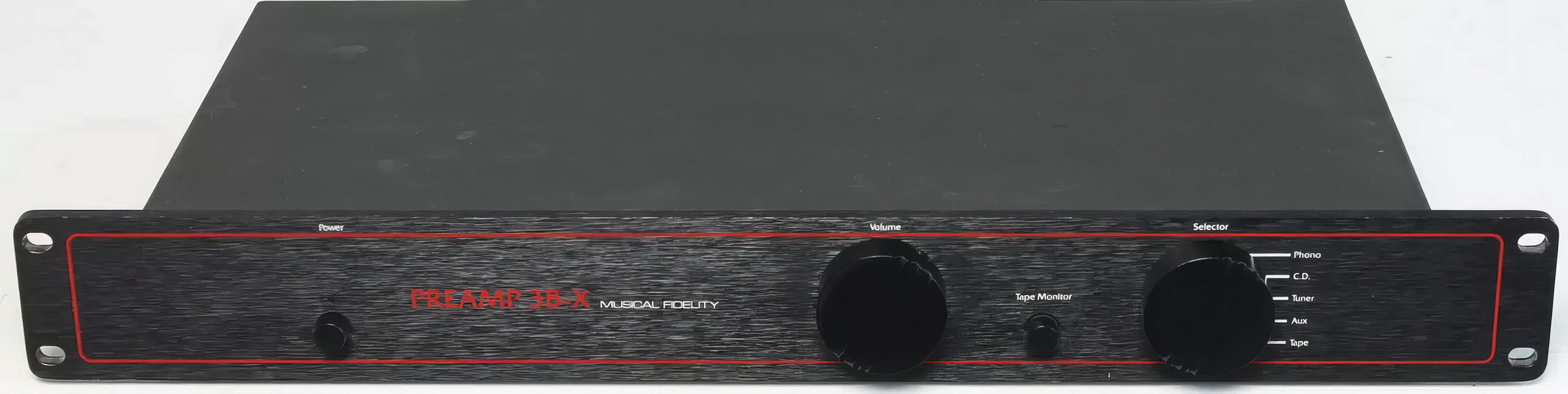
The sleek and elegant Musical Fidelity 3B pre-amplifer

The Quad 606 power amplifier
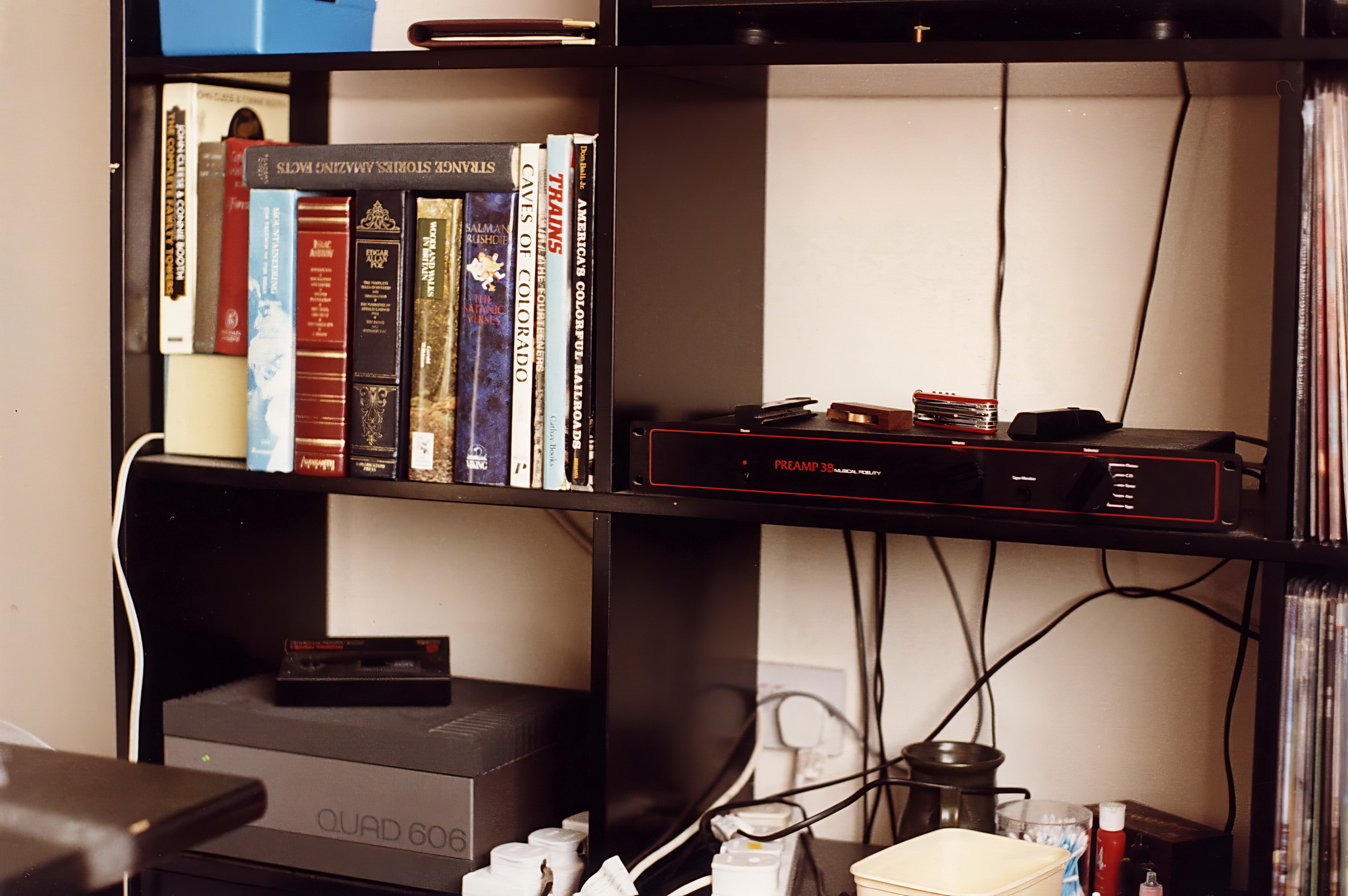
My Quad 606 power amp and Musical Fidelity 3B pre amp
At this point, I wanted to upgrade my speakers.
The Tannoy M20 Gold speakers are a great budget speaker, but I needed something a bit meatier against the rest of my system.
Such is the problem of hi-fi upgrades!
I auditioned a pair of Epos ES14 loudspeakers and was completely blown away at the depth of sound it created for a relatively small speaker, about the same size as the Tannoy M20s in terms of height and width, but deeper in stature.
It was good timing, because my sister needed a pair of speakers on her return to the United States. So she had my Tannoy M20 Golds. Can’t remember how we shipped them, but we did. To this day, she still has them.

After giving my Tannoy M20 Gold speakers to my sister, I purchased a second-hand pair of Epos ES14 speakers which blew me away.
So now, I had the Rega 3 with OC-7, MF’s 3B pre-amp, Quad’s 606 power amp and my lovely Epos ES14 speakers.
Throughout my many hi-fi upgrades, I was still avidly collecting vinyl here and there. One of the sadder points of some hi-hi enthusiasts is that they don’t extend their music repertoire but rather, keep a small collection of favourite LPs but endlessly upgrading this and that.
And before I forget, let’s talk about all those interconnects and speaker cables.
Trust me, there’s a lot of snake oil out there with vendors trying to con you into thinking that owning a strand of interconnect cable with 99.999999999999% silver for four-figure sums is going to make all the world of difference to your system.
This is patently ridiculous.
I’ve auditioned many of these so-called exotic cables when I worked in the hi-fi industry a couple of years later and lo and behold, they made very little difference, if at all, towards the ultra-pricey end. Yes, you want good cables and interconnects rather than shitty bell-wire or crappy interconnects with poor connections, but most of the importance should be placed on the equipment starting with the source working down to the speakers. And yes, I’ve come across enthusiasts that have paid more for their cables and interconnects than the equipment itself.
It’s just not necessary.
My next upgrade was my turntable, the reason being is that my grandfather wanted one for his classical collection of vinyl records. So it was an opportunity to try something new.
After doing much researching and listening in various demonstration rooms in London, I opted for the Pink Triangle PT TOO turntable. Tonearms were not included for most turntables, so knowing that Rega’s excellent RB300 works really well with the PT TOO, I transferred it over along with the OC-7 cartridge leaving me to buy the more economical RB250 tonearm and Rega Super Bias cartridge for my Rega 3 hand-me-down to my grandfather. It was more than enough in terms of quality for his existing amp and speakers.
I have to say, with all the turntables I owned, the PT TOO was my favourite of all. It was a little fiddly to set up, but once done, it had a real drive and sense of dynamics to everything that was fed to it. It had this beautiful silky acrylic platter which didn’t need any mat for the record. The equivalent in its price range at the time were the Linn Sondeks which went astronomical in price as the years went by. However, compared with the PT TOO, the Linn Sondek sounded sedate and boring. Unfortunately, as beautiful as they were, Pink Triangle did not have the same degree of engineering quality as Linn which led to unexpected faults that had to be repaired from time to time.
I wish I still had this turntable but due to an unfortunate incident involving a burst water mains in the place I stayed in later years, some of my hi-fi system was trashed leading to a insurance claim to replace them.
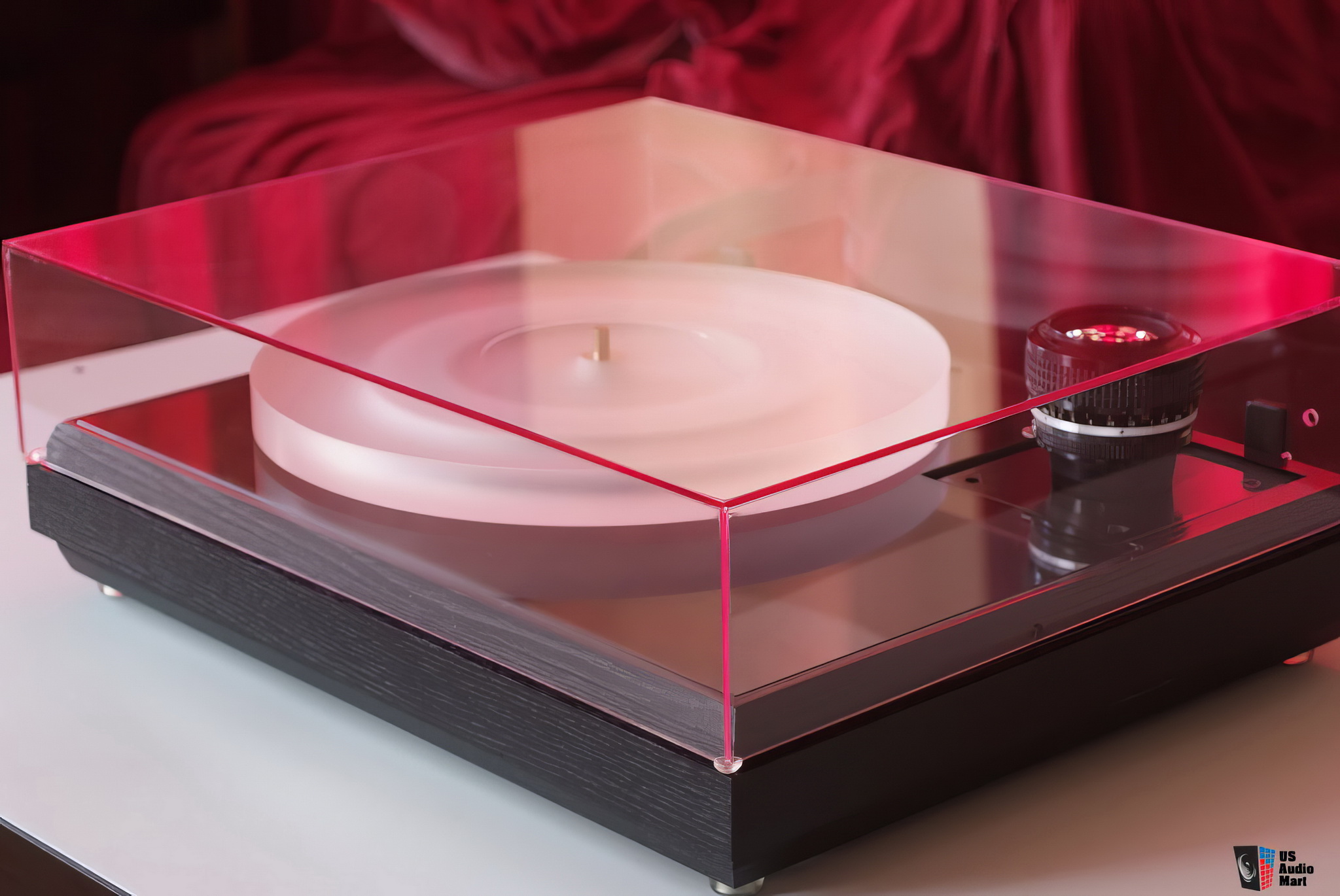
The stunning Pink Triangle PT TOO turntable when new
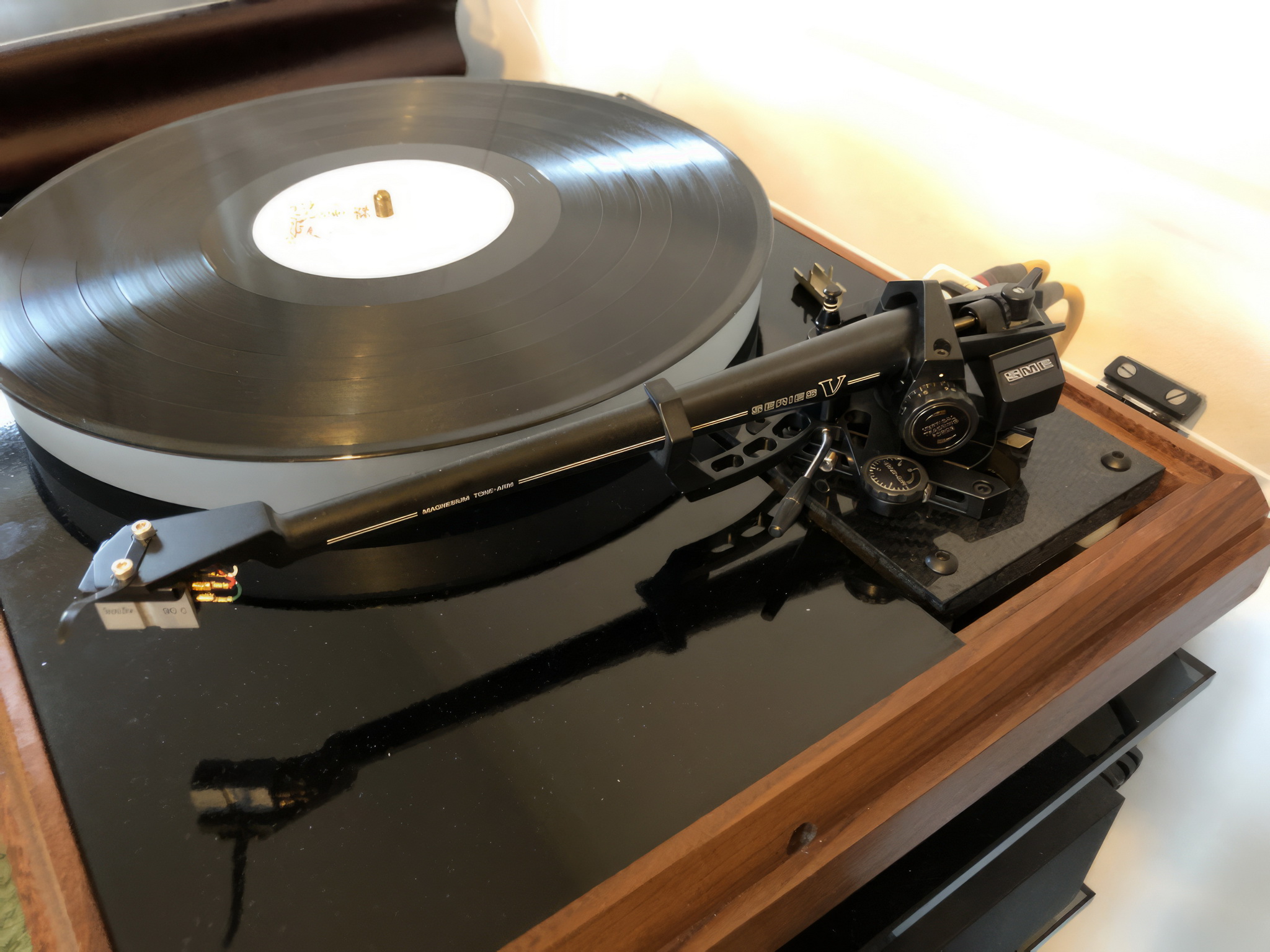
Not mine, but this PT TOO is fitted with the legendary SME Series V tonearm, significantly more expensive then the deck itself!
There were many occasions that I wanted to listen to music on the go. So, I got back into tape recording as I did back in Colorado. But I needed a tape deck.
But which one?
I salivated at the Nakamichi’s flagship domestic cassette players, the Dragon and the CR-7, but they were way out of my price reach. However, I did manage to get a Denon DRM-24HX, a reliable 3-head deck with the usual bells and whistles including HX Pro, Dolby B and C.
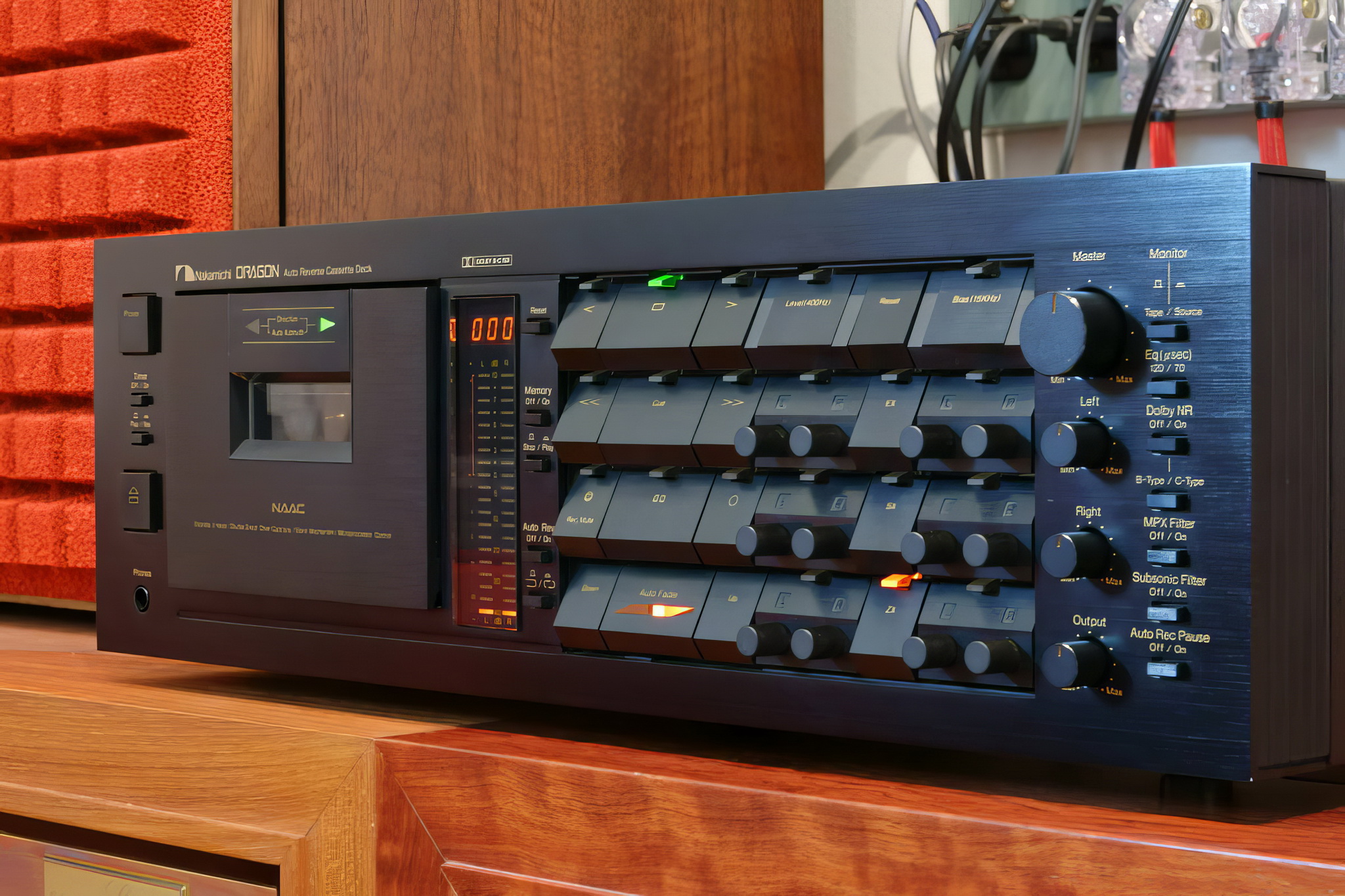
The best domestic cassette deck in the world, The Nakamichi Dragon
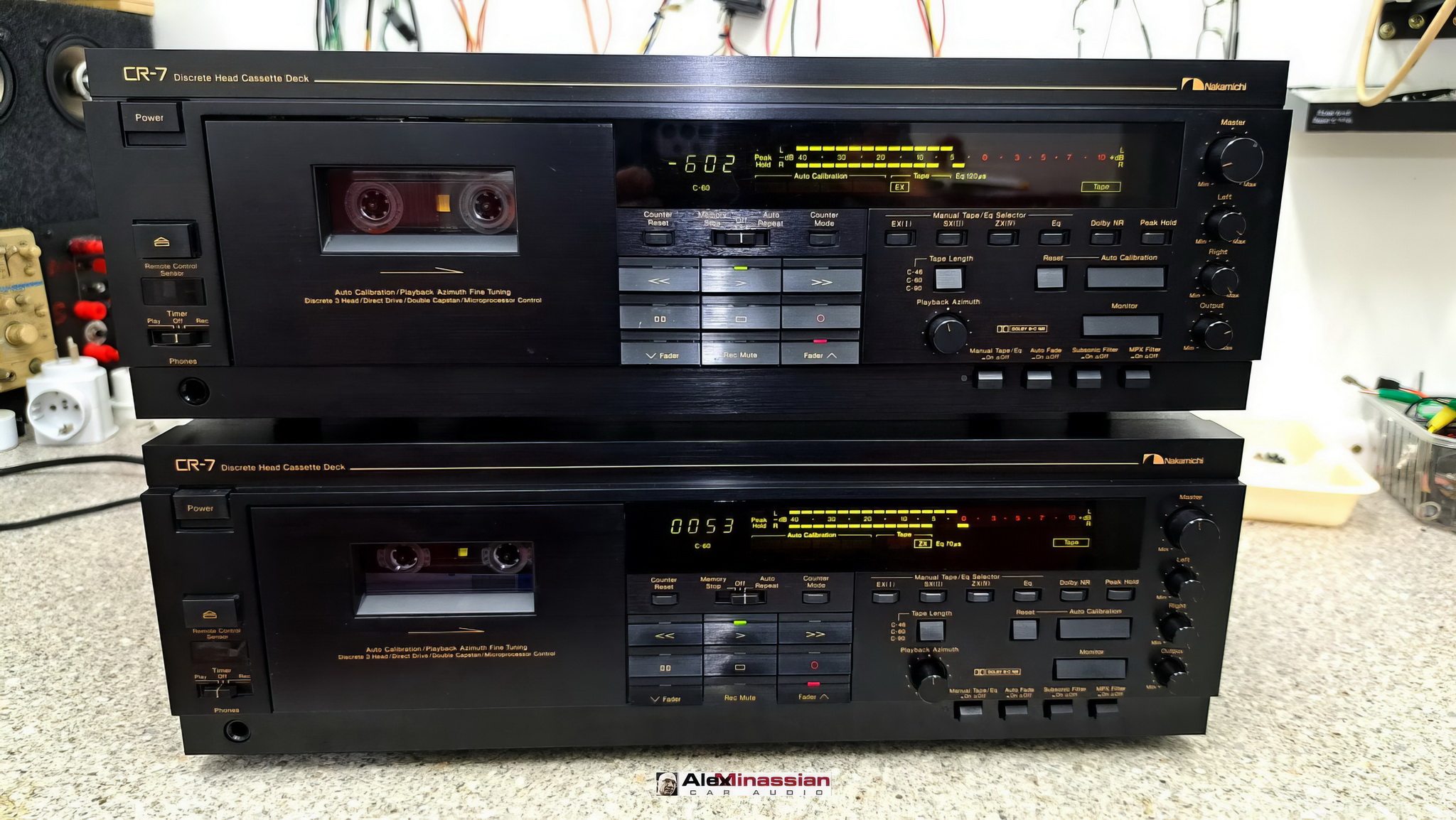
A pair of Nakamichi CR-7 cassette decks. Not as famous as the Dragon, but I think they’re equally good.
I often thought to myself, what happened to Dolby A, only to research it and discover it was a far more complicated and expensive noise-reduction system for professional audio kit. Often, I didn’t use Dolby B at all, and never Dolby C, which, in my opinion, killed the life of the music. I did like the headroom expansion HX Pro feature which opened out the sound in the recording.
Getting blank cassettes weren’t terribly expensive and I opted to get chrome TDK SA-X 90 tapes, my go-to blank tape. Metal tapes sound better but are not only more expensive but can be a bit fussy on playback with some cassette decks. Never understood the reasoning of buying 60-minute tapes. 90-minute tapes usually has the space to hold two entire LPs with 45 minutes each side. Unless you’re copying one of those tightly packed compilation vinyl records which can extend up to 60 minutes a side. They sound horrible and nasty in most cases because of the need to overly compress the dynamics by reducing the groove width through something called RIAA equalisation. This is why those 12” singles which DJs use are so robust and sound great. They often keep the groove width the same throughout even on the quieter bits.
Unfortunately, having one cassette deck has a disadvantage. You can’t record other people’s tapes unless you have a second one. Sure, you could get twin players, but often they had very lacklustre performance. My father was in the music scene as I mentioned before and having the need to copy his tapes to give to agents, gave me an excuse to ask for funds to procure another machine. But, alas, not enough to get a Nakamichi.
However, Denon’s then flagship deck, the DRM44HX was available at a reasonable price. It looked downright sexy, and I just had to get it. Although the 24HX was very good, this was strikingly better. Weightier and cleaner sound. Amazing. And it felt good. Ultra-quiet mechanism and wonderful button action. I still have this deck today! I consider it the poor-man’s Nakamichi Dragon.

My Denon DRM24HX tape deck on top of the bigger brother, the DRM44HX.
To enjoy my music on the go, I got a Sony Walkman Pro, which sadly, is missing because I can’t find it anywhere in my storage boxes when I moved overseas to Australia. I got myself a stash of tapes and started recording the records that I wanted with the DRM44HX. I ended up with a stash of fifty TDK SA-X tapes filled with my favourite material.
I’ll say this about the Sony Walkman Pro. It was an amazing beast. It was quite a bit larger than most Walkman-like devices and chewed batteries, but my goodness, did it sound sensational. They worked perfectly with my Sony MDR-V5 headphones as well. It felt good with solid engineering throughout. The biggest surprise was its phenomenal recording quality when a decent microphone was plugged into it. Apparently, bootleggers were using such devices to secretly record live concerts. That’s how good the Walkman Pro was.

The best personal cassette player ever made in my view
I went on to study engineering in London during the early 90s and often used my Walkman Pro with delight. Not only to listen to music, but to record some of the lectures I went to.
The London Years during the 90s
After graduating, I worked for a couple of years at a specialist hi-fi shop called Graham’s Hi-Fi in London. This was during a recession and it was a stop-gap before finding a position within the field of civil engineering. The shop was located on a back street away from high street window shoppers. It relied mostly on repeat business by loyal customers who brought their favourite pieces of music to try out on a new system or an upgrade with the help of expert advice which we offered.
Graham’s is still in existence today.
One of the perks of working there is to try out practically any bit of hi-fi equipment you wanted to. In fact, we encouraged it. Staff were allowed to take most of the items to try out on their own systems at home. Moreover, staff discounts were extraordinarily good, many being below cost, subsidised by manufacturers like Linn and Naim to encourage salespeople to push their products.
Naturally, I took advantage of this.
During my time at Graham’s, I learned so much about the industry and hi-fi in general from others who worked there.
Graham’s was quite Linn and Naim focussed, but we had many other great hi-fi manufacturers on board, most of them being British made. Arcam, Rega, Quad, Meridian, and a lot of other manufacturers here and there. We were selective on what we sold trying to keep our range of items manageable.
I’m still very grateful to those at Graham’s who let me into their flock.
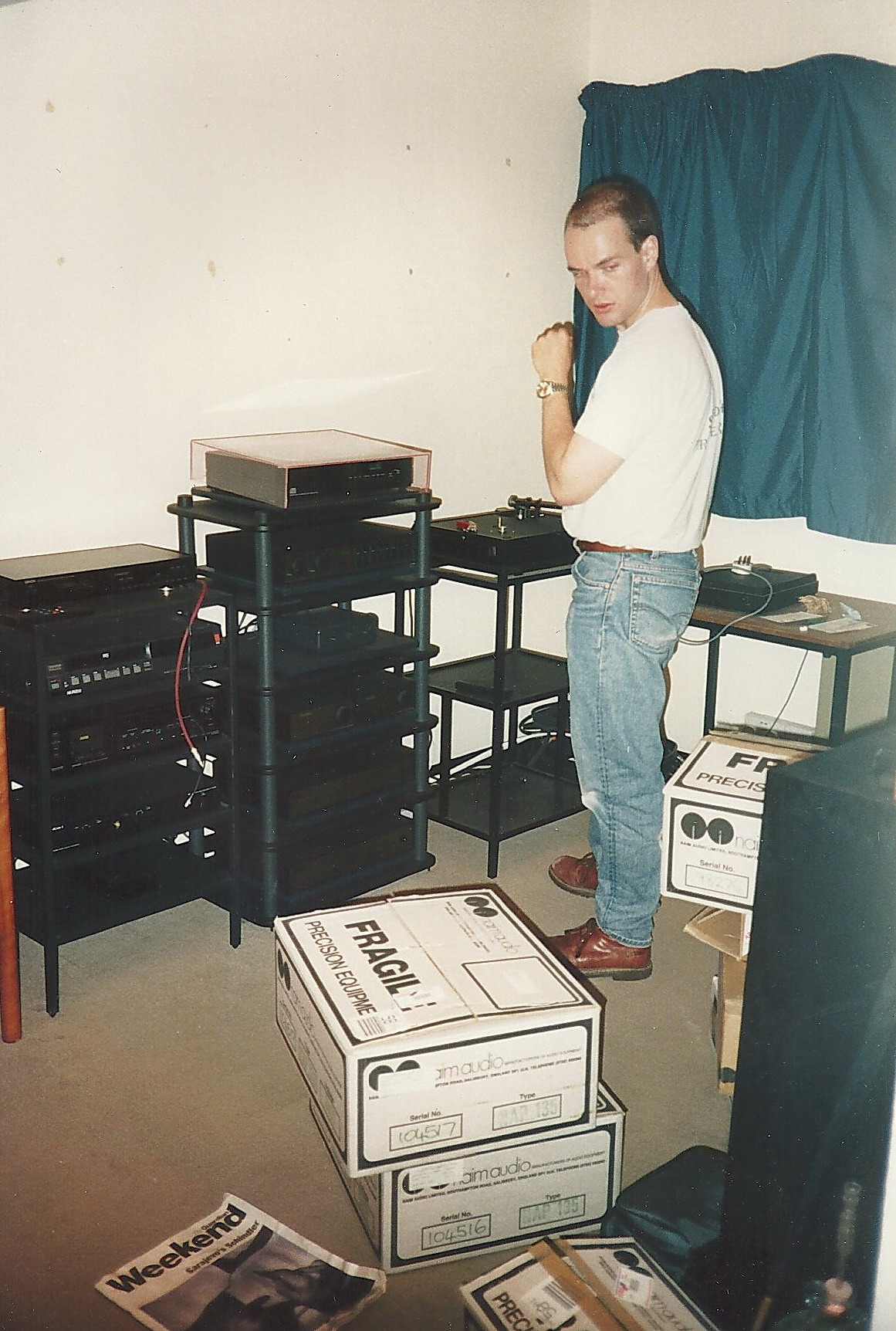
A very young me trying out the flagship Naim NAC 52 / NAP 135 pre-power combination on my Pink Triangle system. Linn Isobariks off to the side out of picture.
I became very familiar with Linn and Naim equipment and sold quite a lot of it. This was during the early to mid-90s, the turning point where Linn made the big push to promote their new range of amps. Naim amps were traditionally and ideally paired with Linn turntables and speakers, but Linn went their own way and also introduced new speakers to complement their amps.
Prior to this, the ultimate Linn/Naim combination was the iconic Linn LP12 with Ekos tonearm, Troika cartridge, Naim NAC 52 pre-amp, a pair of Naim NAP 135 monoblock power amps, and the awesome floor-thumping Linn Isobariks loudspeakers. Some enthusiasts went full-out by bi-amping or even tri-amping their Isobariks with more pairs of 135s!
It was a sound that I sorely missed and will probably never return. Perhaps not as transparent and neutral as some of the best systems these days, but it was so utterly engaging with oodles of slam and depth.
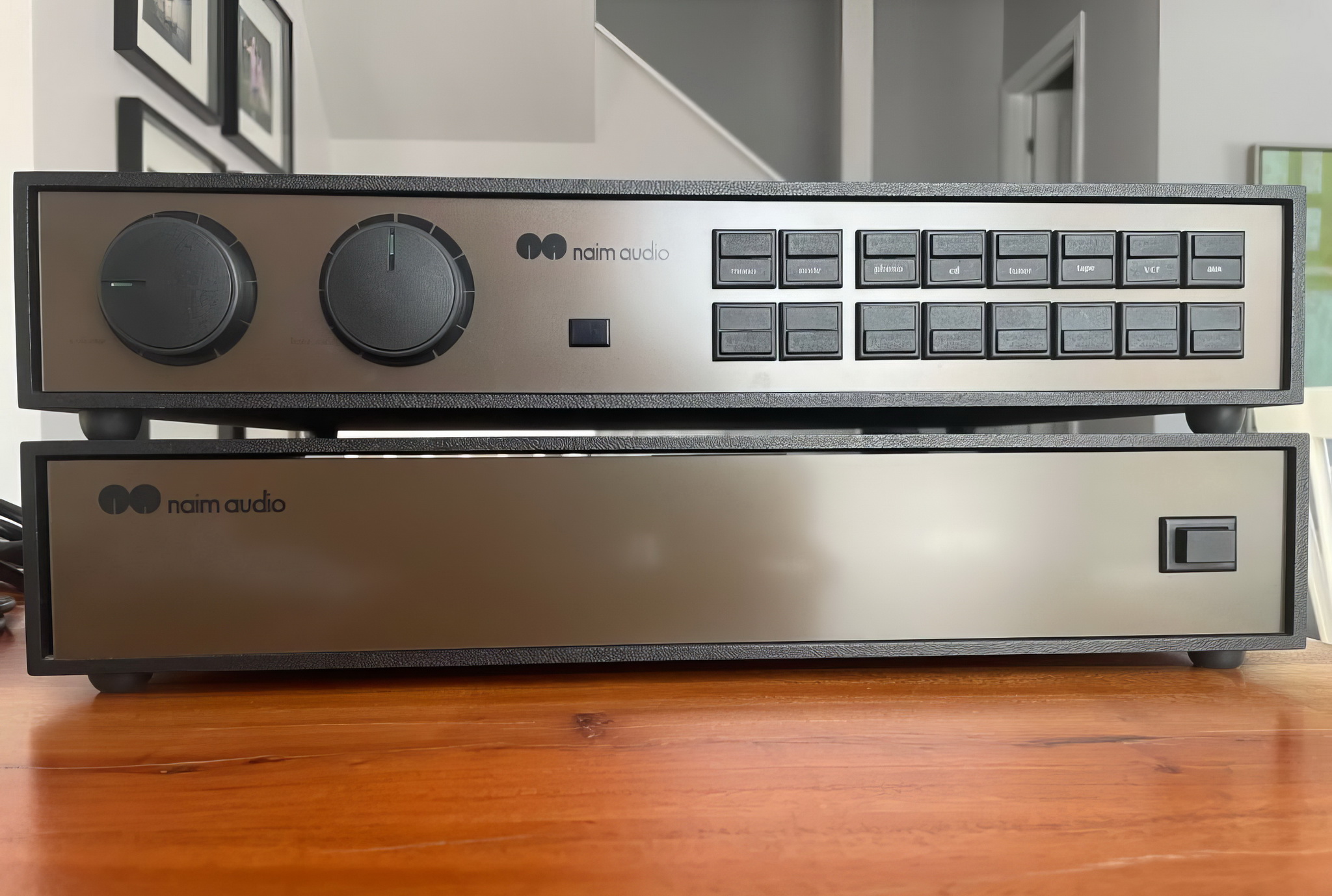
Naim’s flagship pre-amplifier, the NAC 52, with a massive dedicated power supply
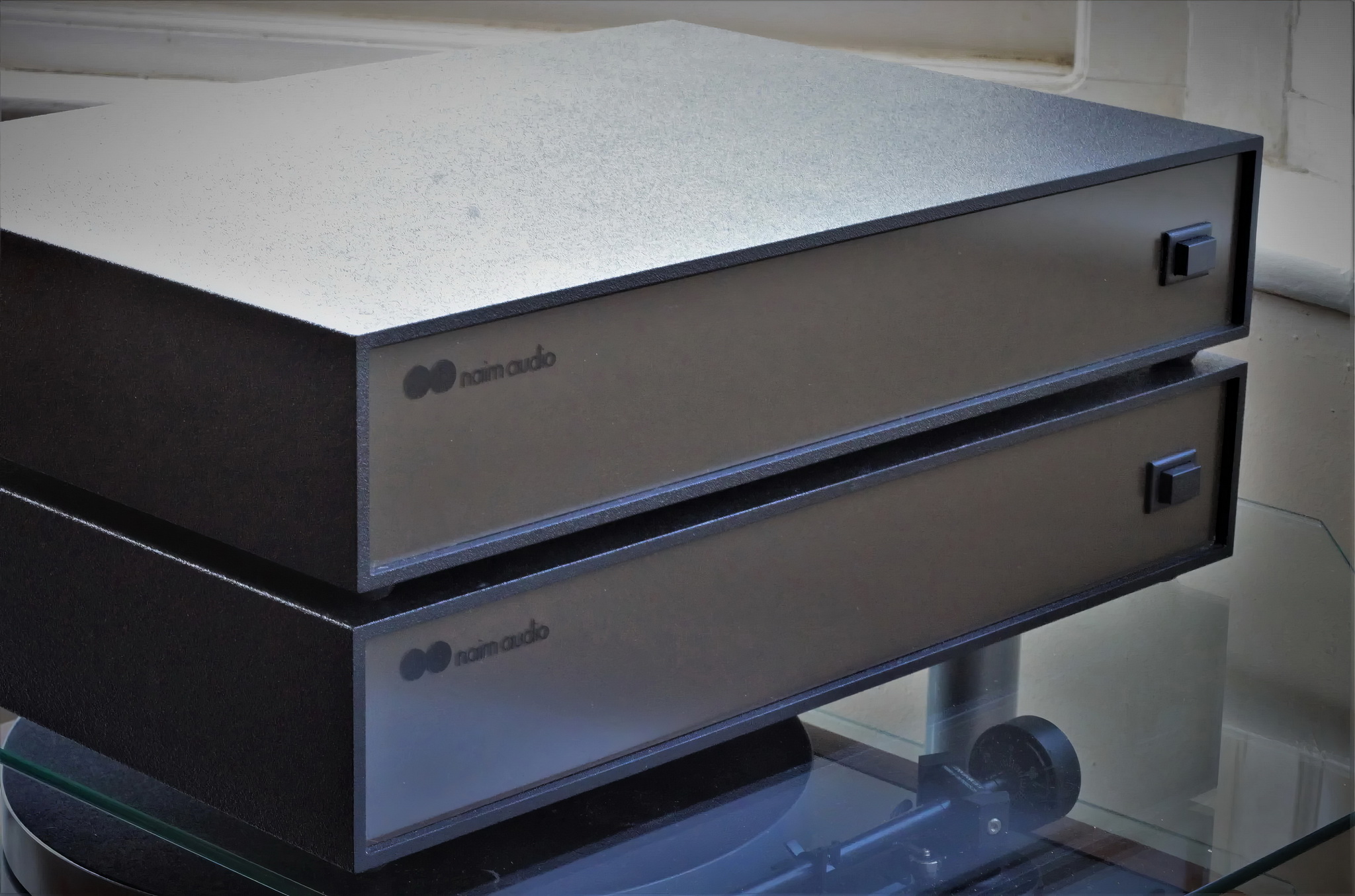
Naim’s flagship monoblock power amps, the NAP 135s
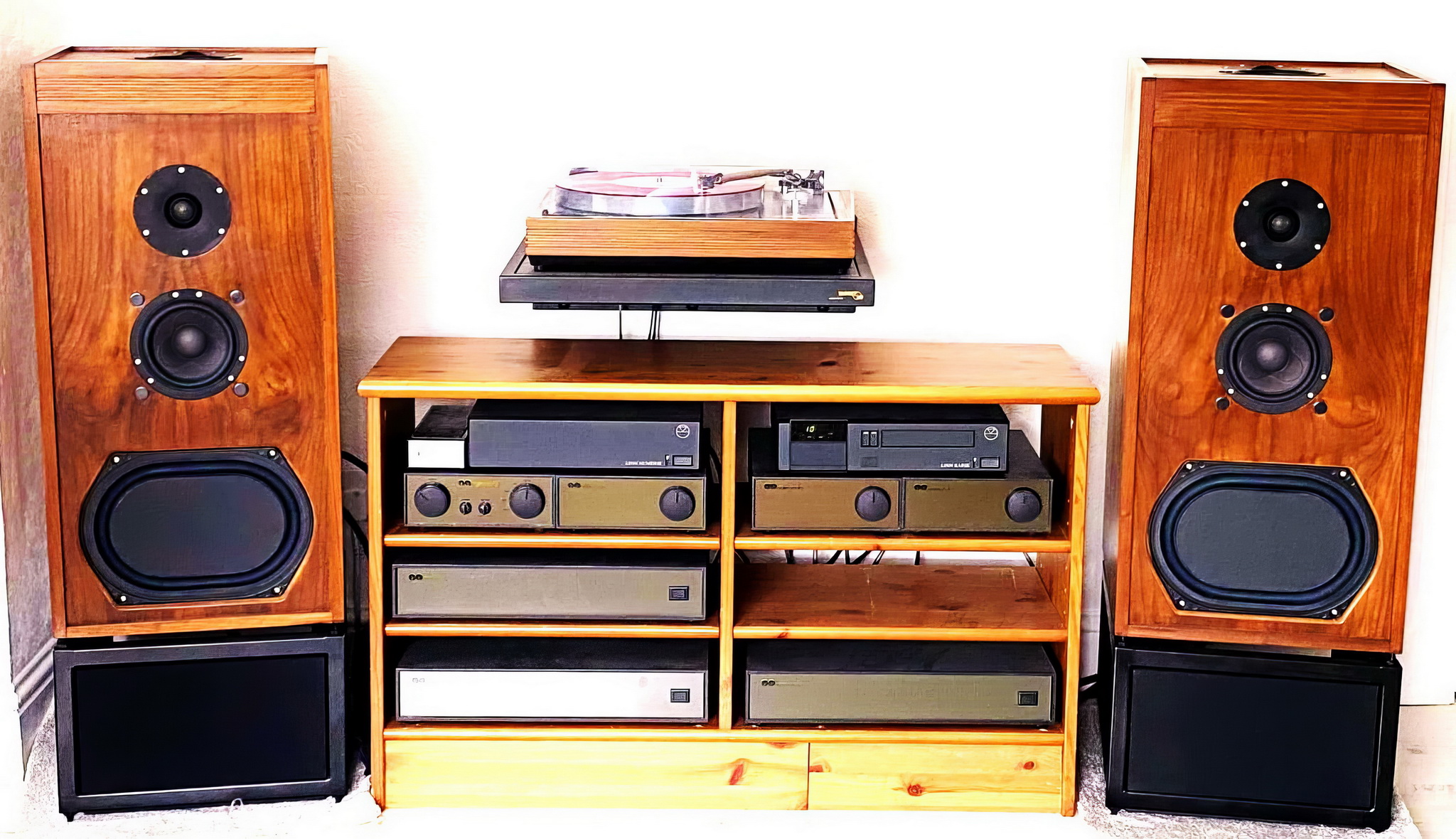
The simply awesome Linn Isobarik speakers pictured here with a typical Linn/Naim system.
On the subject of Linn’s move to being its own line of products, it sparked a lot of debate and discussion amongst us. A lot of us agreed that Linn’s amps had always been on the lacklustre side of things. For example, they had the LK1 pre-amp and the LK2 power-amp. None of us liked them very much likening them to have a bit of a thin toppy sound with not enough depth. They were not in the same league as Naim’s equivalent-priced mid-range amps like the shoebox-sized NAC 72 / NAP 140, let alone their iconic NAC 82 / NAP 250 and flagship NAC 52 / NAP 135s pre-power combos.
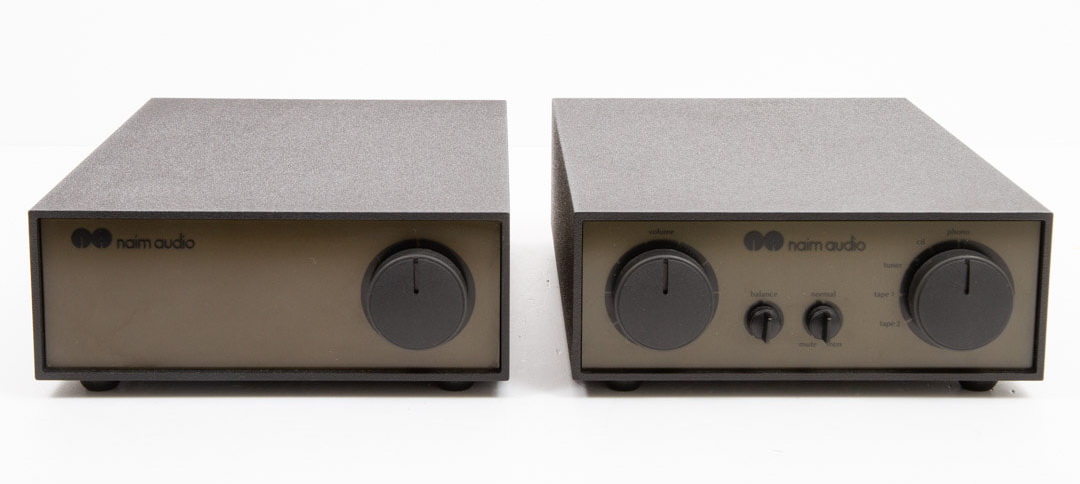
Naim’s excellent-sounding solid and elegant shoebox NAC 72 and NAP 140 pre and power amps.

Linn’s rather lacklustre LK1 and LK2 pre-power amps.
Linn came out with a new line of amps, starting with the Linn Majik integrated amp up to the flagship combo, the Kairn pre amp and Klout power amps.
There was nothing particularly magical about the Linn Majik integrated amp, but it sounded decent enough and had full remote-control capability which, for many, especially in multi-room environments really liked. Linn also developed its Keilidh floor-standing speaker which, to be fair, sounded decent enough and was had for surprisingly little money when compared to other speakers of that ilk. It was a lot of speaker for the money and improved considerably when sources and amps were upgraded.
I sold a lot of Linn Majiks and Keilidhs to happy customers who often came back for more in future years.
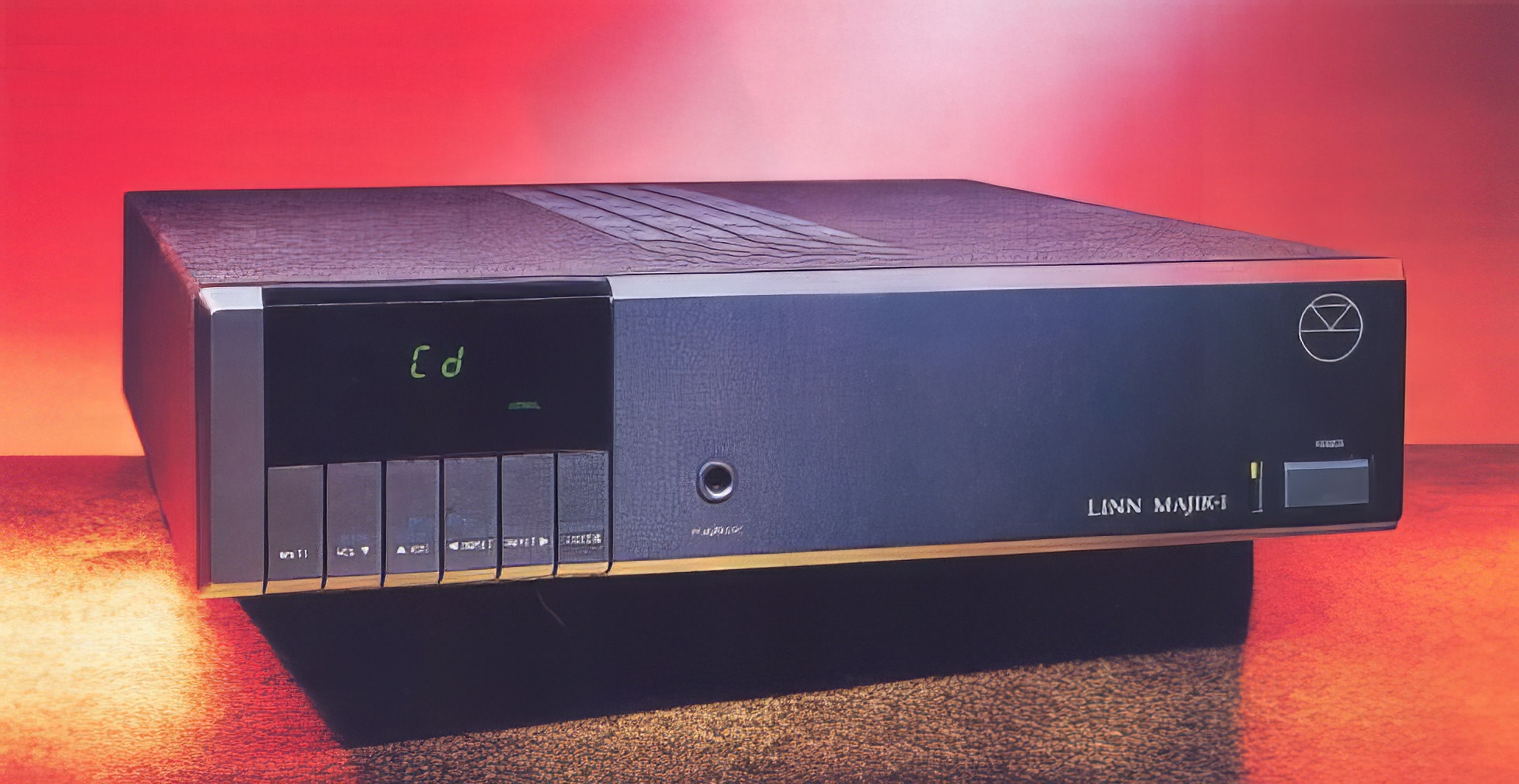
Entry-level fully-remote Linn Majik integrated amplifier
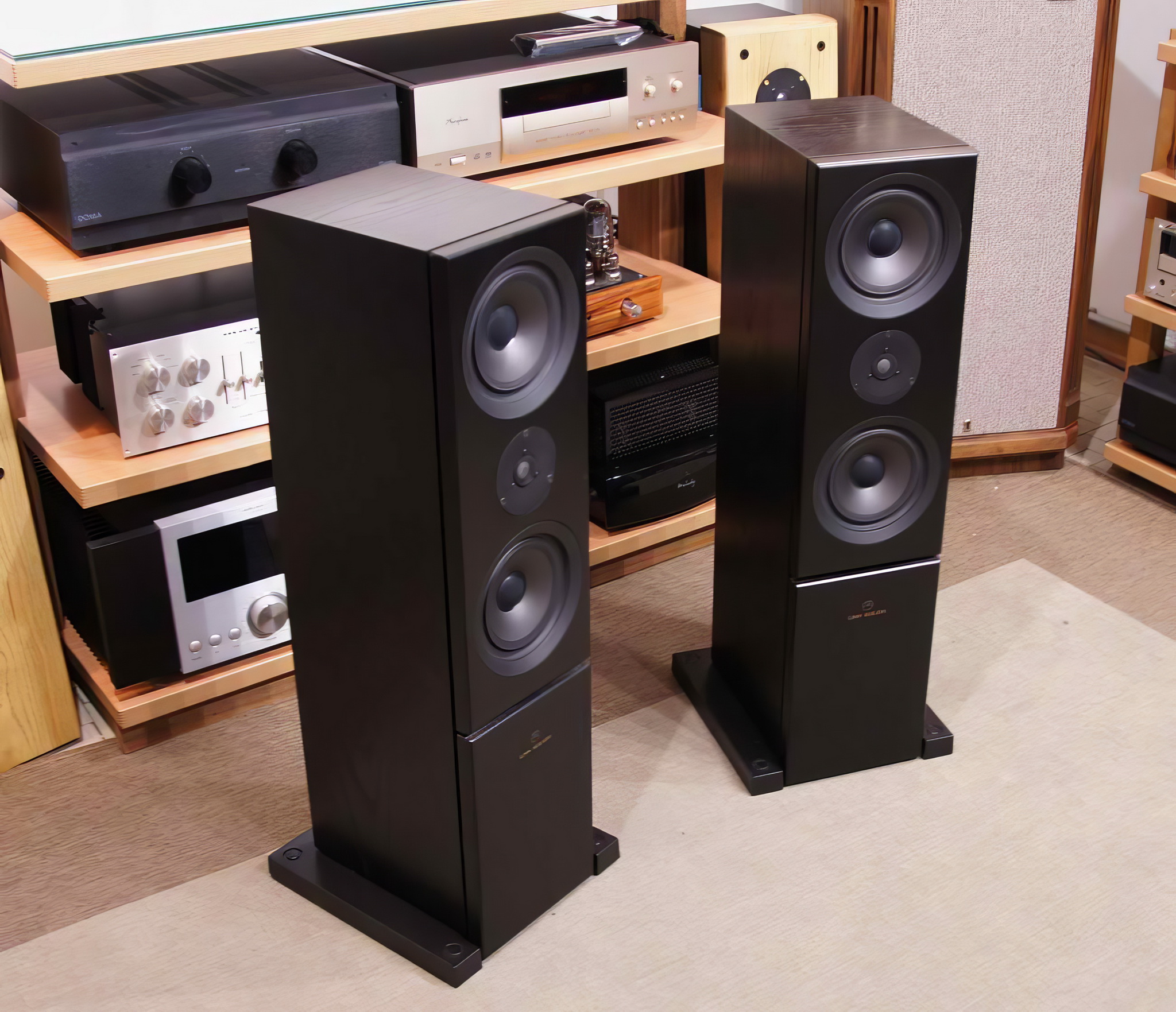
The very popular and reasonably-priced Linn Keilidh loudspeaker offering a lot of bang for your buck.
Linn’s Kairn pre-amp and Klout combination was pretty good and well sought after. Linn designed their equipment, including their Karik and Numerik CD / DAC solution to run in a fully automated multi-room environment. I was sometimes part of the installation team to implement these multi-room solutions, often in townhouses owned by wealthy people in central London.

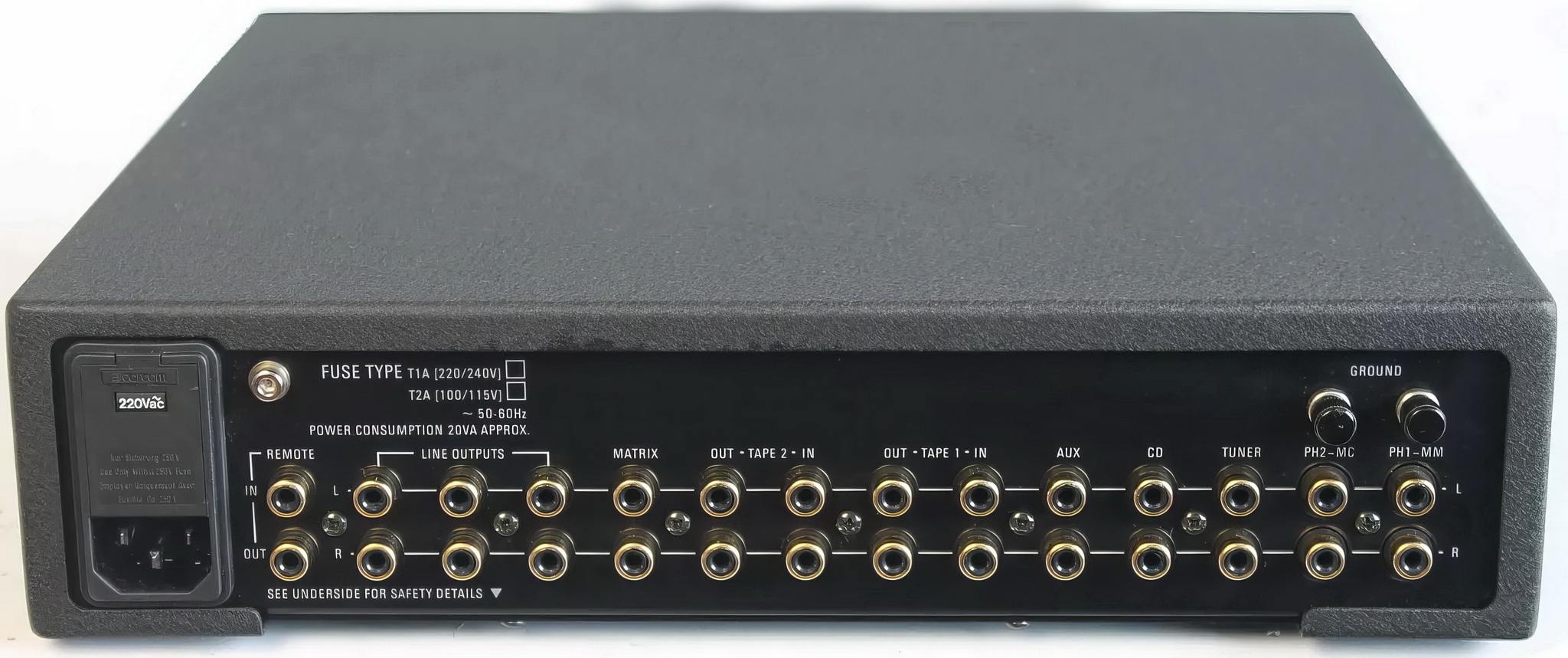
The Linn Kairn pre-amplifier, the heart of Linn’s multiroom system
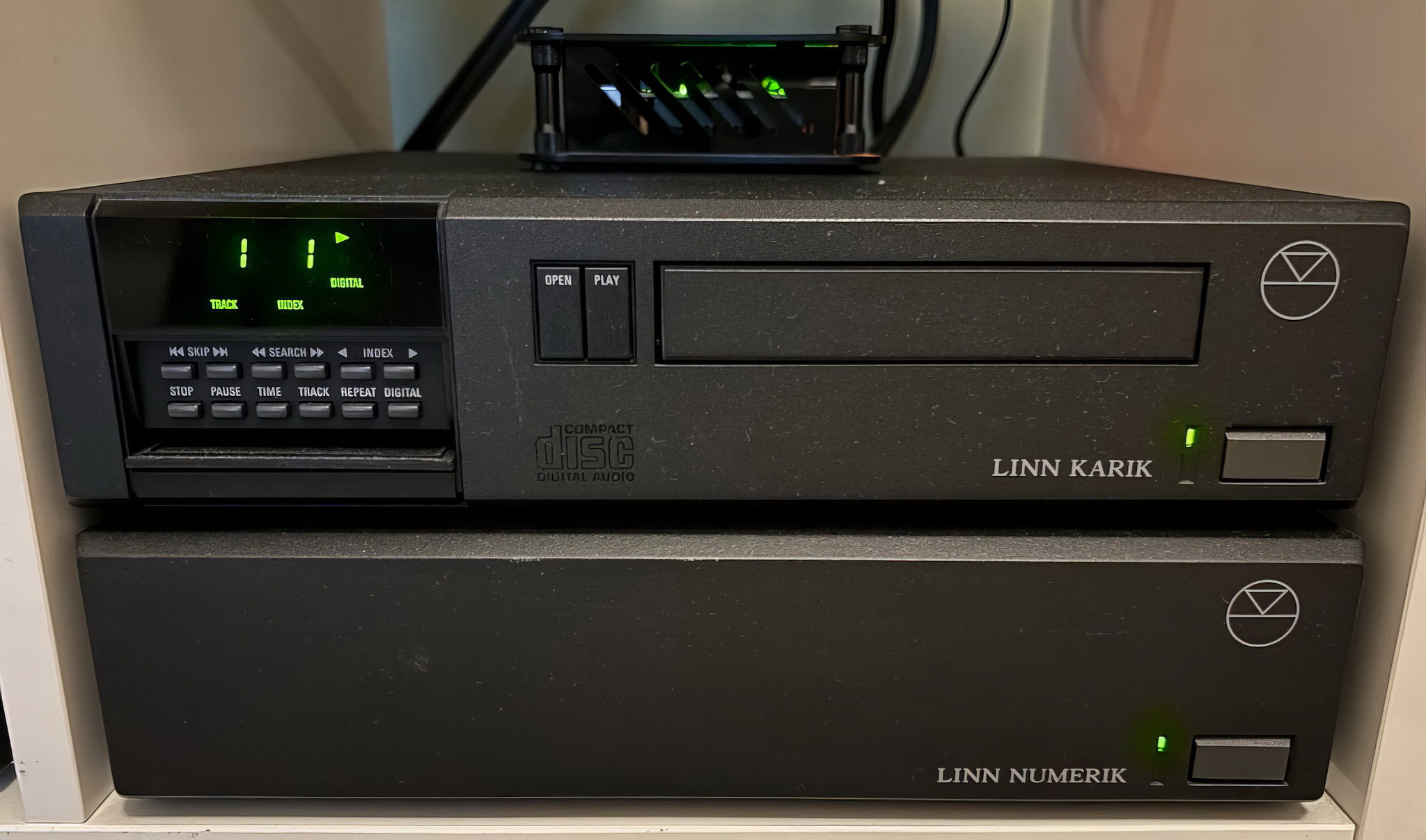
Linn’s Karik CD transport and Numerik DAC solution
The Linn Kairn was a nice pre-amp and it was upgradeable, for example, when Linn introduced its Brilliant switching power supply. It was certainly neutral sounding and transparent, but when matched against its Naim counterpart, the NAC 82 pre-amp, second to its flagship NAC 52, it sounded dull and staid. But this is my opinion, of course.
Naim’s philosophy was entirely different. Big power supplies in separate boxes but with no smarts for multi-room use. Whereas Linn opted for compact boards in small lightweight boxes digitally armed for multiroom use. To keep up with the times in more recent years, Naim joined the digital revolution with its streaming devices.
Linn and Naim are still going strong today.
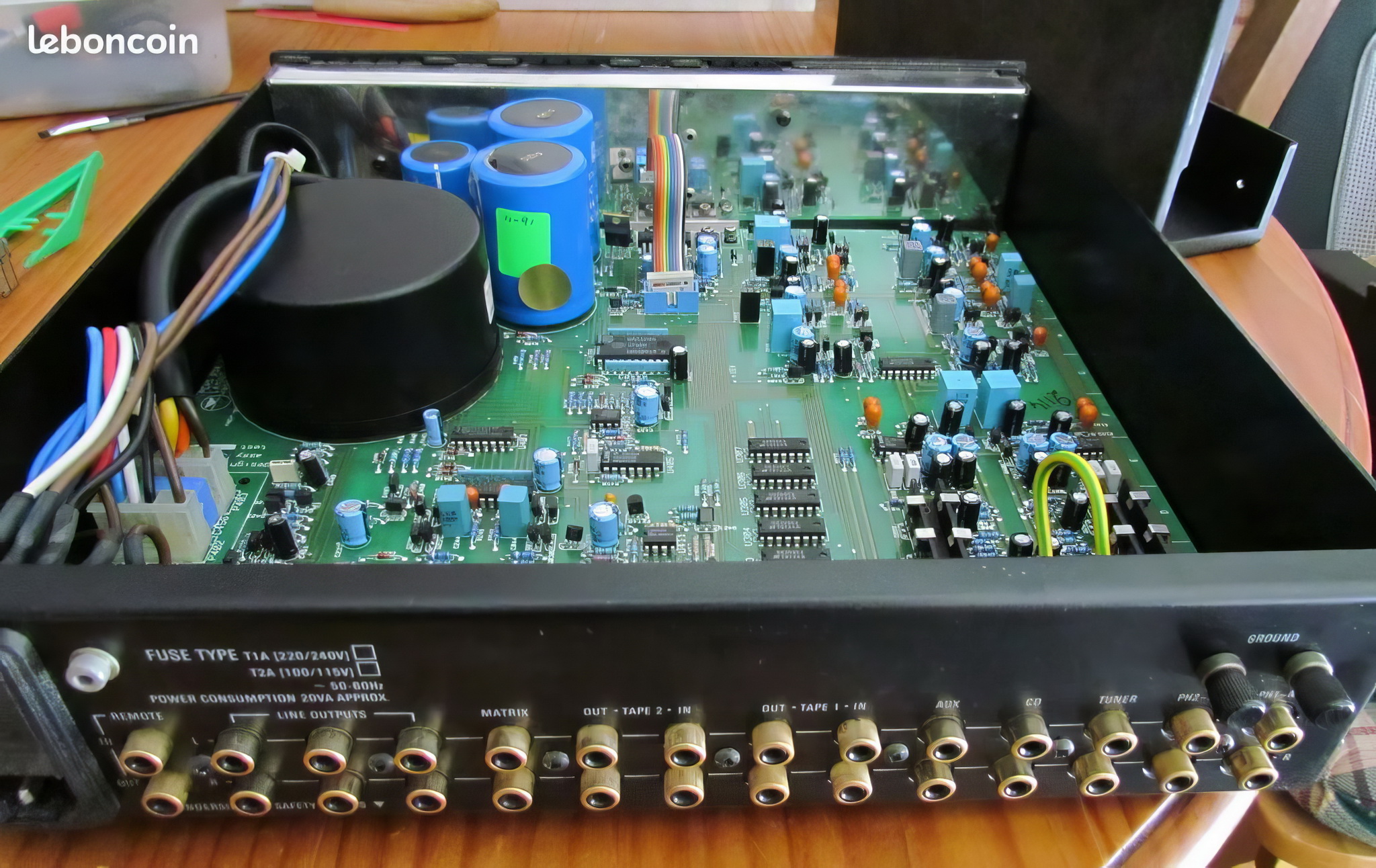
Inside the Linn Kairn
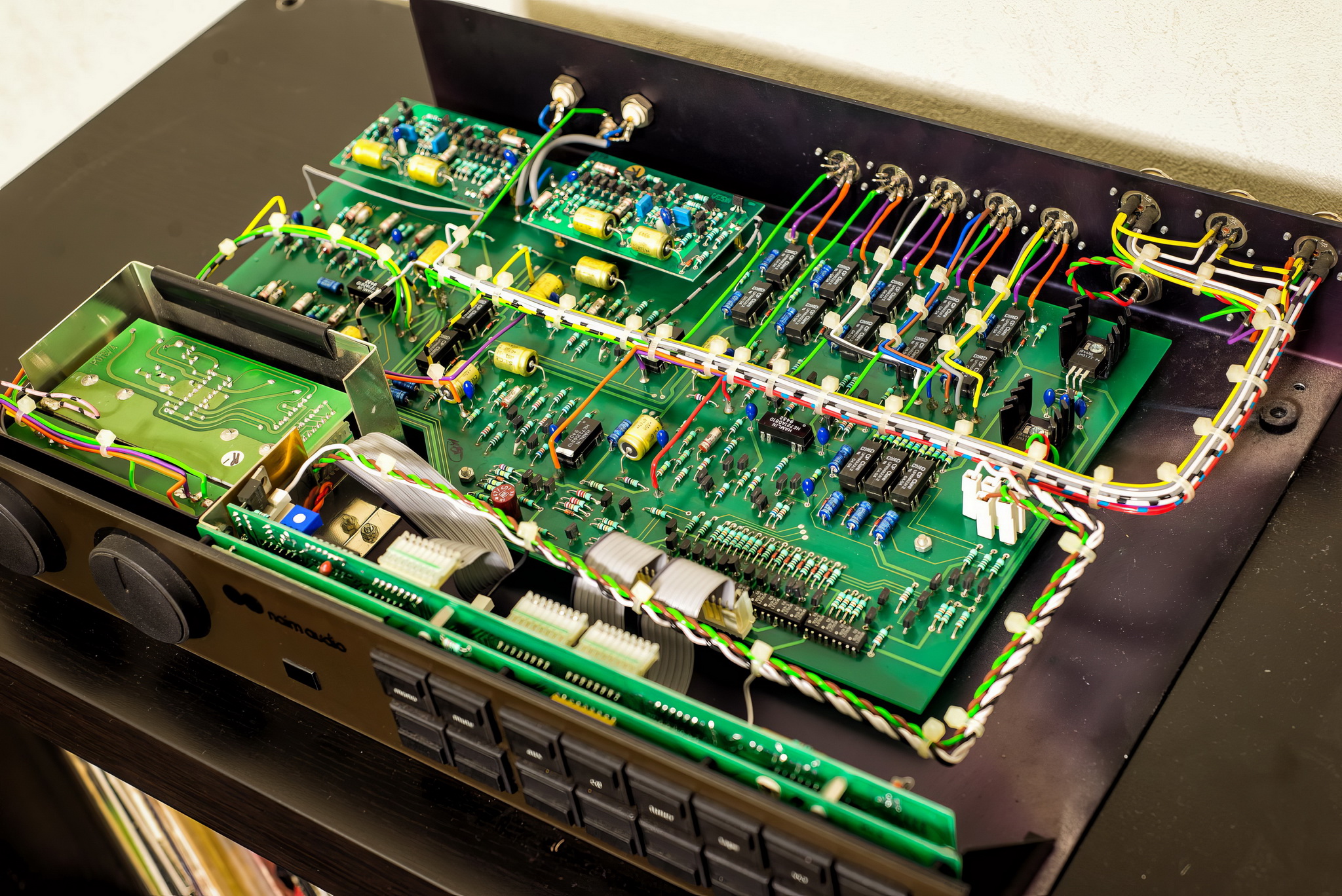
Inside the Naim NAC 82
Linn’s power amp, the Klout, is an exceptional product and still, to this day, is much sought after. It could be chained up for bi-amping or even tri-amping to drive some of the most demanding speakers on the market. It was quick and dynamic, transparent and neutral, and as a bonus, they felt and looked great.
Along with the Keilidh loudspeaker, I think The Klout was one of Linn’s biggest success during this period.
One thing to mention about Naim was its peculiar choice of connection sockets. Instead of RCA phono sockets, they opted for DIN sockets which caused endless issues for our technical team building custom interconnects for customers with components using differing connections.
My personal hell was trying to solder Sonic Violet interconnects into DIN plugs!
I’ve still got a stash of them.
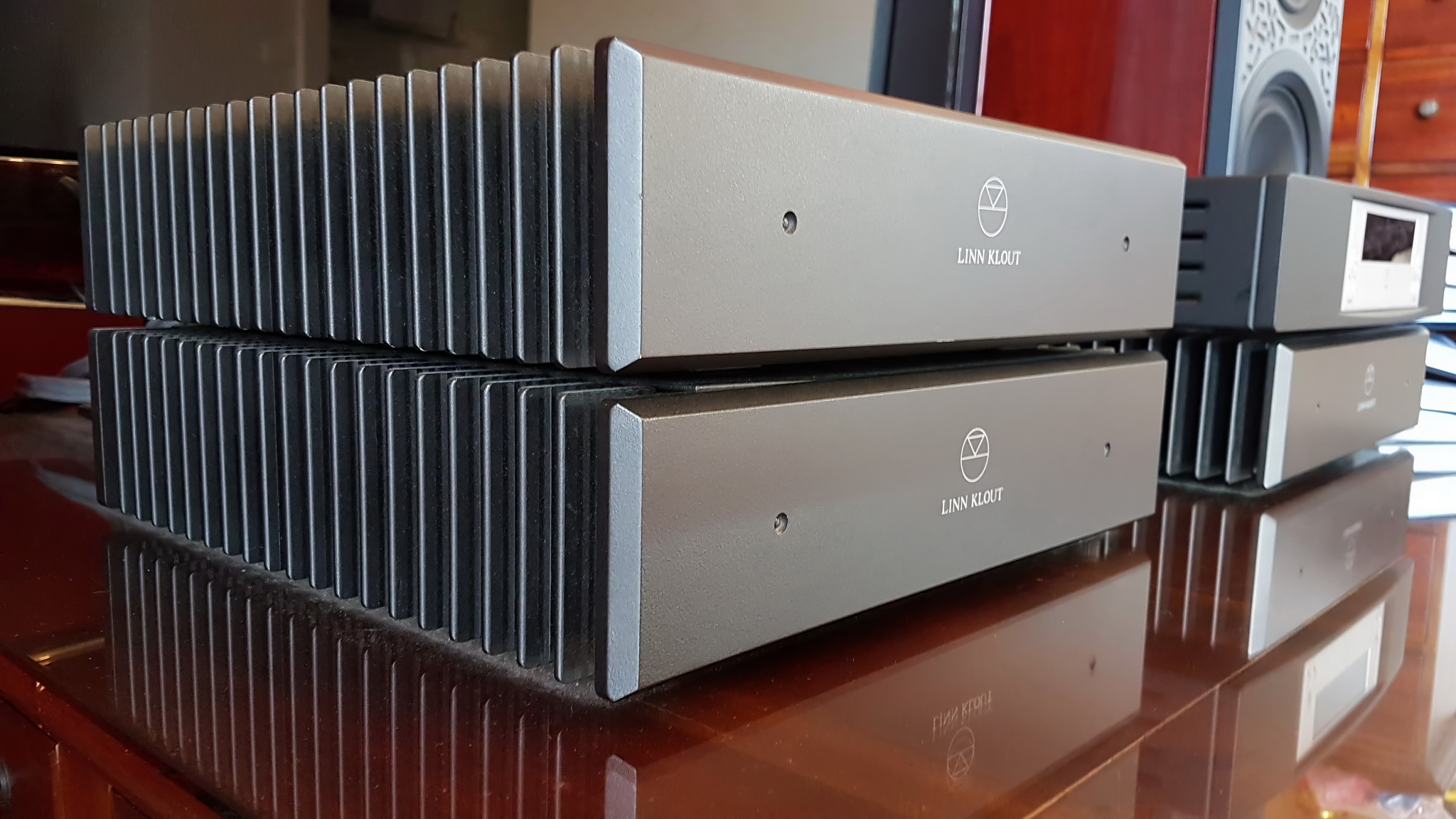
The sleek, slender, but meaty Linn Klout power amp
Ultimately, during this time, I took advantage of the amazing discount and purchased a Naim NAC 52 and a pair of 135s. Not only did I love its sound, but I loved its build and engineering.
Naim prided itself in its build quality. Instead of using printed compact boards of electronics, they went for actual wiring where possible internally. Their power supplies are phenomenal and their philosophy was to house a massive power supply within a dedicated box as with the case of the NAC 52. These were heavy beasts I can tell you. The 135s were very heavy and beefy as well.
As for the case, this easily slid open by undoing four standard screws on the bottom without any fiddling whatsoever. And the case was superstrong, some purportedly claiming that you could drive a car over it without breaking it!
I had also sold my Epos ES14 and purchased a pair of second-hand Linn Isobariks which are quite enormous and takes a strong pair of arms to shift them. I loved these speakers immensely. Not especially the most transparent or subtle speakers in the world, but for action, dynamics, drive, and engagement, they were virtually unmatched.
As soon as I plugged in the Naim amps, I entered into a sonic paradise which I never had before.
At this point, I had the Pink Triangle PT TOO, borrowed a Linn Karik/Numerik CD player, a Naim NAC 52, Naim NAP 135s, and the imposing-looking Isobariks.
Linn’s other speakers in its new range at the time were somewhat disappointing. Notably its flagship speaker, the Keltik, the bigger brother to the Keilidh.
It was boomy and it felt like it plodded along in a boring way. It did work kind of well when each driver had its own Klout, but I think this is a bit of a design flaw, don’t you think? None of us really liked them. We tried everything with the demonstration room to make them shine. We did sell a few of them, but usually for Linn enthusiasts with more money than sense. They were seriously ugly as well!
The Keltik, in my opinion, was Linn’s most horrible piece of kit and when compared to its previous iconic flagship loudspeaker, the Isobarik, it was a total embarrassment.
As an alternative, we supplied a range of amazing open-sounding speakers by Shahinian, an American based company.
We’ll discuss more about them later.

The decidedly dull Linn flagship speakers, the Keltiks
Naim had their own speakers as well. The SBL and the scary DBL.
These were weird floor-standing speakers, the SBL being a three-piece speaker, the parts of which are stacked separated by carefully-placed rubber rings with silicone oil. One of the other guys at Graham’s had a pair of these and he loved them but to get them to work properly, it needed careful attention to this.
The enormous DBL, a much bigger version of the SBL, I had never seen in the flesh, but according to those who auditioned it, described the sound as being extremely upfront, almost to the point of being frightening.

Naim SBL loudspeakers

The crazy-big Naim DBL speakers
I didn’t have a great interest for CDs, but during the early to mid-90s, it was almost impossible to escape the world of them as vinyl had been becoming scarce with many high street retailers abandoning it. Of course, there was the second-hand vinyl market, but for a lot of new material being made, especially in the world of electronica, it was easier to get CDs. For some material, vinyl was available which I tried to snap up, especially eletronica. But they were sold in smaller quantities and not always available. Turned out later that these vinyl electronica albums became to be worth quite a lot of money!
I had been using a variety of CD players, usually cheap and basic ones, but then I borrowed some from Graham’s. I learned a great deal about CD transports and DAC (digital-to-analogue) converters discovering what sound quality I could get out of a CD. I was very surprised, at the time, to learn that using a better CD transport makes a big difference because I thought that all CD transports feeds the same digital bits to the DAC.
I was wrong, because, unlike the digital world in computing, extracting digital bits from CDs are not verified like they are in the world of computing. The accuracy of the stream of bits coming out of a CD transport varies enormously depending on the quality of the machine.
I have to say that I enjoyed the Linn Karik with its Numerik DAC as a sensible CD option. There was also the Meridian 508 which sounded excellent, but having a lot of experience with these at the shop, they were complex inside and often prone to having a fault in the near future.
Frustratingly, they also had a complex remote control which I hated and not included as part of the price.
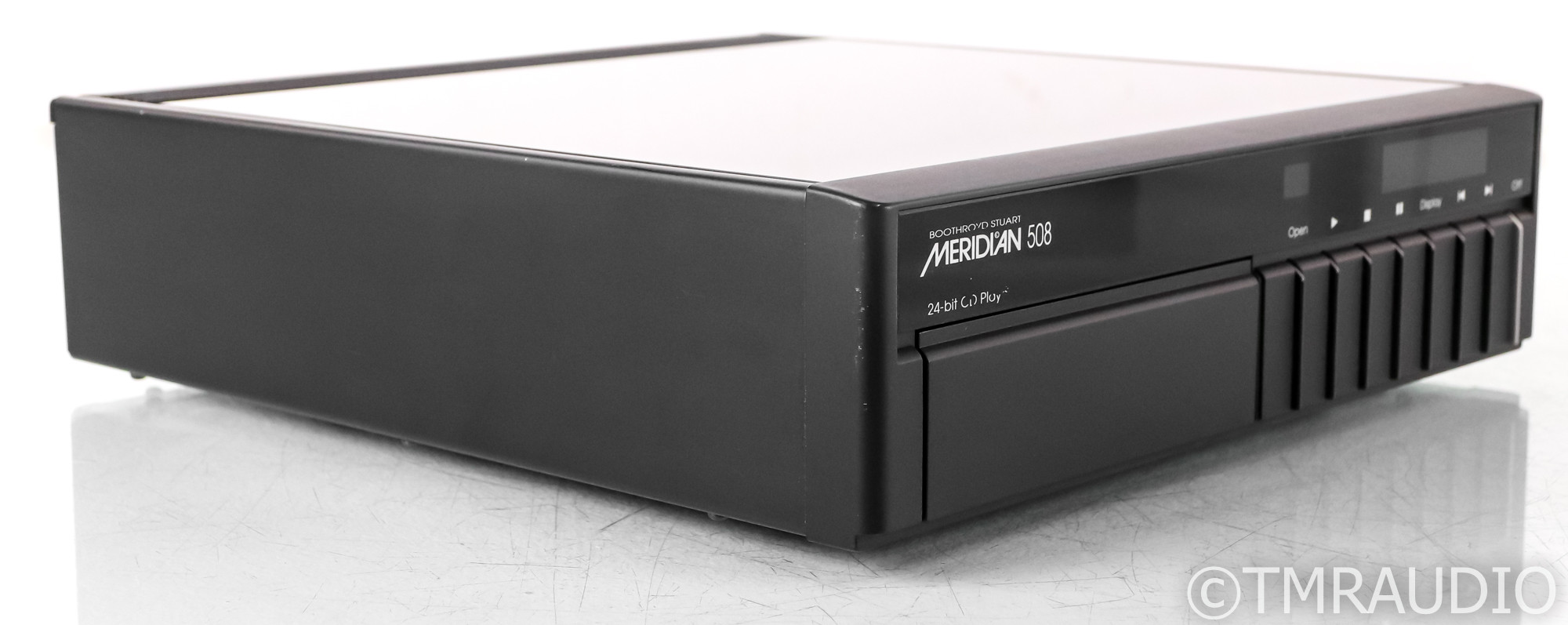
Meridian 508 CD player
To be fair to Meridian, they had a very clean, virtually no-wires solution for those people who wanted good sound without having a proliferation of boxes. I have every respect for Meridian. Although it wasn’t my cup of tea, they had innovation up their sleeve and, still to this day, they are strong. They were connected with Roon, an excellent music management system which I use today to stream music electronic files from my NAS drive to my PS Audio Directstream renderer.
What made Meridian stand out was their digitally active speakers being fed by intelligent all-in-one streaming devices and CD transports. Their products were also beautiful in design, with speakers adorned with a glossy piano-quality finish as well as their components. In essence, provided you weren’t into turntables, you can have one Meridian CD transport and one pair of Meridian active speakers connected with an inconspicuously thin cable feeding them from the transport. Forget all the rat’s nest of wiring and multitude of boxes. And that was it!
For me, personally, I thought the sound was a tad too mellow and didn’t quite have that edge which I wanted, but hey, it was a great sound all the same. They also had the same problems which afflict many complicated digital products. They become faulty and hard to repair.
Meridian Audio were one of the pioneers of blending high-end audio into the audio-video (AV) market and introduced such components like the Meridian 568, their digital surround processor, which certainly augmented the quality of sound in home cinemas.
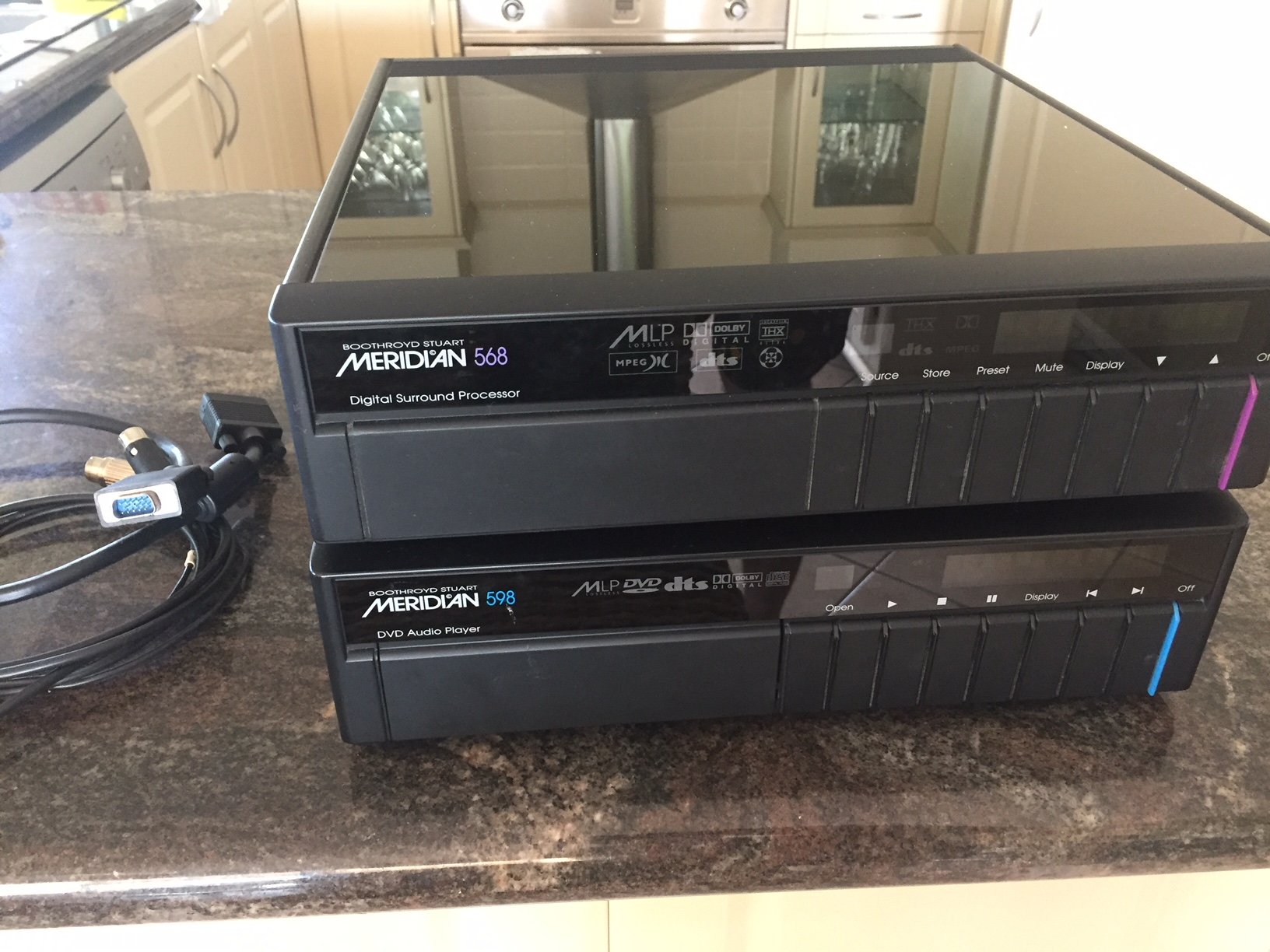
Meridian Audio 568 digital surround processor with a 598 DVD audio player
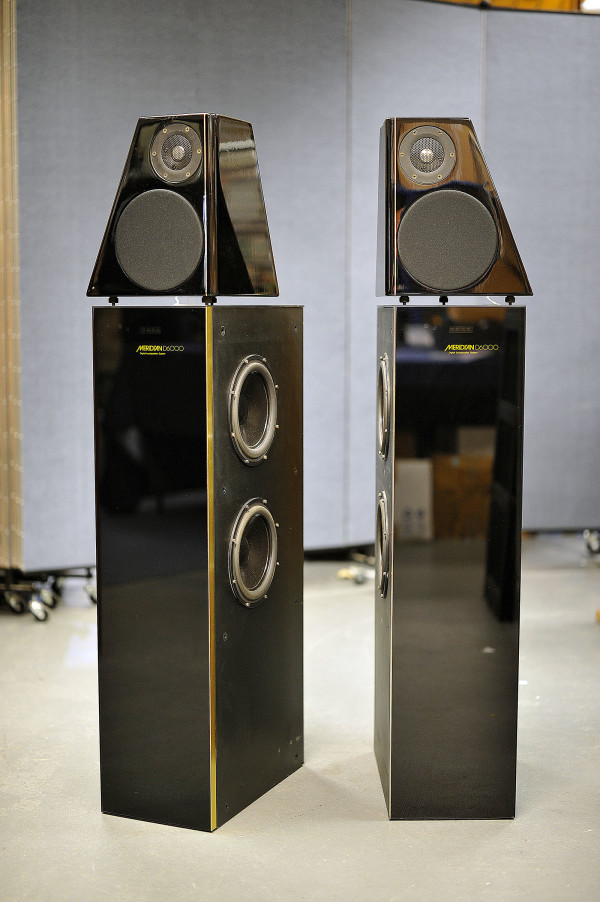
One of many digital active Meridian Audio DSP speakers
The most exciting CD player we had at Graham’s was a bit of peculiarity. It was Naim’s flagship CD, the CDS. Like the NAC 52 pre-amp, it was a two-box affair, the second box being an entire dedicated power supply. So rather than dividing the CD playback system with a transport and a DAC, Naim divided the CD and its power supply.
Typical Naim!
A great big fat scary looking cable with something like a dozen pins connected the two boxes, as with Naim’s NAC 52 two boxes, the same principle being applied with the dedicated power supply philosophy.
The Naim CDS was unique and beautiful.
Rather than your typical Phillips or Sony standard CD mechanism, it had this lid that you lifted, and then having the CD secured with a magnetic puck that acts as the spindle. You can see the CD spinning around through the smoked glass panel.
The sound was just incredible. Nothing like I heard from any CD player. In typical Naim fashion, it was breathtakingly energetic and dynamic.
But it did have a weakness. It was sometimes fussy with CDs and tended to reject playing them. The puck had one tiny little bit of rubber which sat between the puck and the CD, which sometimes made the spinning a little off-balanced. But, being innovators at Graham’s, we put two more little extra bits under the puck to make it symmetrical and it worked beautifully. We had heated debates whether it made any detrimental difference to the sound by making this modification to the puck! So what we did is to give the customers two pucks. One with one little rubber bit and the other, with three!
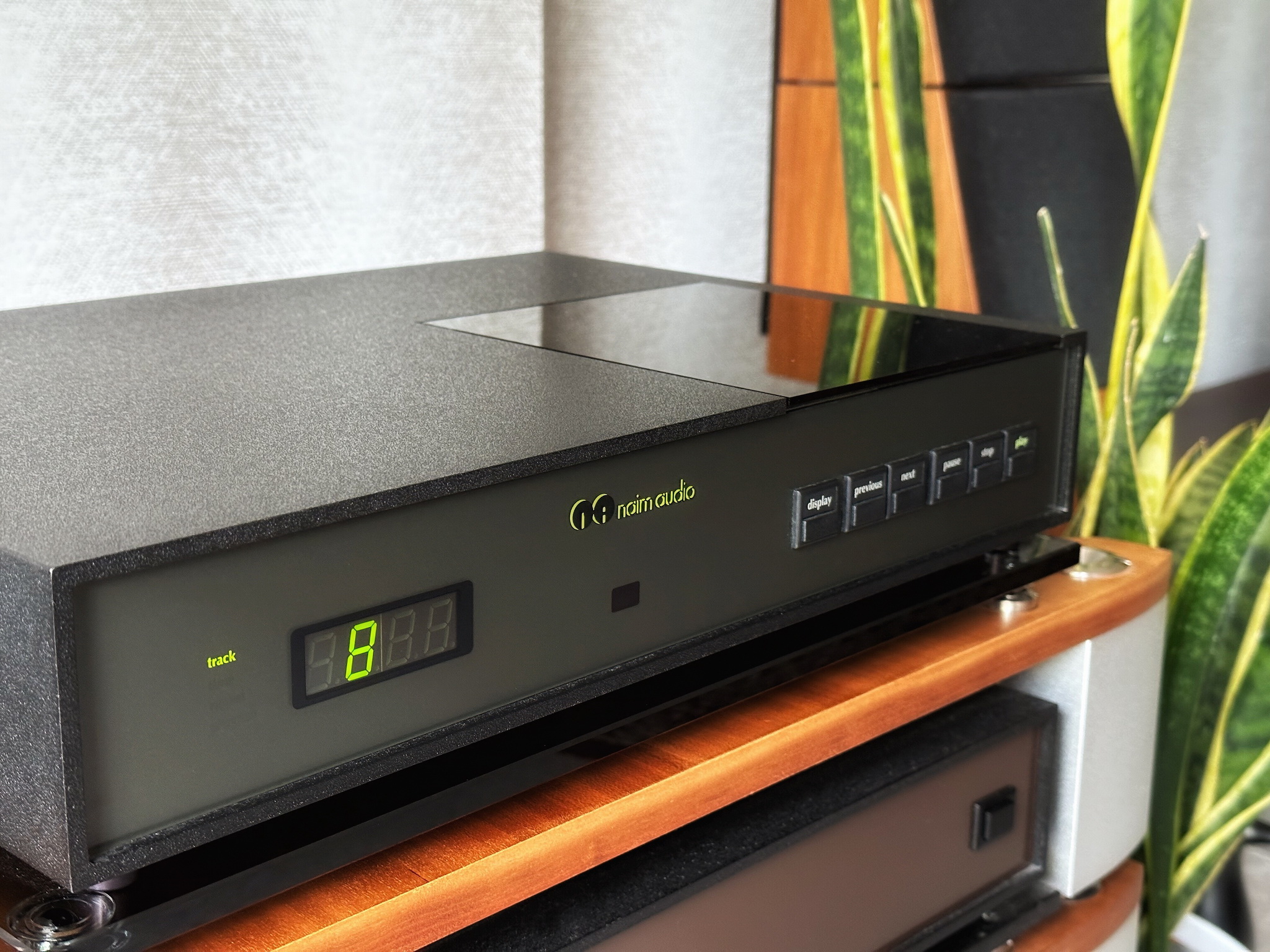
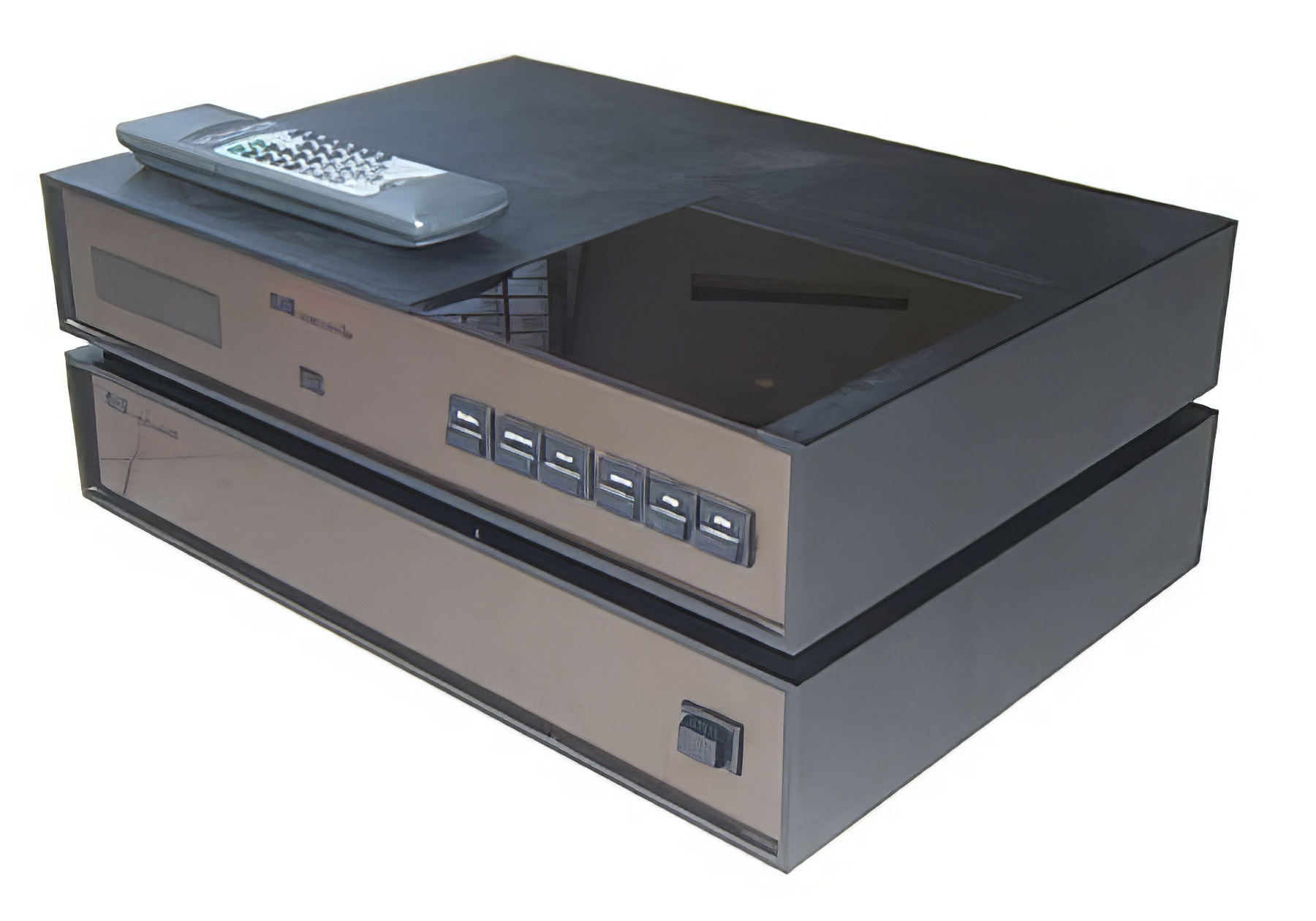
Naim’s eccentric but exciting flagship CD player, the CDS
During this time, there are a couple of other pieces of hi-fi which I stumbled upon, and they are both tuners.
Now, I’m not really into high-quality FM tuners, but there was one which, I’d say is the crème-de-la-crème of tuners.
The one-hundred-percent analogue and manually operated, FM-only Naim NAT 01 FM Tuner.
Provided you had a good antenna, there was nothing like it. It had the best sound I ever heard for an FM tuner making my Denon tuner sound tinny. The UK had, and probably still does, have a good collection of FM stations. For example, BBC Radio 3, is famous for its classical music and it has been transmitted at very high quality for many years.
And yes, the NAT 01 had its own dedicated power supply, of course!
Wish I had one of these beautiful units.
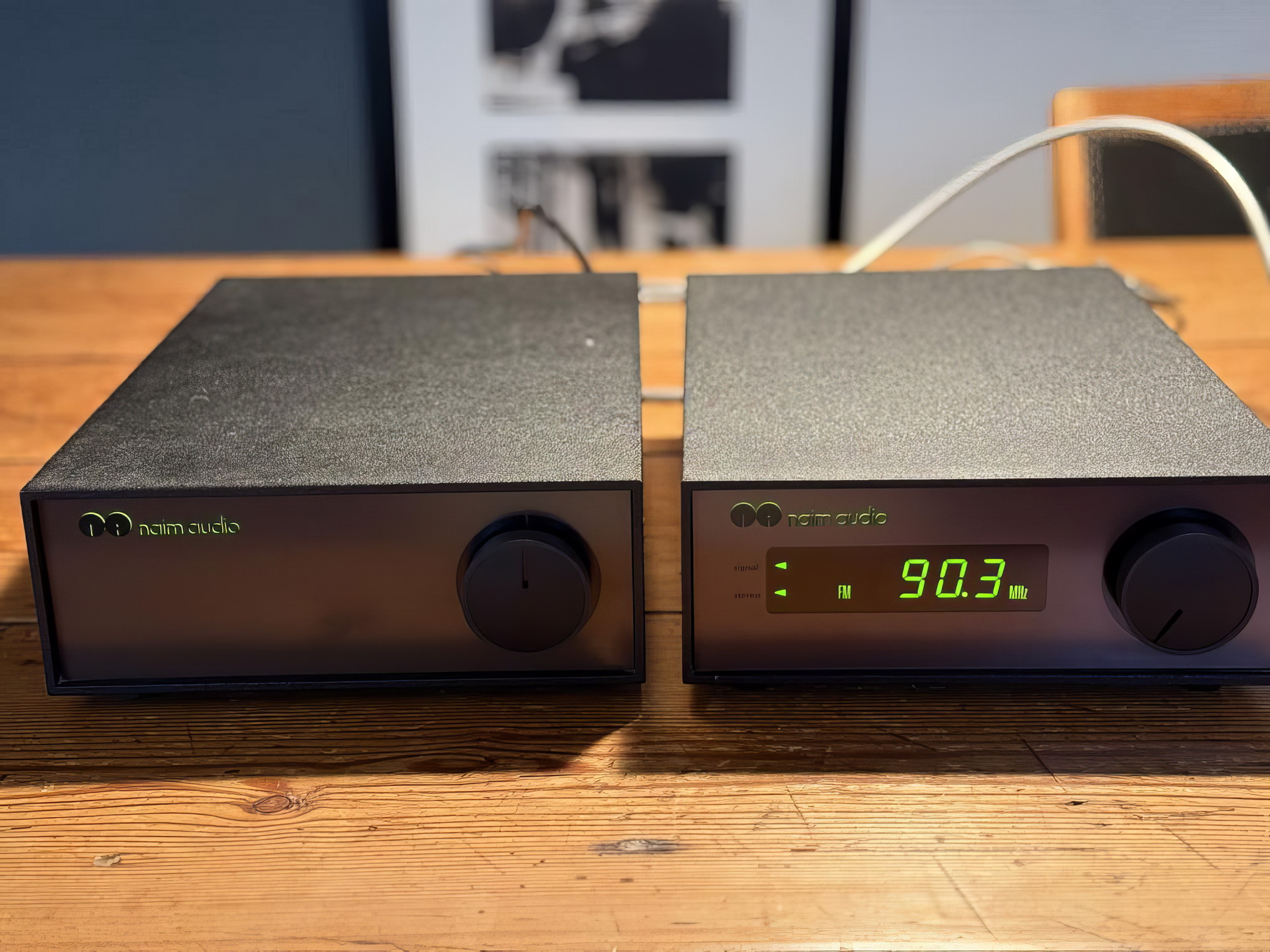
The supremely awesome Naim NAT 01 FM tuner.
The other tuner I stumbled upon is now obsolete, but it completely redefined the sound that I got from watching network TV.
It was the Arcam Delta 150 which was a NICAM tuner. NICAM stands for Near Instantaneous Companded Audio Multiplex, and, not wishing to boast, I did not look that up because I still remember the acronym! And yes, it is companded, not compounded.
In those days, some TVs were fitted with NICAM to convert the TV signal audio to stereo, but most of these NICAM units were pretty ordinary in sound quality. However, once plugging in this Arcam Delta 150, I never could believe that I could get such good sound from conventional TV. It was an ear-opener! I was watching BBC documentaries, Channel 4 movies and TV sitcoms with beautiful stereo sound that I thought never existed when aired.
But that was then, and now, these days with digital TV and streaming, this component is now just a sentimental souvenir.
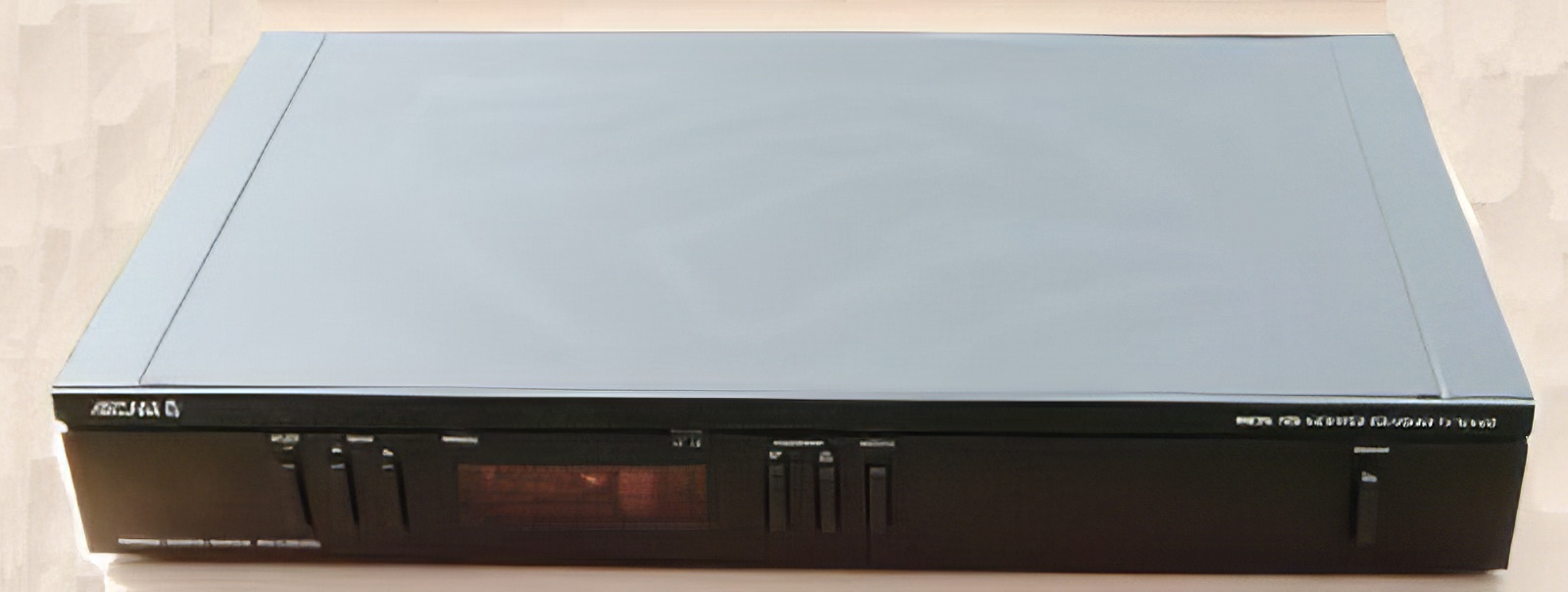
Revolutionary at the time, the Arcam Delta 150 NICAM tuner
Civil Engineering Days in the south of England
During the next couple of years from 1995 to 1998, I moved to Ashford and worked as a graduate civil engineer. I had the same gear and used it extensively.
Namely, the Pink Triangle PT TOO turntable, Naim CDS CD player, Naim NAC 52 pre-amp, Naim NAP 135 power amps, and Linn Isobarik speakers.
During this time, I was heavy into electronica including IDM, techno, ambient, trance, and all that sort of thing. Thankfully, I had rented a house with thick walls which meant that I could crank up my Isobariks to unacceptable levels.
They were good days. I was on a health trip. Played lots of sports, went to the gym, but went out on benders during Friday and Saturday nights with my buddies from work.
Unfortunately, during the winter freeze in 1996, I had a catastrophic water mains burst which flooded the house from the ceiling down. Except for my Naim equipment, some of my hi-fi was destroyed. My Pink Triangle table was in tatters. But woefully, my wonderful Isobarik speakers were beyond repair. Thankfully, I encased every LP with heavy 400g neoprene covers so they were spared. But the Naim equipment, with their robust cases, escaped the damage.
The British, while being great inventors, seemed to have lost their mind when they decided to adopt the idea of putting water header tanks in their lofts!
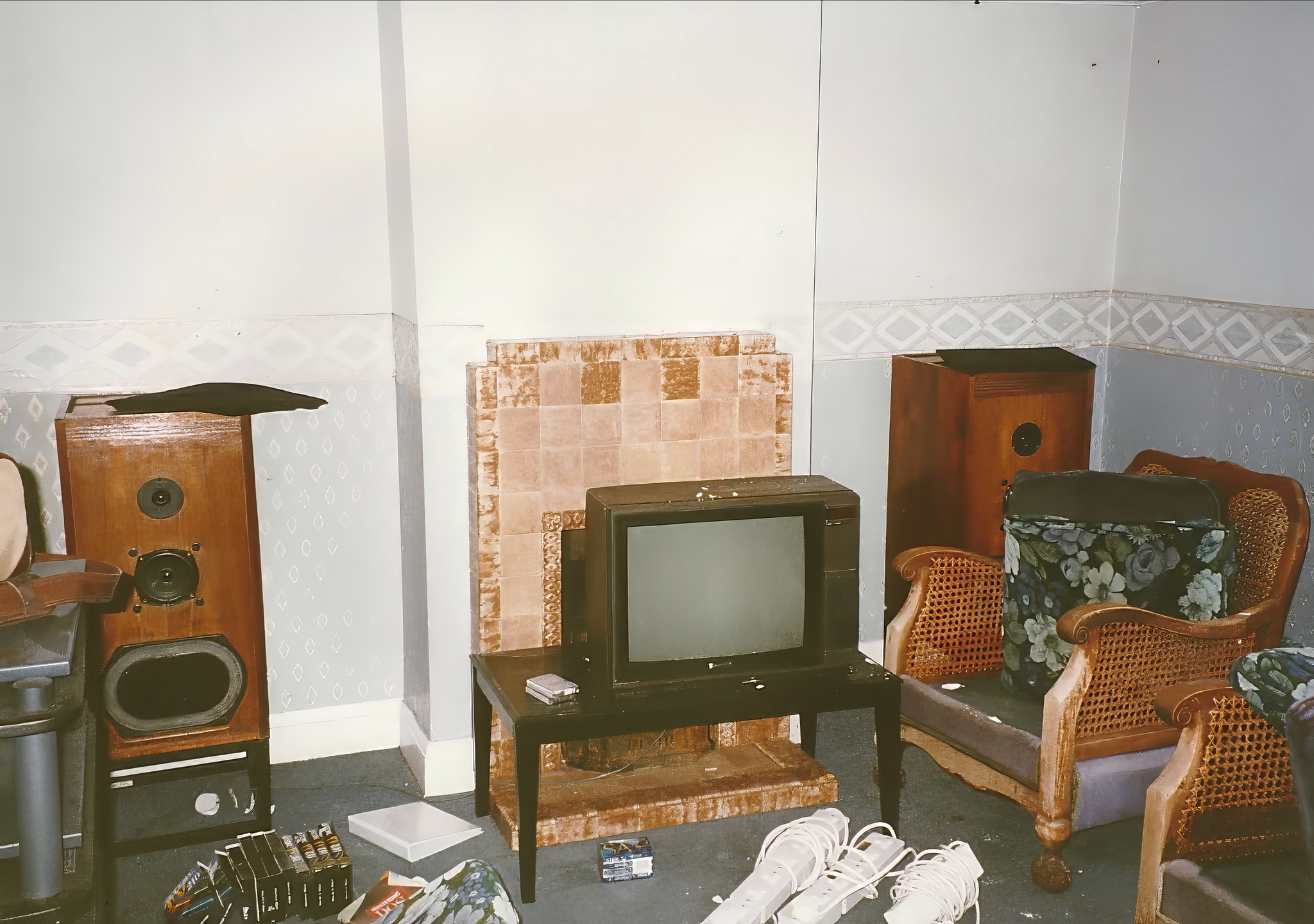
My poor Isobariks after water damage from burst header tank in loft
I filed for an insurance claim and they requisitioned from Graham’s, a brand spanking new Linn Sondek LP12 with Ekos arm and Arkiv cartridge, the top end at the time. As for speakers, I got a pair of Shahinian Obelisks, which I will discuss shortly.
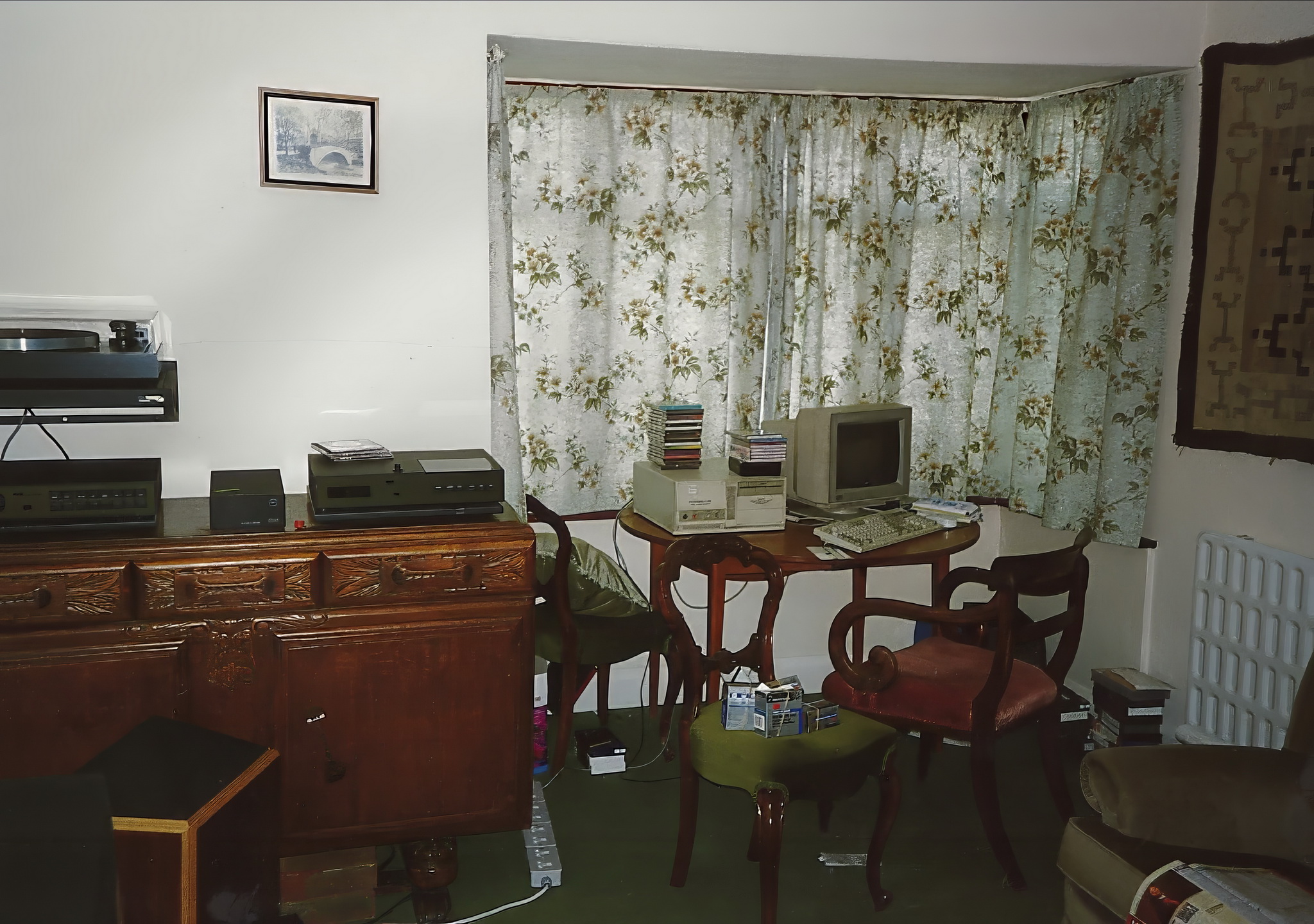
My messy living room after water disaster with Linn LP12/Ekos/Arkiv, Naim amps (most in wooden cupboard) and CDS and a bit of Shahinian Obelisk speaker showing in the lower left corner
Let’s start with the new Linn turntable.
It was the top end of Linn at the time, but sadly, I was disappointed. I loved my Pink Triangle and, to this day, I don’t remember why I chose to go for the Linn as an insurance replacement. The Linn Arkiv cartridge was really problematic as it sometimes popped unexpectedly, which was quite nasty because you never knew when the next pop would happen. And when I mean pop, I mean POP!
Now, we must talk about Shahinian loudspeakers.
I met the portly friendly American founder of Shahinian whilst working at Graham’s Hi-Fi. His design of loudspeaker was so outrageously unconventional that it left us debating furiously about it at Graham’s for quite some time. By the way, I worked Saturdays at Graham’s for some extra cash.
At Graham’s, we sold Shahinian loudspeakers, which were the most beautiful looking wife-friendly speakers I’ve come across. But Shahinian threw the book of conventional speaker design out the window. Gone with the spikes in the floor, the exact positioning, and that so-called sweet spot. These speakers could fill the room in such a way that most speakers could not. Not only that, they were on castors. You know, like castors, as they use on trolleys? No damage to floor. Easy to move. And they sound sensational. Wherever you are in the room!
They were not cheap nor were they ridiculously pricey either. Our most popular sale was the Shahinian Arc speaker, and I have to say, they offered amazing value for what they delivered. Whatever quality of the source or amp you upgraded to, the Arc would reflect this effortlessly.
Unlike most speakers, this has absolute 3D imaging of sound. It’s like the singer is virtually there, right in front of you. A friend of mine by the name of Shane who often visits me, notes this every time he comes around for a listen.
However, every speaker has its flaw or specific strength.
Whilst the Shahinian speaker has amazing transparency and depth combining the strengths of an Apogee Magneplanar magnetic ribbon speaker or a Martin Logan electrostatic speaker with a transmission line conventional speaker, it didn’t quite have the slam and energy of the Linn Isobarik speakers.
Damn! I miss those speakers!
But the Arcs were exceptional speakers. And beautiful. I sold a lot of them to very happy customers.
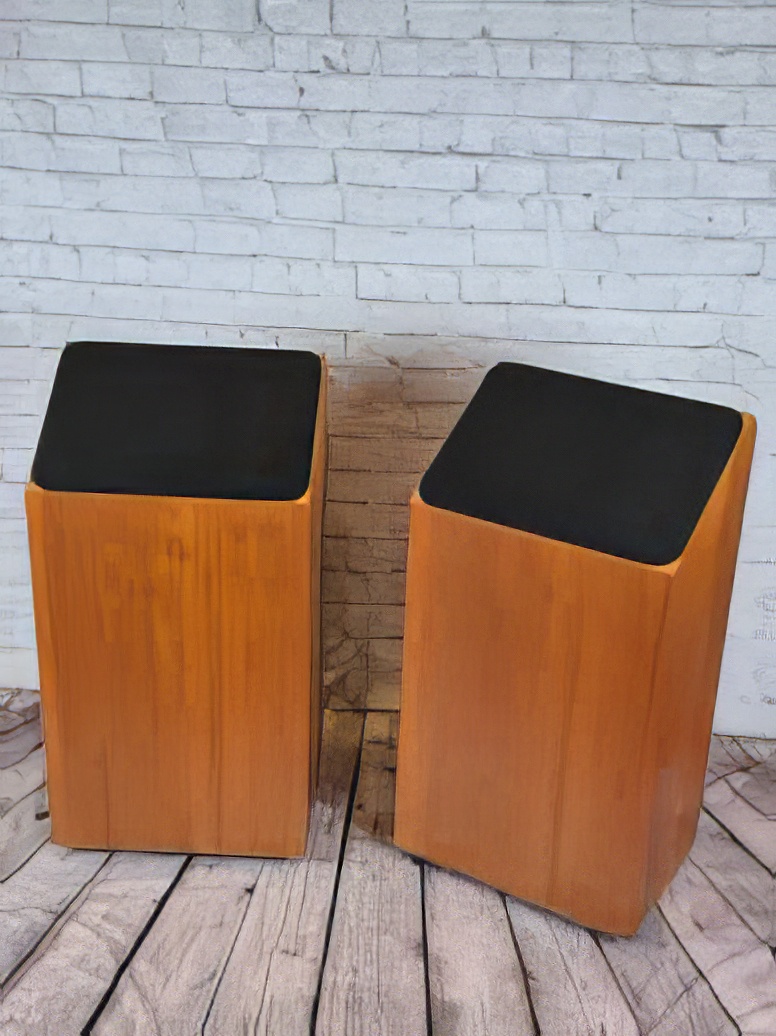
Shahinian Arc loudspeakers
The original Shahinian loudspeakers was the next level up, the Obelisks. Speakers which I still have to this day, although I had the speaker drivers updated in future years.
The Obelisks are beautiful and suited to most rooms. Not only that, the Obelisks went deep. Very deep in frequency at something like 28 Hz or so.

The sublime Shahinian Obelisk loudspeakers
Shahinian’s flagship is quite something else. None other than the awesome Diapasons. I heard these in action with the founder of Shahinian. He played an organ piece on it and it sent actual shivers up my spine. For organ lovers, a 32’ pipe, going low to something like 16 Hz, is an awesome thing to hear for real, and I’ll tell you what, the Diapasons were damned close to it at 23 Hz!
They were quite a bit bigger than the Obelisks but they weren’t ugly. However, they needed a big room and weren’t easy to get to sound right requiring endless positioning and room modifications.
Unfortunately, the problem with Shahinian speakers, including my Obelisks, is that they were notoriously difficult to drive and when I cranked up my music with my Naim 135s, they sometimes shut down due to their tricky loading characteristic.
Oh dear. This isn’t good. I certainly don’t have the budget for Krells!
The Nomadic Career Days in Telcos
Anyway, I become increasingly nomadic moving from place to place from 1998 until 2007 and had little time to appreciate my hi-fi with all the work I was doing in the telcos industry.
I moved to Watford, moved to Horsham, moved to West Hampstead, moved to Bedford, moved to Hatfield, moved to Leamington Spa and moved to Warwick in the world of telecommunications.
It was the frenziest and most unstable time in my life.
Funds being needed, I sadly sold my Naim equipment and my Linn turntable leaving me to downsize somewhat.
Never being really enamoured with the Linn turntable, I went to Radlett Audio and got myself the Rega Planar 25 turntable with RB600 tonearm and a Rega Exact cartridge. It’s a great turntable. Easy to set up. Easy to maintain. Looks beautiful. And I still have it today, albeit with the cartridge I always wanted, the Audio Technica OC-9.
Now, one of my best friends from Uni by the name of Basil, along with his brother, set up a new hi-fi company called Sonneteer. I loved their vision and their products.
They wanted to fill that middle-tier gap of British hi-fi with elegant beautifully built components. They used brushed metal, solid casing, and quality material. I was given one of their Alabaster integrated amps and a Sedley phono stage, both of which were satisfyingly solid and beautifully finished.
Unbelievably, the Alabaster drove my Shahinian Obelisks reasonably well. I didn’t drive them as hard as I did when I had the Naim 135s, but even so, the much less powerful Alabaster drove them quite admirably.
As for the Sedley, this was a great phono amp and complimented the Alabaster amp perfectly. To this day, I still have both products ready to use for a second system should I need one!

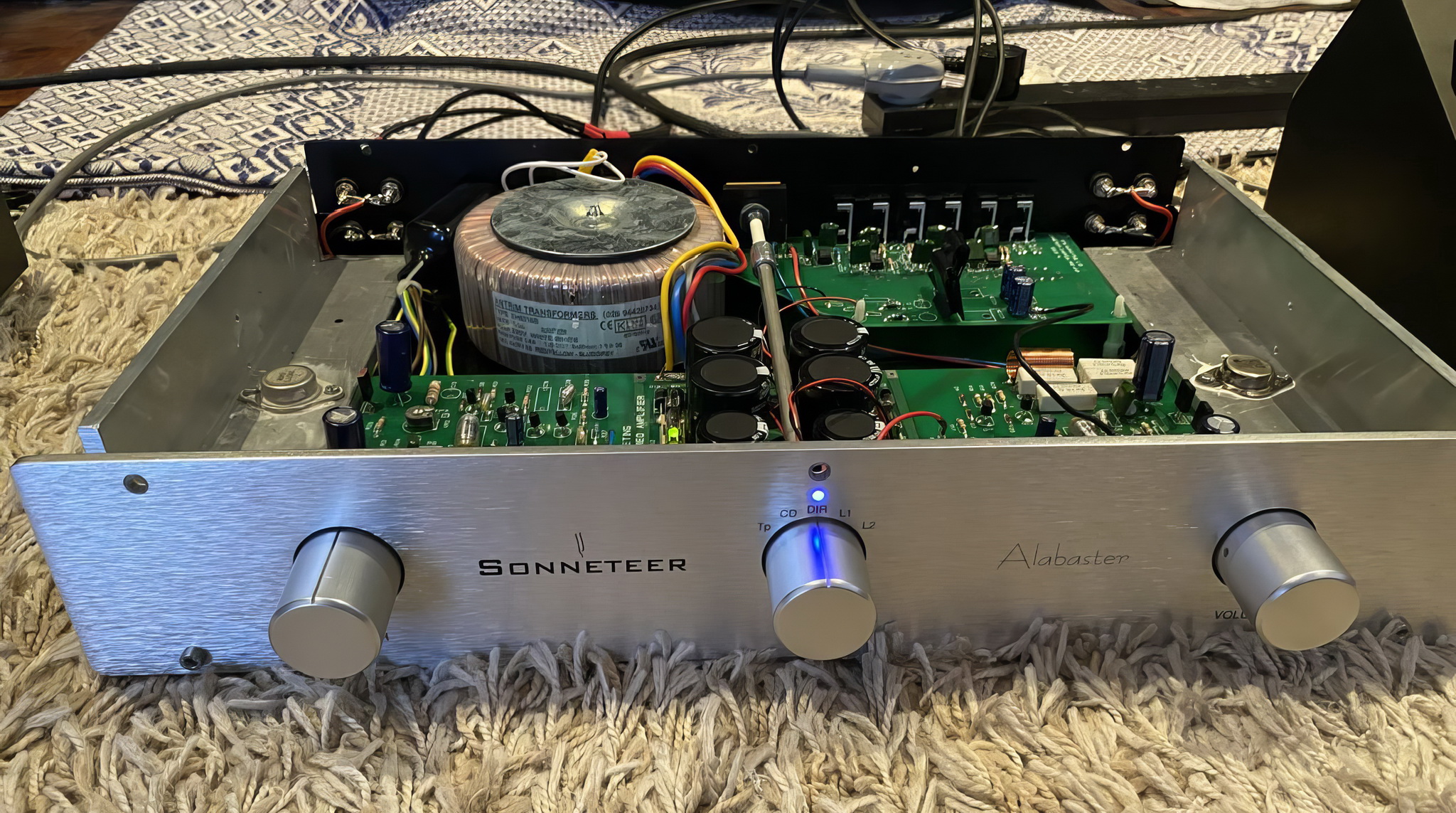
The underrated Sonneteer Alabaster integrated amp

The lovely Sonneteer Sedley Phono Stage
It’s funny when I speak to Basil and his brother, Haider, on their Sonneteer line. Basil, being frustrated by the lack of progress to reach their full potential, and Haider and his mate, Ramo, on their overly-opinionated way how hi-fi needs to sound, it seemed unsure how and when Sonneteer would mature because it seemed to take so long to get to the next stage.
But I love them all the same!
I’d never give up my Sonneteer pieces. They’re lovely items.
During all this time, I had to get a replacement CD player for the Naim CDS which I sold. It so happened, that I managed to find a second-hand Audio Research CD1 which I still have to this day.
It’s old school and 16-bit but it still sounds absolutely magnificent although, unfortunately, I need to use a step-down voltage transformer for it because it has an American power supply.
It never goes wrong either, which is a rare thing for old classic CD players.
It’s kind of cool having at least one piece of Audio Research kit in my ensemble.
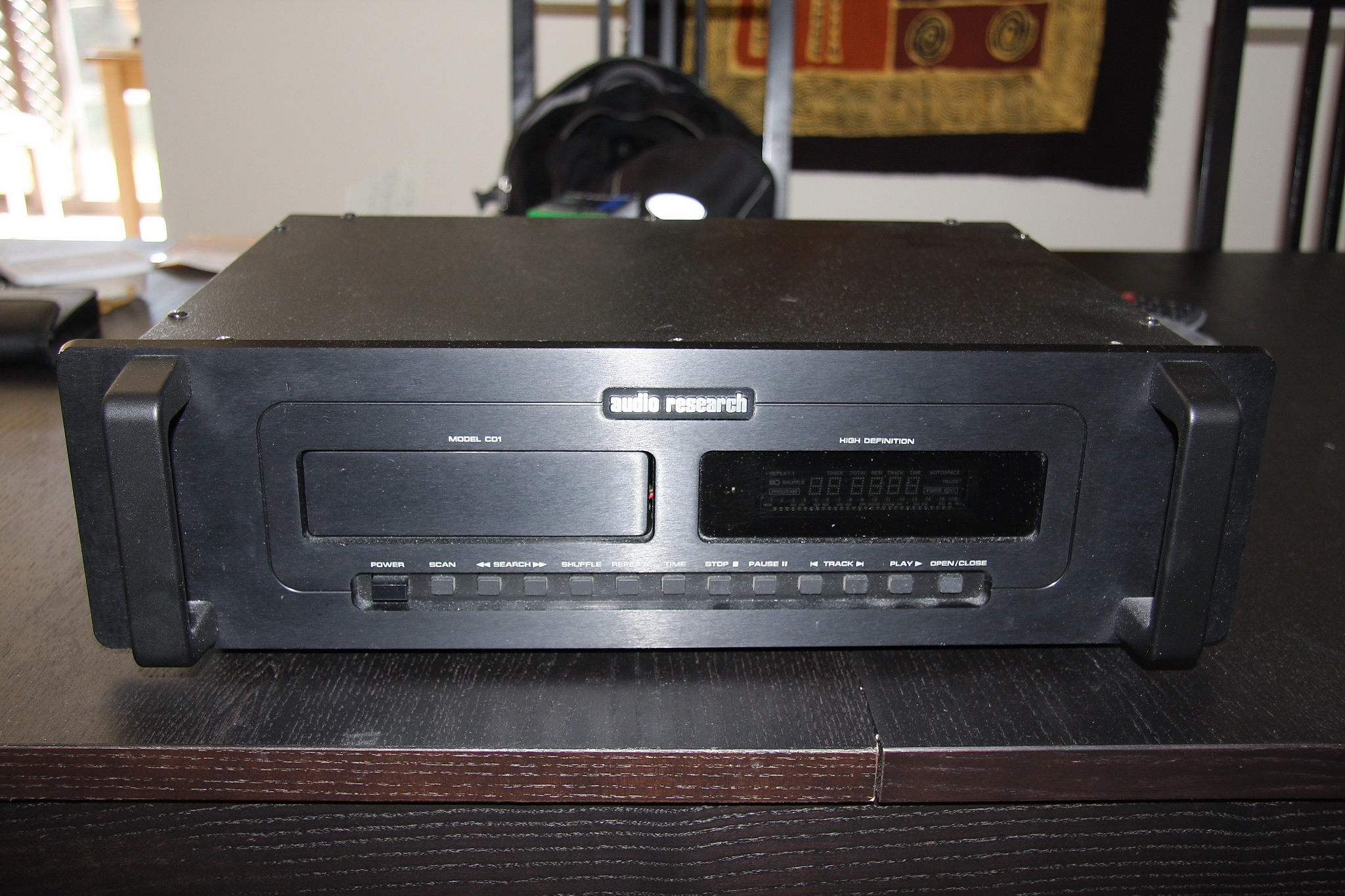
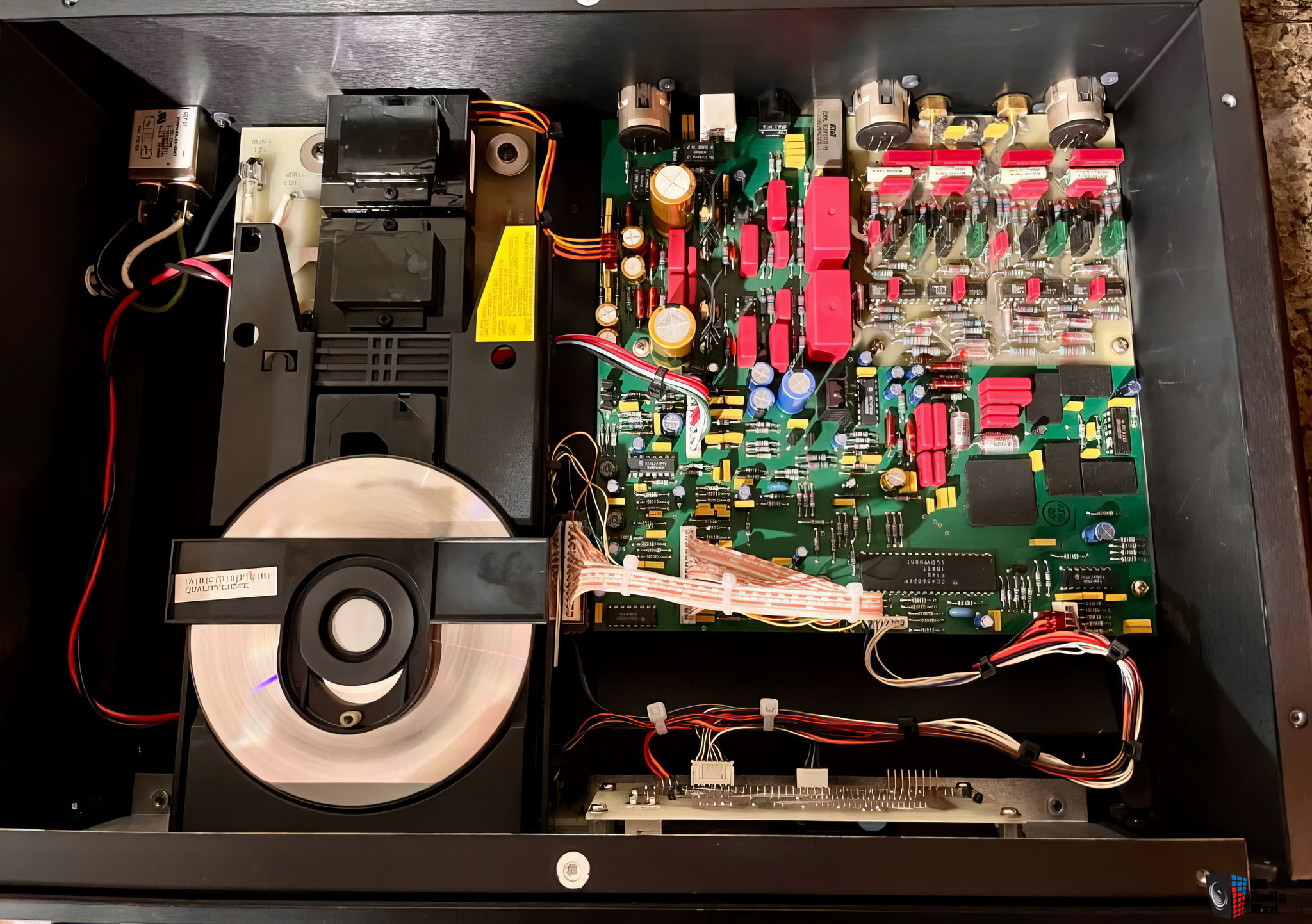
Audio Research CD1 CD Player
With all the moving around, some places having thin walls, I needed something nice to listen to without disturbing others.
The Sony MDR V5s are great headphones, but they’re really suited for travelling around only requiring a Walkman or some other personal listening device. They also got a little closed in around the ears after long listening sessions.
To combat this, I looked into getting a second-hand Stax open-backed electrostatic headphone coupled with one of their tube-driven headphone amplifiers. This Japanese company made the best headphones, or should I say earspeakers, in the world although, in more recent years, there have been a few other amazing contenders, one being the French company, Focal, who make outstanding headphones.
There are open-back and closed-back headphones. Most personal headphones that fit around the ear are closed-back meaning that others around you can’t hear much of anything. However, open-back headphones can be heard, although not loudly of course, but it’s enough to irritate people if around you.
In my opinion, open-back headphones offer a more airy and transparent sound. They also tend to be somewhat cooler against the ear. I got a very good deal for a new Stax Lambda Signature headphone with a Stax SRM600t valve-driven head-amp.
Although big in size, they are extremely comfortable around the ear and don’t feel heavy. The only thing which is a little off-putting is the multistranded cord that connects the headphone to its amp. After switching it on, the valves began to glow, and ensuring it had time to warm up, listened to my records through them.
Listening through headphones doesn’t have the same aplomb as through one’s speakers, but the detail was astonishing and the soundstage was amazingly three-dimensional for a pair of headphones.
I still have them and love how they sound.
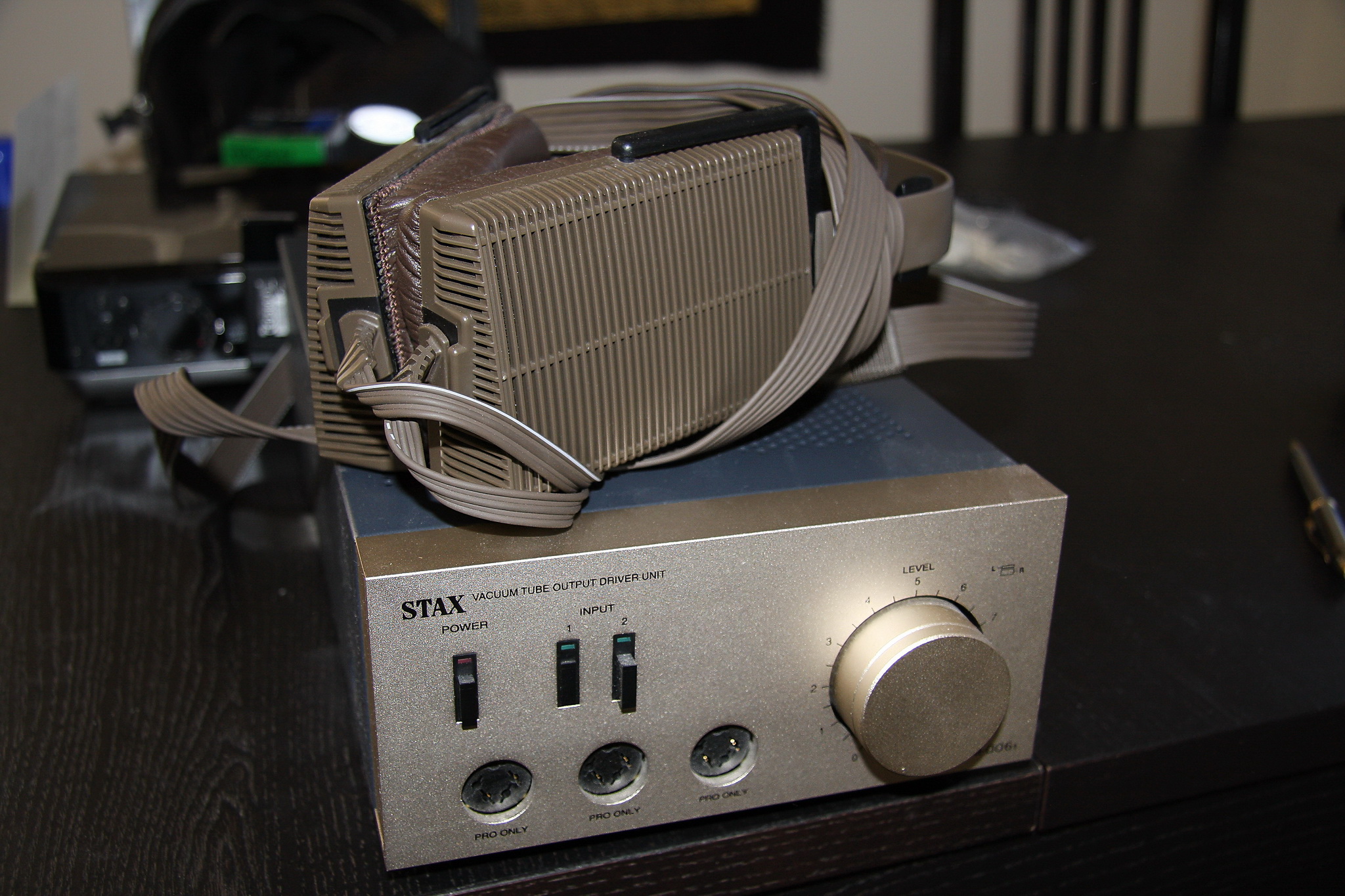
Stax Lambda Signature earspeakers with SRM600t valve head-amp
The Australian Years
Whilst sitting in a pub in Warwick during a cold and damp November evening, I got a call from a telco company in Sydney and they offered me to move over there all expenses paid for.
Who could resist?
At this time, my system comprised of a Rega 25 with RB600 tonearm, a Rega Exact cartridge, a Sonneteer Alabaster amp, a Sonneteer Sedley phono stage, an Audio Research CD1, Shahinian Obelisk speakers, and the Stax headphone system.
For a few years, I had a lot of this in storage whilst I was getting my feet on the ground in Australia.
Eventually, I moved permanently to Adelaide, and it was then that I unleashed my system for the first time in years. What an event it was as well!
But then, I bumped into a guy called Mike from Magenta Audio based in the Adelaide Hills.
I got to know him quite well and it was then that he offered me a great price for a pre and power amp combination by Dynavector. An L300 pre-amp and an HX 1.2 power amp. He was an avid enthusiast of Shahinian speakers and suggested I try out these amps with my speakers.
I was astounded. These Dynavector amps drove my speakers effortlessly. No other amp could do this in my experience. Not only that, I upgraded my speaker’s drivers as well which Mike recommended. It was quite the revelation to say the least.

Dynavector L300 pre amp

Dynavector HX 1.2 power amp
But by this time, during the late 2000s and early 2010s, the world of high-end audio streaming files were the thing of the day.
High-fidelity streaming services from Tidal and high-resolution FLAC files found on newsgroups servers which I’d used for many years, were the way to go for me.
During all my years, I had accumulated hundreds of CDs and eventually ripped them all to FLAC files using a bit of software called Exact Audio Copy. I had also copied my entire vinyl collection to blank CDs whilst in the UK with a Pioneer PDR-W739 compact disc recorder, a great little machine. So I ripped them as well.
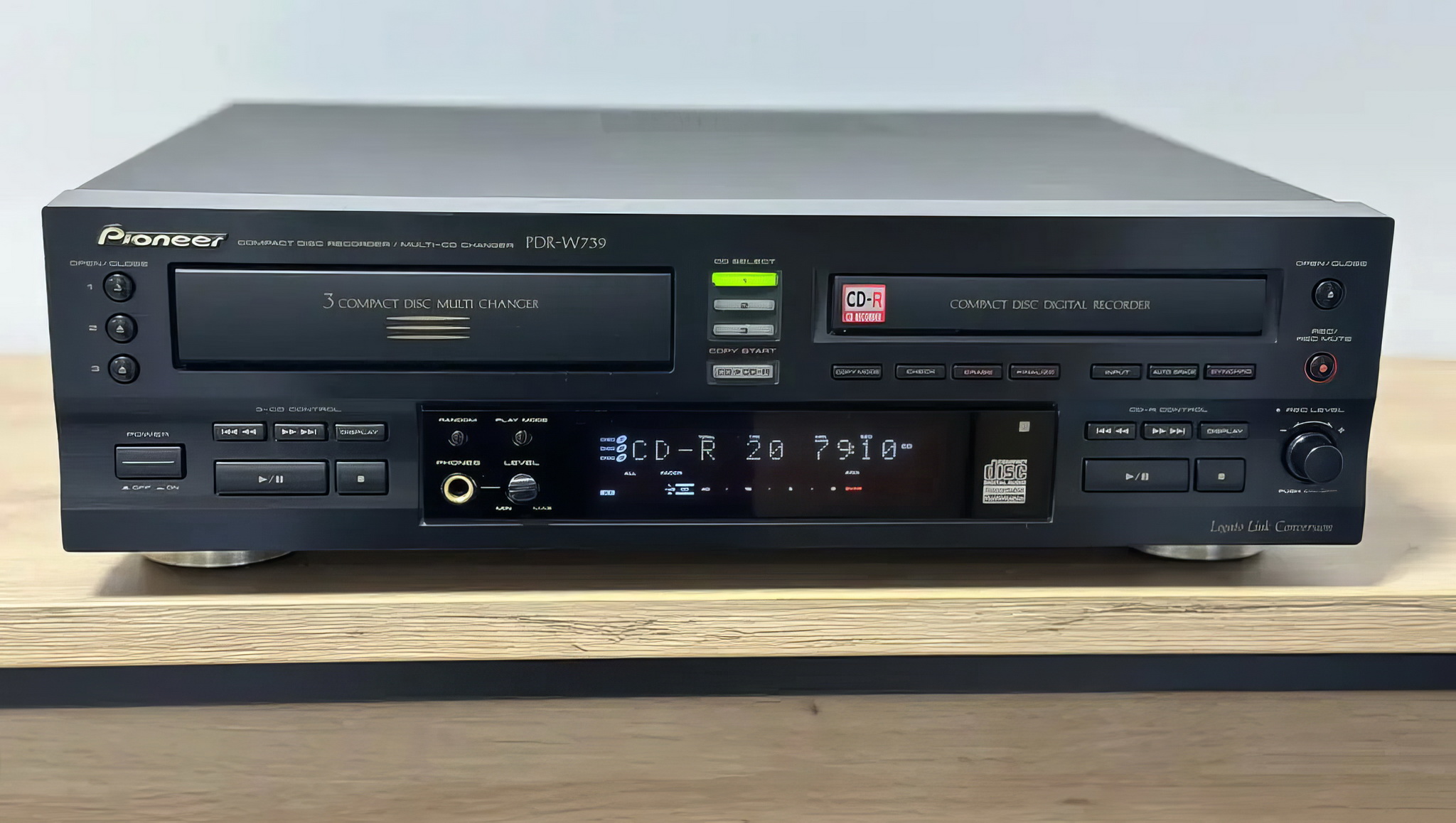
Pioneer PDR-W730 CD recorder
I refuse to part with my vinyl and CDs and I’m sure there are many out there who made this horrible mistake thinking that they don’t need them anymore after converting to electronic files.
The whole world of high-end turntables and CD players, including their less-known SACD and DVD-Audio brethren, being the highest source of quality was upended in a way. Yes, vinyl records were tactile and fun to use, but for sheer quality of sound, the world of high-quality audio lossless files was the way to go.
It just didn’t feel tactile like holding an actual LP or opening up the little booklet that comes with a CD.
But a new age of hi-fi had arrived. The arrival of the high-end audio digital file but what does one do with it?
Basically, you store the file locally, use a media server to retrieve it, a renderer to convert it to analogue, and then pump it out the conventional way through the hi-fi. Alternatively, you can subscribe to a streaming service like Tidal and have that rendered into the system. Note that Spotify’s quality did not offer lossless sound until only recently.
The hi-fi market had many products out there which distributed music from streaming services and audio files including Logitech and Sonos, the former being the more affordable. I would say that Sonos is a sort of mid-quality product dressed up as being more upmarket and fancier reminding me of the Bang & Olufsen mid-80s yuppie craze, products of which, true audiophiles would steer well away from.
And by the way, speaking of Bang & Olufsen. I remember at Graham’s Hi-Fi, we had so many people come in with B&O kit that went faulty asking us to repair it. Most cases, we gave them the bad news that it’s not worth fixing because everything they made seemed to be designed to break. They also had highly unconventional parts which were nearly impossible to replace without exorbitant costs.
B&O was designed for yuppies who knew nothing about audio quality or anything about the world of hi-fi. But at the time, its stuff kind of looked futuristic and cool for its time in a Doctor Who or Blake’s 7 sort of way.
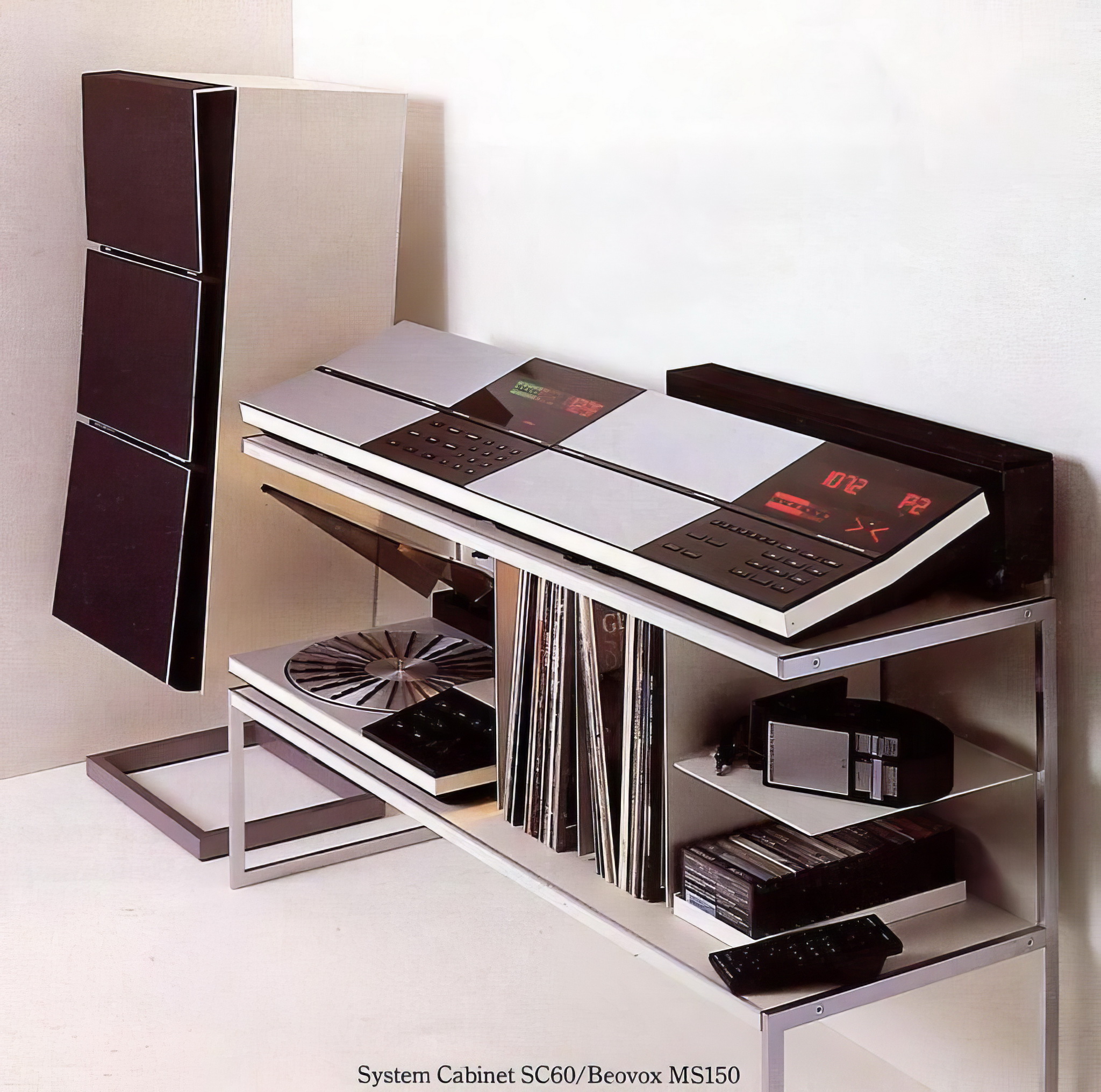
Bang & Olufsen hi-fi from the 80s which attracted all the yuppies who knew nothing about audio quality
But high-end media retrieval and rendering systems were certainly available. Naim and Linn are examples of long-established hi-fi manufacturers who both kept up with the times and did just that.
In fact, a friend of mine, being inspired by my system got his hands on a Naim Uniti Nova music player and a pair of Focal Kanta speakers. It’s a great bit of kit because, essentially, it’s all self-contained in one box and, true to Naim fashion, built very well and feels satisfyingly solid.
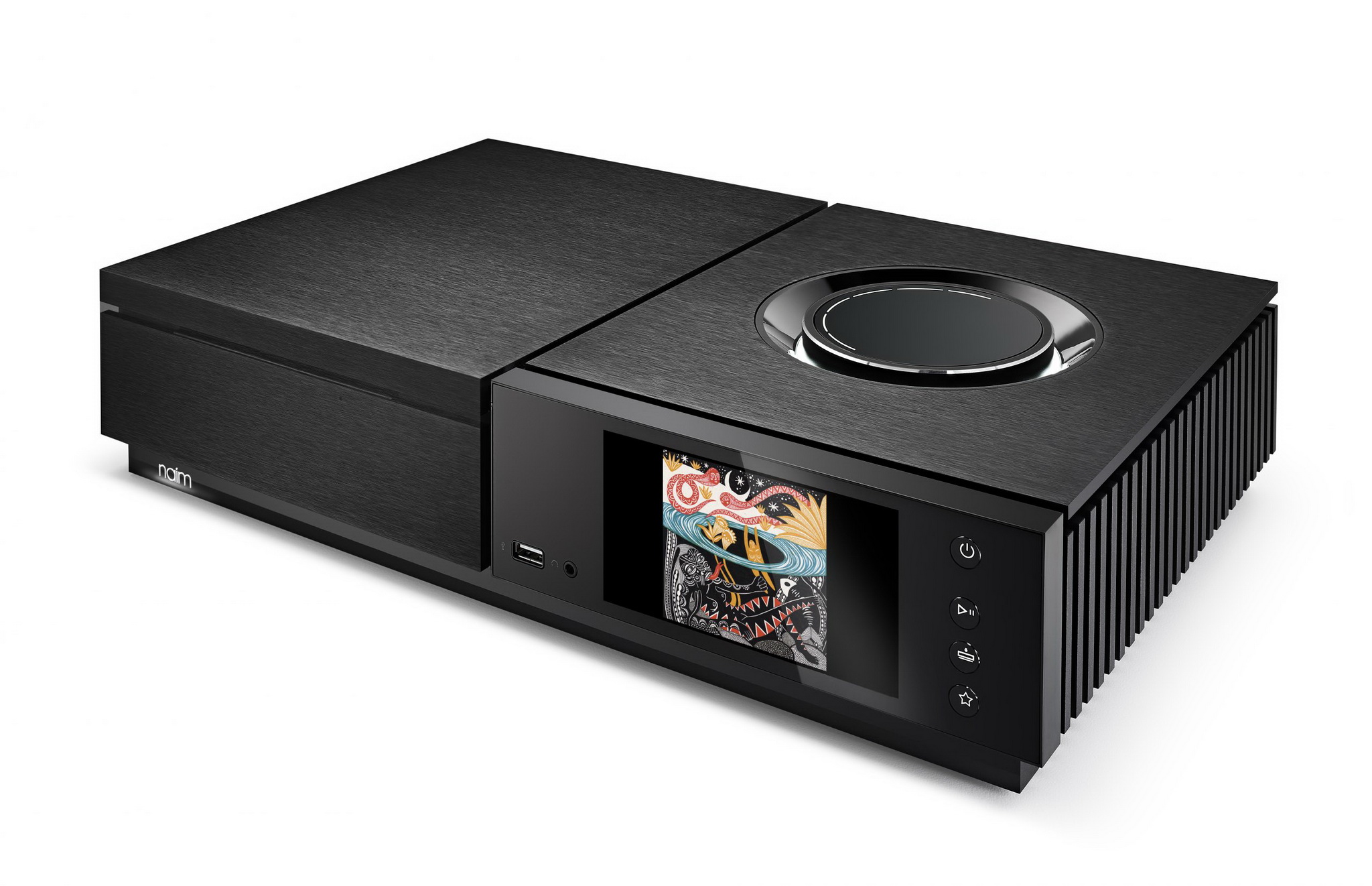
Naim Uniti Nova Music Player
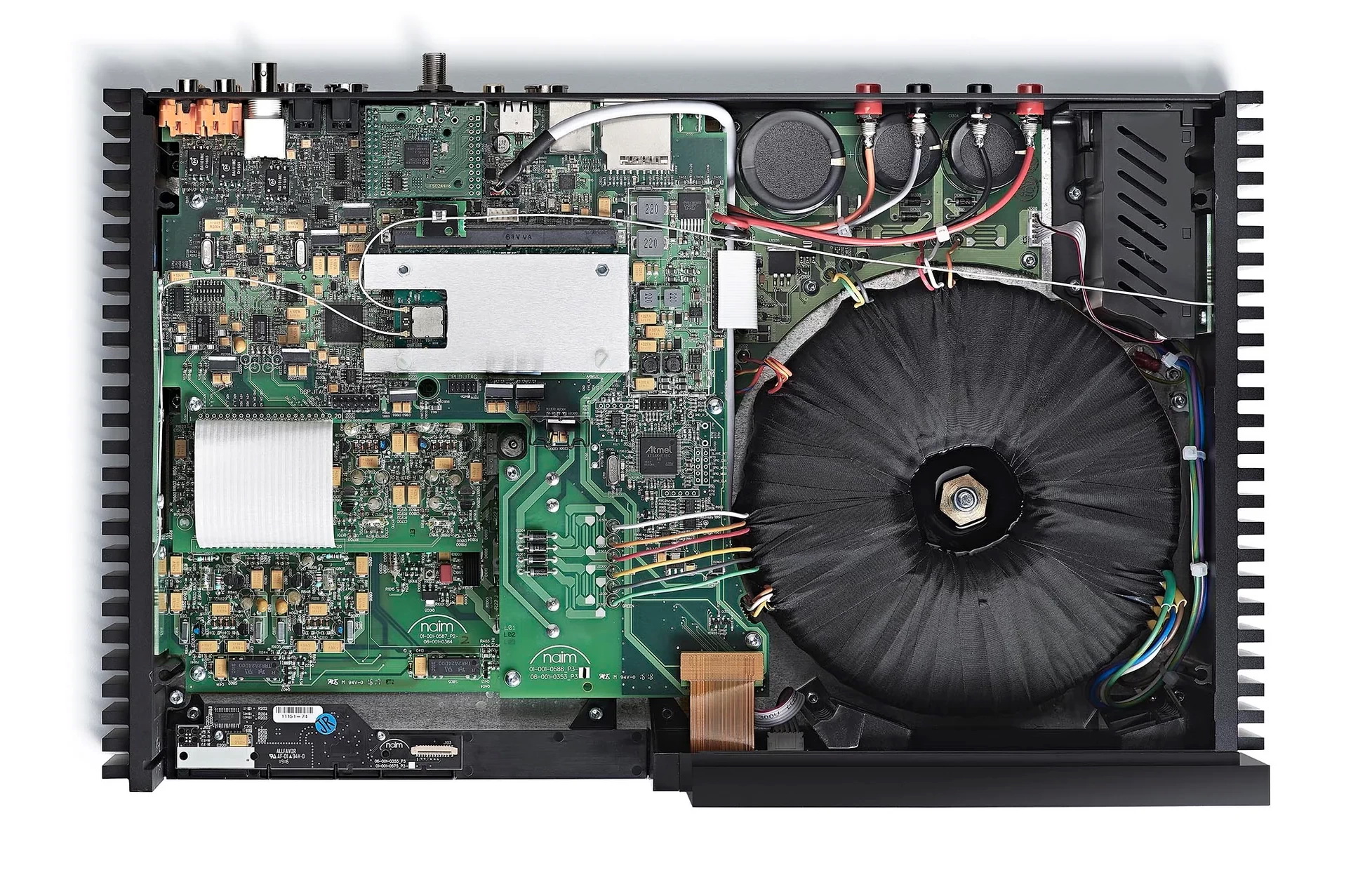
Inside the complex Naim Uniti Nova Music Player
But I discovered PS Audio, a company based in Boulder, Colorado.
Enter PS Audio’s Directstream DAC, perhaps the biggest paradigm shift I made in music playback.
It is, perhaps, one of the most revolutionary products I’ve come across. It sits in the heart of my hi-fi system and TV. All my digital connections, whether it’s from the PVR tuner, the CD player, the TV itself, and, of course, the ethernet cable connecting it to my NAS drive, runs through this beast.
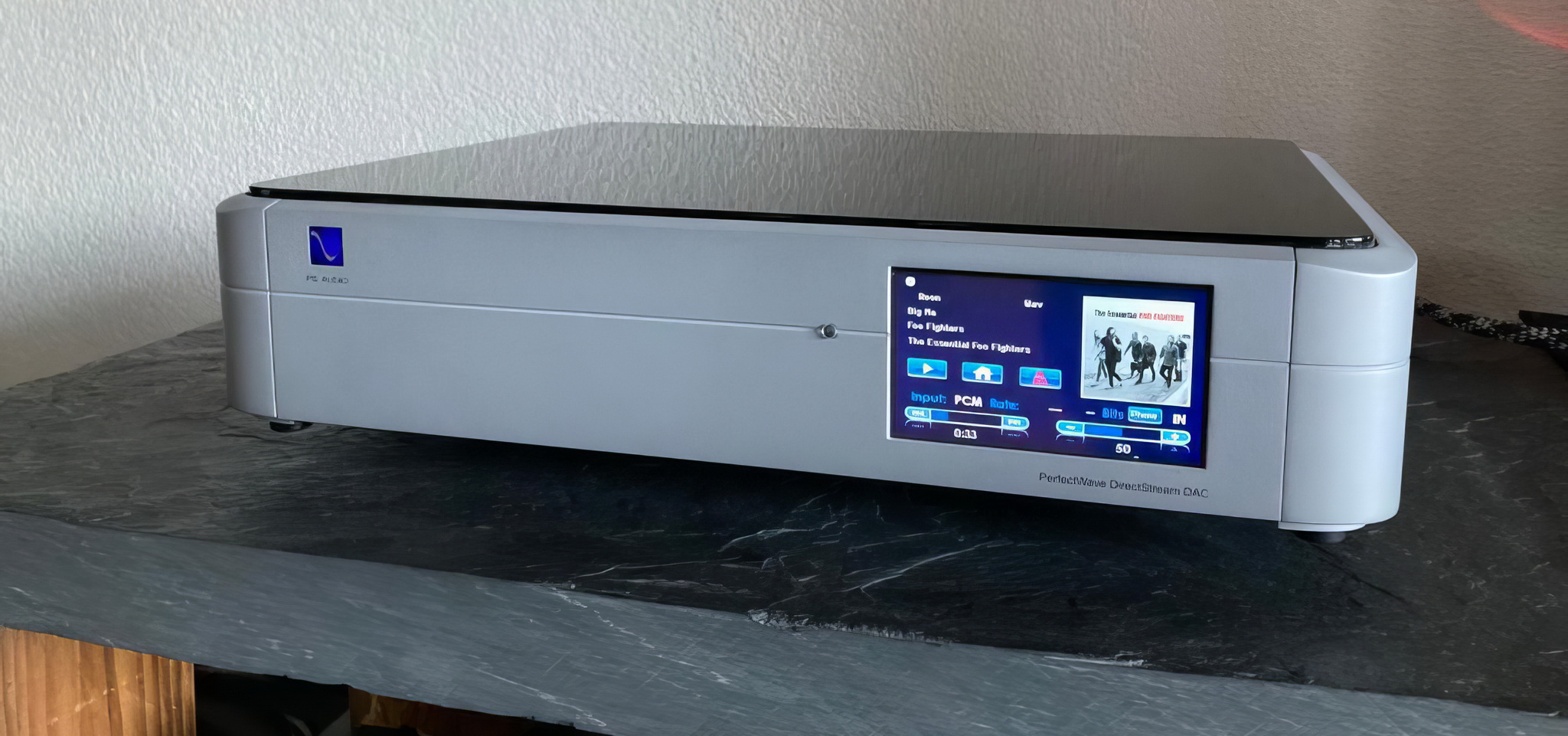

PS Audio Directstream DAC

Inside the PS Audio Directstream DAC
Thereafter, it runs through my Dynavector pre-power amp combination, although, you could simply skip the pre-amp and connect direct to the power amp if you had no other analogue connections.
I had purchased a Synology NAS drive with lots of storage space on it and downloaded the Roon server on to it, an application which serves any rendering device in the network to play music from a specified number of folders or locations on the Cloud to any renderer that converts the audio to very high-quality analogue.
Paul McGowan, who founded PS Audio, has created a vision which surpasses most others. Knowing full well that digital technology is often made obsolete or surpassed with superior features, he created an ecosystem of products that customers can upgrade free-of-charge by downloading patches and upgrades for free. There have been a couple of hardware upgrades which cost extra, but it doesn’t happen all that often. Moreover, the prices for PS Audio components are very reasonable when compared with similar undertakings by other manufacturers.
Finally, I wanted to try out PS Audio’s NuWave Phono Converter to boost my turntable output to line level, much like the Sonneteer Sedley. The Sedley is a great bit of kit, however, it lacked one very important feature in my situation. A pair of balanced XLR outputs. Having a turntable a good several metres away from the pre-amp makes using unbalanced standard RCA interconnects a poor choice when compared to the XLR option.
In all honesty, I think the sound quality was on par with the Sedley when the Sedley was in closer proximity to the pre-amp. But when the Sedley was too far away, the NuWave had the advantage.
So, well done to the Sonneteer team!

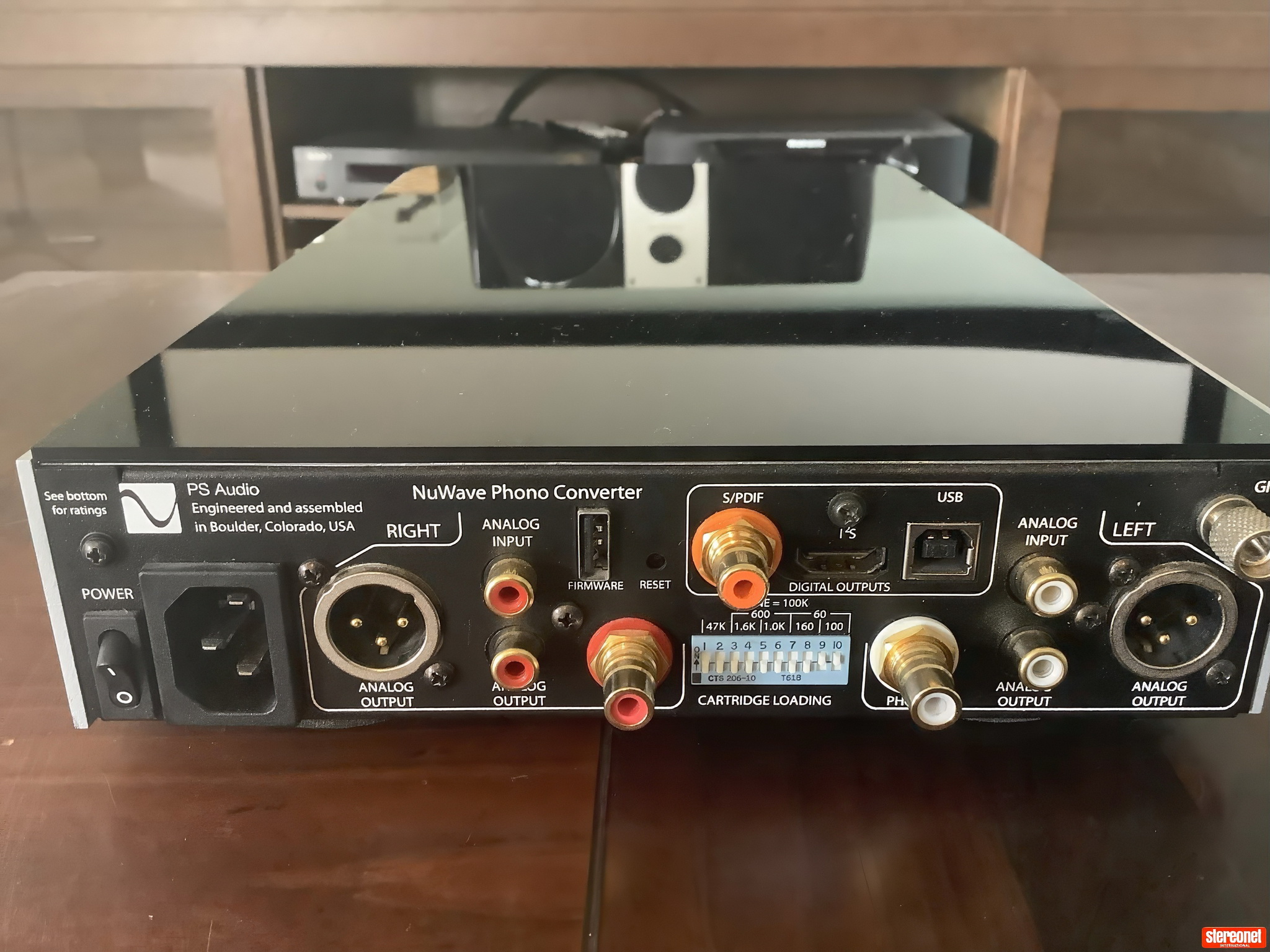
PS Audio NuWave Phono Converter
The PS Audio Directstream is so good, that it seems pointless to play records anymore, but more on that in a moment.
Not only that, I got to the point that I haven’t had the need to upgrade my system anymore. If anything, the room needs something to improve the sound as it’s acoustically awful, but that’s another story!
The Strange New Revival of Retro Hi-Fi and its Collectors
I’d like to finish off this piece with, what I consider, a complete new wave of retro hi-fi enthusiasts.
One may have noticed that there is quite a big revival going on in the world of vinyl records. Go into a high street shop like JB Hi-Fi in Australia and you’ll see racks of new vinyl for sale. Now, we have to bear in mind that there was a time back in the 90s that major record stores like Virgin in London had almost completely got rid of all their vinyl moving entirely over to CD. And this continued for many years to come with some predicting that making new vinyl records would be a thing of the past.
Thankfully, the DJs and vinyl-loving audiophiles saved vinyl from becoming extinct. Oddly enough, France, for a time, was the only place making new vinyl and it wasn’t the best quality either.
Somehow or another, an entirely new generation found that playing records was fun. Also, the very act of browsing through racks of vinyl, admiring the artwork, and the heavy and satisfying feel of picking them up. Today’s new vinyl is actually very good indeed, unlike much of the 90s stuff.
Even my young son was completely thrilled when browsing through records at our local electronics shop. It was a happy moment for me, but a little surreal as well.
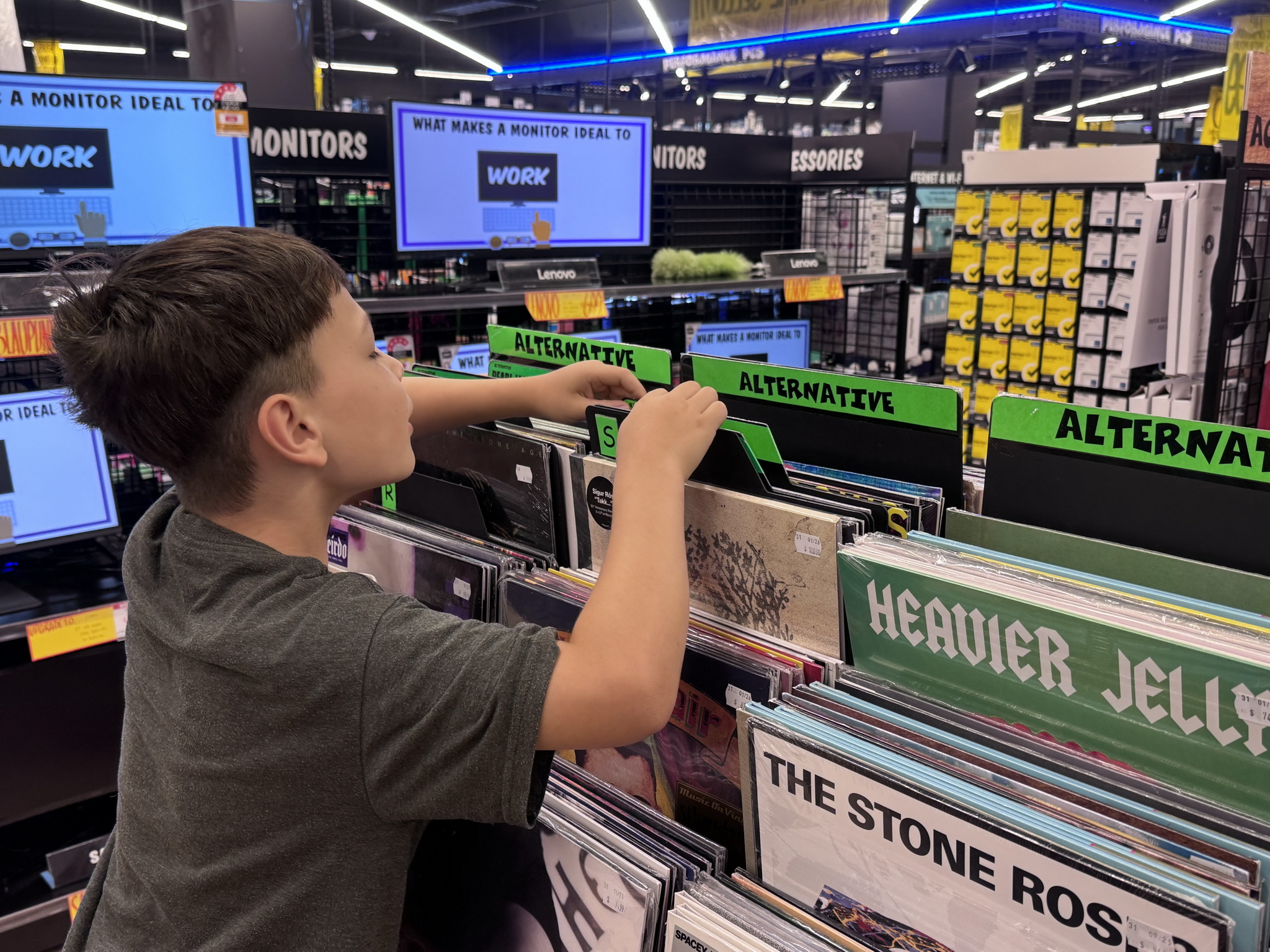
My son browsing through records at a local shop
Surreal? Why?
Because the focus is that they are exploring something which had become lost. The loss of feeling something tactile perhaps? I don’t know.
It isn’t based on sound quality because today’s high-resolution lossless files played on good quality renderers is, in my opinion, superior to that of the best turntables. Provided that the file came from a high-quality source of course!
During my time in the pursuit of hi-fi excellence, vinyl was the ultimate medium for sound quality. But times have changed and I, being pragmatic in all this, now simply go for the better quality sounding lossless high-resolution files rather than fumble around with a record player. I’ve done enough of it and I love the convenience of using Roon and watching the lyrics flow by on the screen.
In all honesty, I love the new digital age of hi-fi and embrace it wholeheartedly.
But I’m happy for the younger generation to get into records because it teaches them to really appreciate something in its entirety. To listen to an entire LP without jumping from track to track. To treat the listening of an LP like a story.
The browsing aspect is fun as well which partly explains why there are retro-like DVD rental shops re-emerging in parts of the United States.
But buying records these days is quite an expensive pursuit unlike back in the late 80s where vinyl was practically ditched in favour of the shiny CD. The late 80s was, perhaps, the best time to collect vinyl. I bought most of my LPs for far less than a tenner second-hand. But these days, that’s nigh on impossible, unless you want a scratched copy of some record which no one would ever want. I’ve seen plenty of them in church charity shops!
Walk into a high street shop in Australia and your eyes will water when you realise that a new vinyl record will set you back at least sixty to seventy dollars!
These high street chain stores, like JB Hi-Fi or Harvey Norman even sell record players.
Record players!
Albeit not very good ones, the best of them being quite average ones made by Audio Technica.
So, picture this.
Today’s collectors will buy records at sixty to ninety dollars a pop and then proceed to play them on low budget crappy and plasticky turntables.
What figures?
However, let me talk briefly about the new wave of Technics direct-drive turntables. Remember them? The DJs favourite? The iconic Technics SL1210 turntables along with those Stanton cartridges that DJs have been using for years?
Remember also how direct drive turntables, rather than belt-driven ones, were poo-pooed by the audiophile community because of rumble, cogging, and other motor noise?
Well, things have changed with the latest line-up of Technics direct-drive turntables.
I recently went into a hi-fi shop in Adelaide and auditioned the Technics SL1210GR turntable, the reference direct-drive turntable by Technics.
Let me say this.
It sounded awesome and it wasn’t at an unreasonable price either. The top end reference version was something like three thousand dollars which, yes, is a lot of money, but believe me, you’ll pay far more for the same quality by another manufacturer building an equivalent belt-driven option.
And, let’s face it, belt-driven turntables are a bit of a pain in the arse. To change speeds, you usually have to do something with the belt and the cog. Unlike a direct-drive in which case you can have, with some models, any speed you want and it spools up fast as well.
I’m all in for a high-quality direct-drive turntable despite what the belt-driven die-hards claim they don’t like about them.
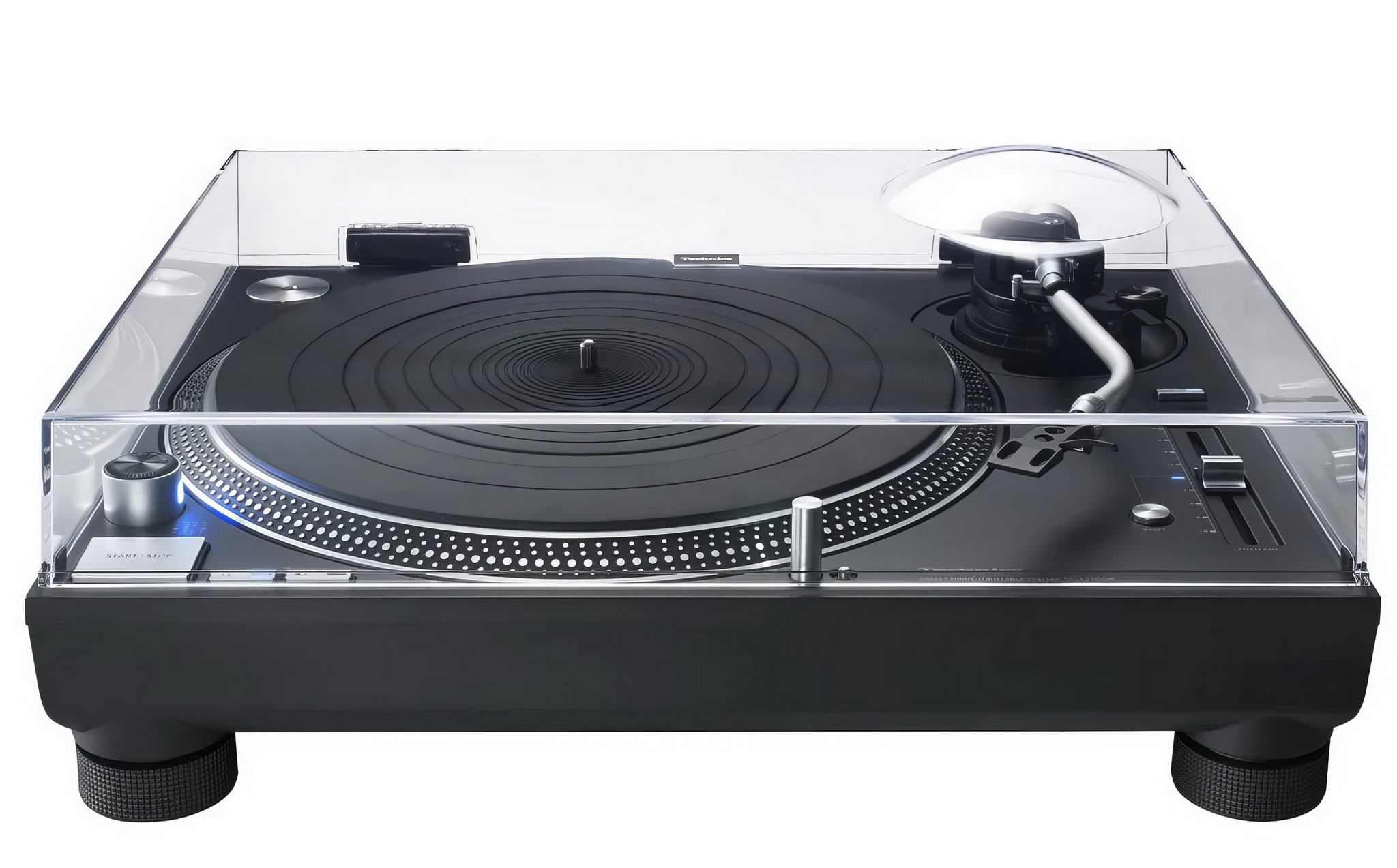
Technics really picked up their game with their reference SL1210GR direct-drive turntable
To cap this piece off, I was utterly surprised that cassettes are making a comeback.
Yes!
Cassettes!
For me, this is such a strange thing because with today’s highly portable electronic files, why go back to cassettes? Why?
Look, don’t get me wrong. I loved my cassette decks back in the day, but in my book, they are totally obsolete. They break. You have to tweak them. You have to buy blank tapes. And let me tell you, blank cassette tapes are crazy expensive, especially high-quality ones like TDK chrome and metal tapes. I could not believe my eyes when I saw that a TDK MA tape on eBay is selling for the best part of a hundred bucks!
That’s insane!
This is the crazy thing.
When I was recording tapes from vinyl back in the early 90s so I could listen to them on my Walkman, I was thinking, wouldn’t be great to record them to memory on my device with no moving parts?
We’re there!! We’ve done it!!
It’s so strange, but here we are.
And, I think it’s time to end this very long piece.
So goodnight, God bless, and hope to see you all in the morning!