The BBC, and Traditional TV in General, Will Soon Die!
Shôn Ellerton, December 27, 2025
The inevitable dying off of those born from the 80s and earlier will herald an end to the BBC and traditional TV.
Steve Coogan, playing the inept Norwich radio host character Alan Partridge in the incredibly funny and cringeworthy late 1990s British TV comedy, I’m Alan Partridge, couldn’t have said it any better when Alan was rejected by the BBC of being granted a second series. After being told the bad news by his BBC editor, played by David Schneider, during a meal in the BBC offices, he childishly picks up a stinky wheel of cheese, sticks it in his editor’s face and runs around the BBC premises, shouting out,
‘What are you doing? Haven’t you programmes to make? No, you’re all on the BBC gravy train!’
It’s true.
The BBC have been on the ‘gravy train’ for far too long and it’s time to change because times have changed and the BBC, in its current guise, is anachronistic and simply out-of-date.
And it will change, but only after Gen X and older generations previous to that die out. My generation, Gen X, or those born around the 60s to 80s, lovingly remember the days of quality programming by the BBC as kids. Having regularly travelled back and forth between the States and the UK, I have had much exposure to both American and British TV. Although the US had around thirteen channels to choose from rather than the initial three I remember in the UK, most of them were heavily laden with advertising and endless repeats.
There was BBC1, BBC2, ITV, and, a little later, Channel 4.
ITV was the equivalent of today’s more junky reality and games show material but I’m being a little harsh because there were some good programmes on it as well. It did have advertising but 1980s British advertising was, to be honest, quite original with some being hilarious to watch. American advertising was, and still is, dismal and painfully boring to watch.
Channel 4 was a real breath of fresh air serving up very interesting cult movies, alternative news reporting, great comedies, and more interesting documentaries. It had adverts as well, but like ITV, it wasn’t overloaded like the American channels were. Unfortunately, Channel 4 went decidedly downhill and turned disappointingly pedestrian during the early 2000s.
The BBC, of course, had no advertising because the British taxpayers paid for it.
During the 80s, many people did not even own their own TVs, but rather, rented them from such outlets like Radio Rentals. Not only that, anybody with a TV, or even a radio, had to pay the UK Government an annual radio or TV licence. The TV licence, being the more expensive of the two, covered both radio and TV.
However, some readers may be surprised to learn that the UK Government still charges anyone with a TV an annual TV licence which, as of writing, works out to be the equivalent of $235 USD! The BBC rakes in more than $5B USD annually from the taxpayer.
During the 2000s, my father, the ultimate rebel as he was, refused to pay it on grounds that he had disabled the radio reception portion of it rendering it purely as a monitor for streaming services which became readily available by then.
The authorities gave up and left him alone.
He’s right. Why should anyone have to be forced to pay a TV licence if they are not watching or listening to the BBC?
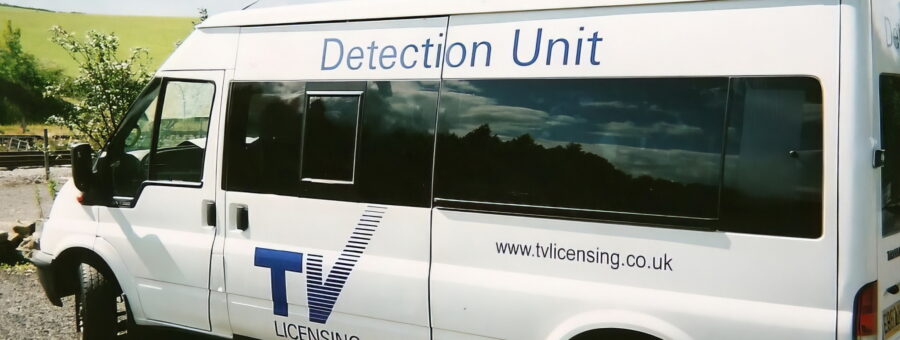
Most people would not have fought the system the way he did because the BBC had quite the intimidating campaign to scare anyone of being given big fines or even a possible stint in prison for not paying their television licence. It got so bad that the BBC rolled out television detector vans patrolling the streets looking for any signs of TVs being used at an address that has not paid up. Much like unmarked speeding vans, they often rucked up in the middle of the night so as not to be spotted.
Can you believe this?
It’s true.
From the early age of ten, I had this love and hate relationship with the BBC. I instinctively knew that it was a nest of propaganda, much of it pointed out by my father who, having been exposed to far more international news than the average Joe, pointed out quite relevant differences of how news, especially political news, can be so variable in its delivery of facts and opinions.
However, the BBC had some of the best comedies and documentaries anywhere in the world. They were simply unrivalled, both in terms of content and technical quality. For example, I had compared BBC to American National Geographic TV documentaries. The BBC had a much more sophisticated, adult-like and matter-of-fact way of delivering the material to its viewers, whereas the National Geographic documentaries always seemed to be a little aloof and childlike in its narrative. The National Geographic documentaries, unfortunately and not a fault of its own, suffered bad video quality because of the American NTSC video standard, which is decidedly lower resolution than Britain’s PAL format. Many viewers watching old American sitcoms will realise how poor the American video format is, the only advantage being, is that the TV signals go much further in distance given its longer wavelength.
Just as a disclaimer regarding my comments about the National Geographic. Its magazines and quality of maps are astounding.
Now.
The BBC also made some amazingly funny British comedies, at least up to the early 2000s. From Yes Minister to The Office, these comedies, many of them being highly satirical in nature, have to be some of the cleverest TV material out there. In my opinion, American comedy was, at best, second-rate. I cannot think of one American TV comedy during the 80s which got me in a laughing fit. This had to wait until the early 2000s when the Americans, through outlets like HBO, started to air genuinely funny comedies omitting the annoying and omnipresent laugh track with shows like Curb Your Enthusiasm and Arrested Development.
It’s all very well to view the BBC with rose-tinted glasses, but let’s look at today’s reality.
The BBC is now a mere drop in the ocean with respect to the whole gamut of streaming channels available for the viewer to watch. The BBC only survives for two reasons.
One, it forces its British TV owners to pay up or get in trouble by the police.
Two, there are oldies out there who don’t know how or can’t be bothered to research quality streaming channels whether they be from YouTube, Netflix, or other streaming services.
This is the sick joke, but you can have an annual Netflix subscription for less than half the cost of a British TV licence. And for what? For four TV BBC channels plus an additional few covering politics and children’s material? Heck, you can have YouTube for free, as long as you don’t mind the interstitial advertising. Or you can pay a similar amount Netflix charges by having the excellent Premium version which has no advertising. And the best part, it’s practically unlimited in terms of content.
I’ve discovered documentary and news source channels on YouTube which are now far superior to those on the BBC.
I kid you not.
Now, for those readers who suggest that YouTube has a lot of misinformation and junk, there is a little bit of learning that I need to impart on you.
Let’s start with the fact that YouTube is enormous. When I mean enormous, I mean truly gigantic. According to a quick Google search, YouTube has something like 720,000 hours of video uploaded every single day. Naturally, most of this will be of ordinary family content and not particularly interesting except for those who upload it to share with family and friends. Then there are all the annoying video shorts for those with attention spans of a gnat. Then there are all the brainless but sometimes amusing videos featuring dogs and cats and all that stuff. And the bane of my life because my son watches too many of them, all those videos showing gamers playing video games.
But YouTube has an enormous variety of just about everything there is to learn and be entertained. There are quizzes, superb documentaries covering everything from animals to travelling through any country you can think of, how-to tutorials on how to make anything, news from any angle, and so much more.
As for technical quality, YouTube has some of the most amazing 4K content I have seen. Gone are the days that only professional cameras belong to the wealthy and elitist TV and movie studios. Given a bit of training and creativity, almost anyone can create quality programming with the YouTube platform.
And, of course, we must talk about harmful material.
YouTube has some of the strictest policies on what can be uploaded to a video streaming platform. Ultra-violence and pornography videos are blocked. There is a kid’s version as well and family accounts can be created so that the younger ones in the family can have a safer environment. Relative to many other video streaming services, YouTube is generally, a safe environment.
And best of all, with YouTube, you can watch political affairs and events across the globe in real or near-real time in its entirety without being edited by state-owned TV. Not only that, you can watch every conceivable angle politically without wandering through the dark tunnel of propaganda.
What I find utterly staggering for those who peddle the idea that YouTube is trashy is this. Instead of relying on their precious BBC to tell them what is good and what isn’t, they don’t know how to do a very simple search on the Internet to find out what good YouTube channels there are.
Community notes and public reviews online solve this problem.
If we want to research what car we want to buy, we seem to have the impetus to go online and do searches as to what car we should look into. But for YouTube channels, the average guy or gall will stumble and doomscroll through endless YouTube channels instead. Why can’t they do the same as they do when buying cars? I often go through independent websites to search out the best music, channels or movie material, but I ain’t going to find it by randomly running through my YouTube feed!
The BBC has become a festering swamp of political propaganda, and it has felt the backlash of its recent debacle of editing Trump’s January the 6th speech by carefully piecing together to make it sound like he directly incited the riot that took place on that day. It was clearly deliberate and Trump has every right to sue the BBC.
I would!
It, of course, raises the question as to how many other news pieces have been deliberately altered during its state-owned life. Indeed, there is now a focussed inquiry on BBC news pieces going back many years, even during the time of Lady Diana’s death. And the BBC are aware of it and since, they seem to be treading somewhat more carefully.
In this piece, I have focussed on the BBC, but the same holds true for all the hundreds of state-owned television channels around the globe.
I’d expect the only environment in which state-owned media can ever survive in the near future are for those countries which disallow free speech and free access to the Internet. They are there to put their people in its place. To tell them what their governments want them to hear. To instil hate in its people for those events that take place across the world which their governments think a threat.
State-owned media has no place anymore in a free society.
We don’t need it.
We don’t want it.
And yet, many state governments force their people to pay for it!
The BBC needs to get rid of its ridiculous out-of-date policy of forcing TV licences on its citizenry.
That’s utter madness.
The BBC needs to be neutral in its political coverage. Those saying that it is are wrong. It is clearly not. Trump’s much-maligned coverage has clearly demonstrated this.
The BBC needs to be self-funded. If this means be sponsored by advertising, it may need to go down that path. It can no longer compete with today’s video streaming services without having to force the taxpayer to pay for it.
We have long since been in an era of video streaming services. Most of today’s younger generation do not watch TV at all leaving only those born during the 1980s and earlier to keep it alive.
One other aspect to consider is the continual upkeep and cost of TV transmitter towers. The traditional lighthouse, for example, has died off with the advent of radio and GPS positioning. There is no need for them anymore. And with the Internet and its hundreds of popular video streaming services, what’s the point of forking out lots of money to hold frequency licences and maintain and build TV transmitter towers?
The exception are radio transmitting stations, both FM and AM. They will probably stay with us for some time much to the demands of, primarily, road users.
There are only two redeeming features of traditional TV.
One. There is a shared experience aspect to it, a topic that warrants an entire piece on its own.
And two. Too much choice, interestingly enough, can paradoxically narrow our avenues of discovery and learning. A topic I wrote to some detail in a piece titled Mushrooms, Doric Columns and the Shipping Forecast.
Realistically, traditional TV will die, and I predict that it will be as functionally extinct within a few years just like the VCR tape and the corded landline telephone.