Colonising Other Planets Will Always Be Just a Dream

Shôn Ellerton, November 22, 2025
I present four overarching reasons why colonising other planets is really a complete waste of time. But we can always dream…
There’s this fantasy that floats around the sci-fi community.
Space travel to other solar systems which might, perhaps, have that perfect planet that we can explore without either being torn to shreds by storms, burnt to a cinder, or frozen solid in seconds.
Building enormous structures orbiting our planet complete with their own atmospheres, manufacturing facilities, and the ability to supply all the necessary utilities to those living in it including water, electricity, and sewerage.
And, most ridiculous, selfish, and arrogant of all, the indulgent dream of colonising other planets because we’ve managed to muck up planet Earth. Naturally, only the wealthy amongst us will be the ones joining in the exodus. All others will simply be left to die. And once other planets are colonised, to then re-create the dark history of humanity leading to mucking up those planets as well.
I love science and I love science fiction, but all this wishful thinking of undertaking these grandiose dreams is nonsensical to the point of absurdity.
I’ll cover off four major hurdles to the dream of space colonisation.
Limited Resources and Buildability
First off. We’ve got major issues on our own planet. We have limited resources, political instability, and, to cap it off, huge swathes of our massively growing population unable to even feed themselves. Until the situation massively improves, there is absolutely no way we will be able to resource and carry the materials required into orbit to build anything substantial enough to hold more than a hundred people; a drop in the ocean with regard to setting up a platform for space colonisation.
The dream of building ultra-sized mega-worlds orbiting our planet is often popularised in science fiction material. Massive rotating ring-shaped structures that are so vast, they can hold their atmosphere like the structure in the 2013 sci-fi film, Elysium. Enormous floating structures in the Earth’s stratosphere containing cities, much like the world of the 1960’s cartoon Jetsons saga or the alien-originated massive pyramidal structure known as The Tet in the 2013 sci-film, Oblivion. Unimaginably large ringworlds that literally encircle stars and, of course, everyone’s favourite instrument of destruction, the Death Star of Star Wars fame, a man-made spherical moon which is all city nearly a hundred miles in diameter and fitted with a device that can blow up an entire planet.
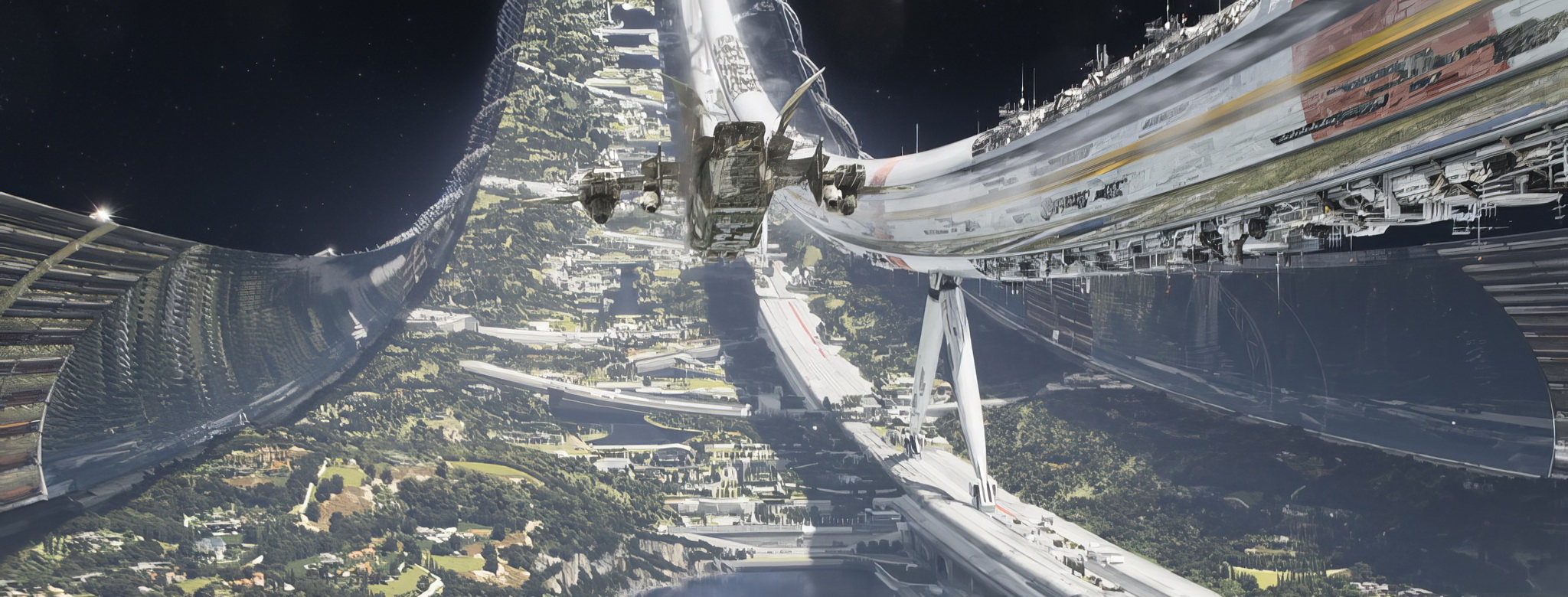
Elysium world in space

The 1960s cartoon, The Jetsons
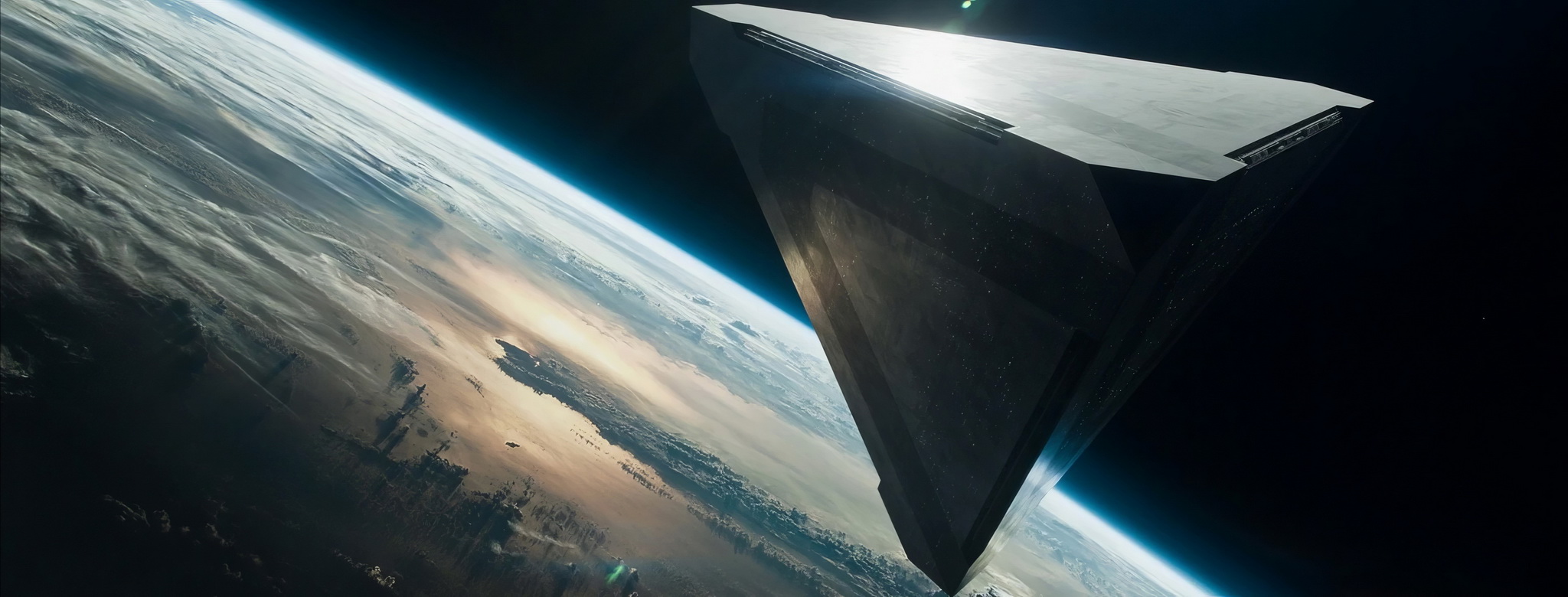
The Tet from the movie, Oblivion

New Death Star in construction, from Star Wars franchise
Where the hell do they get the materials from?
Bringing it down to more realistic levels in the realm of sci-fi, we have the iconic partly-constructed rotating Space Station V in Stanley Kubrick’s 2001: A Space Odyssey, which, in my opinion, is, by far, the best and most-realistic sci-fi movie ever made. Theoretically, such a structure could be accomplished. A rotating space station simulating gravity fit for humans complete with hotels, restaurants, conference rooms, and a space dock for further travel to the Moon on which bases have been set up.

Space Station V from 2001: A Space Odyssey
Should the Earth had become more unified in terms of peace and stability since the movie’s release in 1968 up to the present, it may have been conceivable to build this structure along with the bases set up on the Moon. However, our political, religious, and social differences have made this dream nearly impossible as we systematically dismantle so much that we have created through war and destruction. The best we have achieved so far is with the ISS, International Space Station, a joint venture between the United States, Russia, and several other nations to create an orbiting haven no bigger than a six-bedroom house and costing more than US$150 billion requiring no less than thirty-six shuttle visits to build it. Amazingly, it has been inhabited for more than twenty-five years, and being such a spindly and visibly unwieldy structure, has managed to out-manoeuvre deadly debris without much in the way of incident.

The International Space Station, ISS
Building an orbiting platform for space colonisation will most certainly require substantially more than Kubrick’s rotating orbiting space station and even more so than our existing six-bedroom-house-sized International Space Station. It would require many hundreds of rockets supplying materials from Earth to build anything resembling an orbiting outpost large enough to create Kubrick’s rotating space station, a mere transit point for passengers wishing to continue onwards to the Moon. Musk’s SpaceX program could foreseeably achieve this, but one must ask the question. For what immediate purpose?

Musk’s family of Falcon rockets
Transporting materials from Earth’s surface to orbit is incredibly energy-intensive and technically difficult. Gravity is the real killer here. Elon Musk, interestingly noted, that a mere ten percent increase in gravity would make escaping the Earth’s gravity almost impossible but a mere ten percent less would make it far easier. This, obviously, raises the question. How on Earth, no pun intended, can enough material be transported into space from Earth’s tyrannical gravitational field?
To put this in perspective, as of today’s prices, it costs at least $3000 per kilogram to send anything into Earth’s low orbit, between 160 km and 2,000 km up, or a whopping $10000 per kilogram to send into the much further geostationary orbit, at around 36,000 km up, using today’s modern re-usable rockets such as Musk’s Falcon rocket series. Imagine the cost of sending up material to build the International Space Station, a structure with a mass of around 450,000 kg! That works about to be nearly a $1 billion in USD for a structure that supports less than a dozen crew members at any one time. And this is only a fraction of the overall cost of the ISS which is estimated to be in total about $150 billion. To build anything significantly bigger would be grossly prohibitive financially and probably, technically.
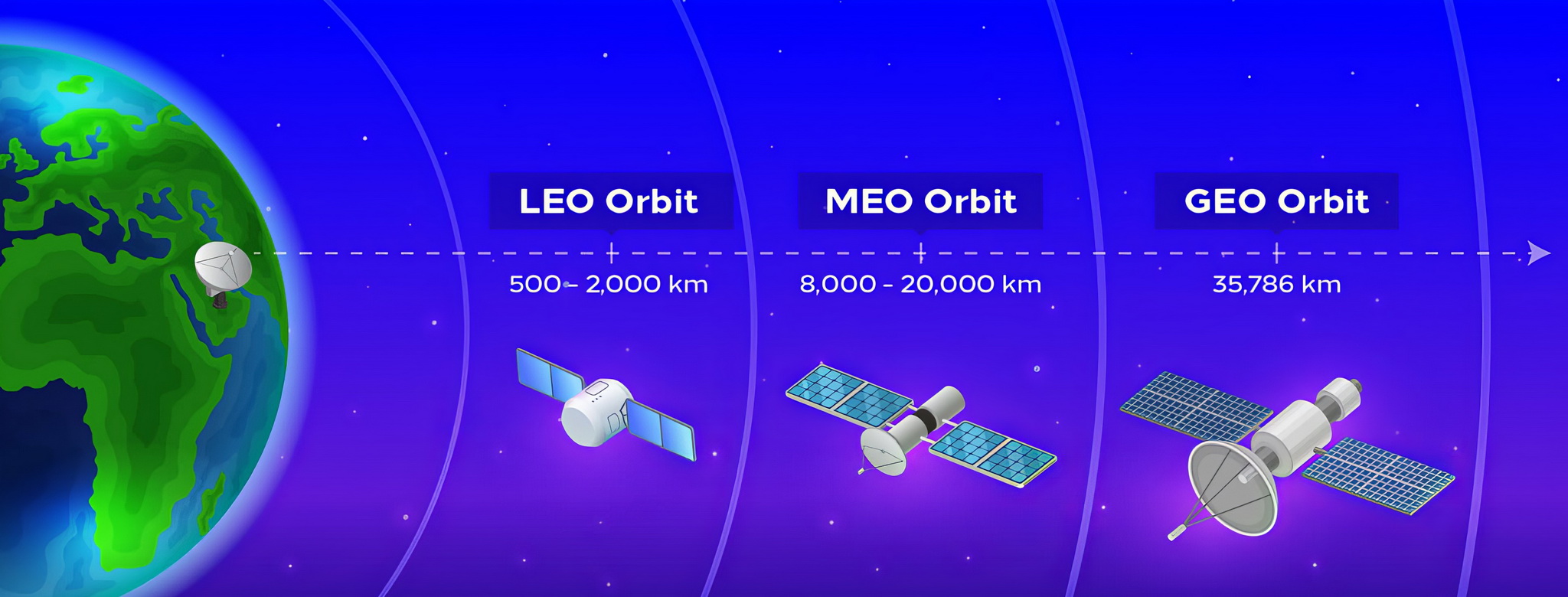
Various Earth orbits
And, of course, one mustn’t forget the amount of fuel required and the emissions it produces for sending each kilogram into Low Earth Orbit. It’s approximated that for each kilogram sent up, 20 kg of fuel is required, which equates to something in the order of 90 MJ, or boiling water using an electric kettle 150 times from cold. In the grand scheme of things, that, in itself, doesn’t seem too onerous, but the ancillary financial and energy costs surrounding the construction of the rocket, the launch of the rocket, the demand for space in the rocket, and the limiting payload of the rocket dwarves this consideration.
This neatly brings us to the point of how it could be feasible to build large spaceships to go beyond our solar system.
You would need enough material to build a ship capable of going for very long periods of time with enough fuel and supplies for those living on board. In order to do this, I would assume that some system of human stasis would have to be developed because it could take essentially years to safely accelerate and decelerate the speed of the spaceship in order to explore other solar systems. With a live skeleton crew at any one time to keep things in order working on a roster basis with hibernation, this could certainly be achieved. As long as we don’t have a Space Odyssey HAL computer disaster, the fictional story when AI goes horribly wrong!
The other issue is fuel.
To this day, the only practical solution is some sort of nuclear power. There is much research going on with the practicality of harnessing nuclear fusion power, but we have a long way to go.
Food and water is another problem.
You can’t harness the power of reverse osmosis to remove salt from seawater as on nuclear submarines, for example, because there is nothing out there in space. Unless the spaceship is hermetically sealed and all the moisture is re-processed, but whatever transpires, an awful lot of food will need to be taken on board to sustain the crew.
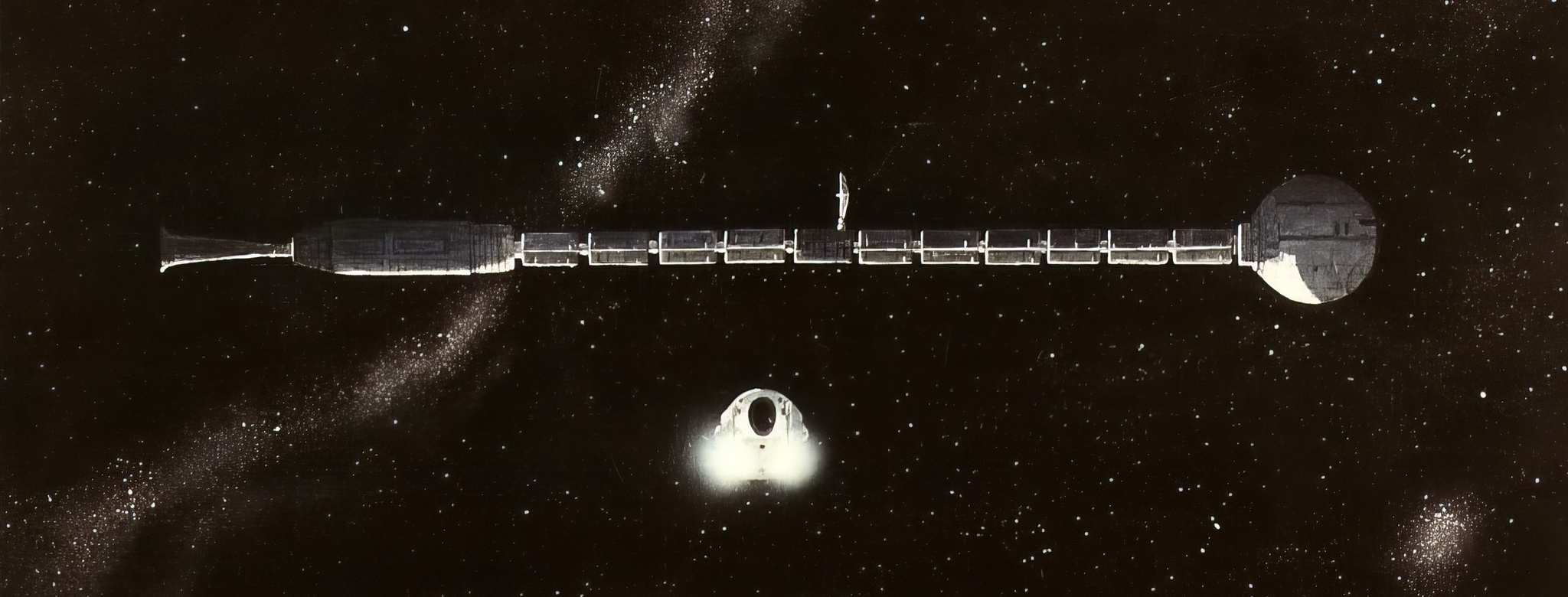
USSC Discovery (and pod) going to Jupiter from 2001: A Space Odyssey

Three members in stasis on board USSC Discovery in 2001: A Space Odyssey
We could assume that the Moon be used as a base to build these spaceships because it is impractical to do so from Earth due to the restraint of Earth’s strong gravity. Allegedly, the Moon has ample resources in terms of ore but how they could be mined and, even more technically difficult without an atmosphere, how to process and forge them into materials used to build the spaceship. Instead of 94 MJs to ship 1kg of material from Earth to its lowest orbit, it only takes 4 MJs to take 1kg from the Moon’s surface to orbit. Moreover, without an atmosphere, there is no issue of friction, storms, or other impedance which could cause difficulties. Again, science fiction immortalises the dream of building moon bases like the once-popular science-fiction TV series, Space 1999, and, of course, the timeless masterpiece, 2001: A Space Odyssey.
So yes, it is technically possible, but outlandishly difficult and, in general, impracticable.
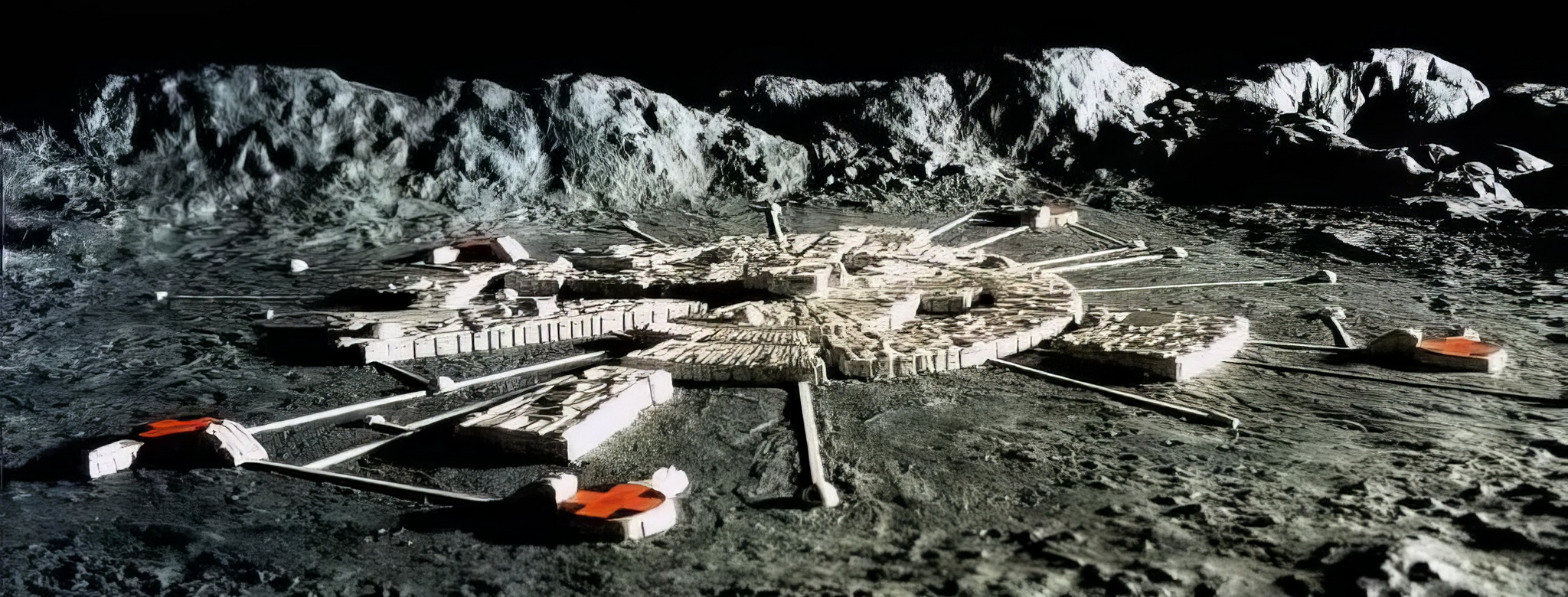
Moon base in TV series, Space 1999
The Issues of Speed, Space, and Time
Secondly, the very limits of how energy is supplied and how time-space restricts us makes space travel impractical.
Things work differently out in space with respect to time and distance. It’s a much more complicated affair than the Newtonian and Cartesian systems most of us are so familiar with down here on Mother Earth.
Space is unimaginably vast. There are 400 billion stars in the Milky Way, our home galaxy. Over a trillion stars in our closest galaxy away from ours, Andromeda. And God only knows how many galaxies there are in the observable universe!
In one second, light can go around the Earth seven times, or 186,000 miles per second. It takes light eight minutes to get to the Sun, a distance of 93 million miles. It takes light more than four years to get to the next star, Proxima Centauri, but to get to our nearest neighbouring galaxy, Andromeda, a mind-boggling two and a half million years!
For those unfamiliar with the distance measurement of a light year, it is the distance that light can travel in a year, which is indescribably huge at 5,878,600,000,000 miles or enough times to travel to the Sun and back to Earth nearly 65,000 times Now, imagine two and a half million light years to Andromeda!

Milky Way and the much larger Andromeda galaxies
So, clearly, any space travel means that you will be utterly cut off from any practical use of radio contact with Earth. With respect to deep interstellar travel at speeds approaching the speed of light, you’re on your own and, as for those left behind on Earth, you are will never see them again as I will explain shortly.
Now, you may be thinking. What’s the point of going to Andromeda if it’s going to takes light more than two million years to get there? The consensus of today is that getting to the speed of light is impossible, but what about, say, ninety percent of the speed of light? If classical thinking is applied that still equates to well over a million years which, of course, is an absurd prospect for space travel.
But that’s not how it works.
Time works very differently when one starts to approach the speed of light. Basically, the closer one approaches the speed of light, the more that time slows down for the traveller relative to those on Earth, assuming that was the departure point. The traveller on the spaceship wouldn’t feel any different but for every second gone by, there would be more seconds gone by for those on Earth. If it would be possible for someone on the spaceship nearing the speed of light to have a God-like instant view what was happening back on Earth, they would observe things going at an extremely rapid pace. Ten times, hundred times, or even a thousand times faster depending on just how close to the speed of light you are relative to Earth. Perhaps the human race might have become extinct by the time one of your hours are up!
This is known as time dilation and it can be calculated by a relatively simple formula being able to calculate the Lorentz Factor, represented by gamma, as shown in the image below.

The Lorentz Factor
This is a truly beautiful way to calculate just how much slower time is for those left behind on Earth. The variable, v, represents your velocity, and c represents the speed of light. It doesn’t matter what units of speed you use as long as both v and c have the same units.
So, c, the speed of light, is approximately 186,000 miles per second or 300 million metres per second. And say, for example, you were travelling at one tenth the speed of light, v would be 18,600 miles per second or 30 million metres per second. Plug those values in the formula, and the Lorentz Factor, represented by gamma, is 1.005.
I know this may not mean much at this stage, but without further boring you, let me explain.
Because 1.005 is nearly 1, travelling at the tenth of speed of light is quite insignificant with respect to big differences in time frames. In other words, for every hour you spend in the spaceship, they experience 1.005 x 3600 seconds which is a mere extra 18 seconds. Therefore, if you’d want to go to Proxima Centauri, a distance of 4.3 light years, going at the tenth of the speed of light, you’d still be stuck on that ship for more than four years although you might have shaved off around ten days.
In fact, even going at half the speed of light doesn’t give you great returns, the factor being 1.155. This will shave off around two hundred days for you, but it’s still well over three years. However, things start to become interesting once 99% of the speed of light is achieved where the factor now becomes 7. And like a hockey stick, the values shoot up thereafter. At 99.9%, 99.99%, 99.9999%, 99.999999%, the factors become approximately 31, 100, 500 and 7000 respectively. Therefore, if you were travelling at 99.999999% the speed of light to Proxima Centauri, it would take you around only five of your hours. Of course, for those back on Earth, it would be 4.3 years. And once you arrive at Proxima Centauri and radio back to Earth to say that you safely arrived, that would take another 4.3 years to wait for the signal!
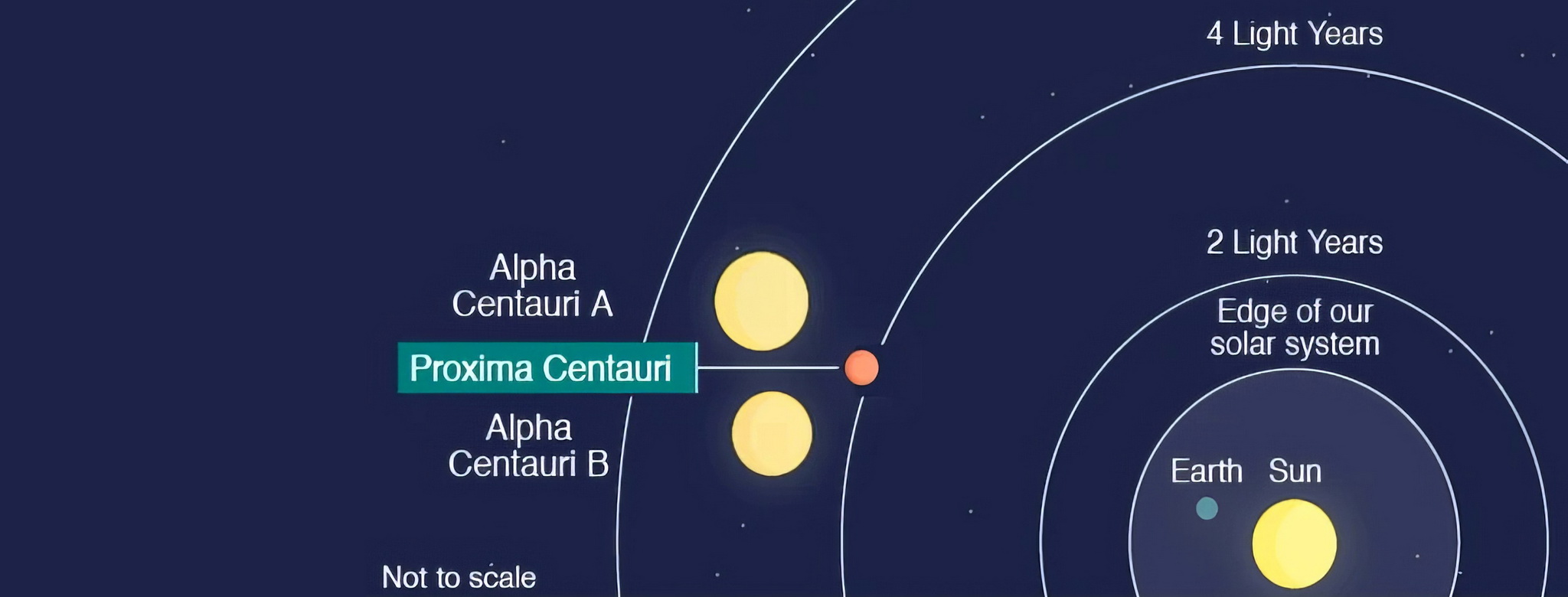
Proxima Centauri, our nearest neighbouring star
Amazingly enough, this time dilation was proved during an experiment that took place in 1971 called the Hafele-Keating Experiment. Atomic clocks were positioned on commercial airlines that flew twice around the world, one eastwards, the other westwards. Another atomic clock was stationed at the United States Naval Observatory, which is famous for its reference time management worldwide. After the planes landed, they compared the clocks and, despite the very slow relative speed of an airliner with respect to the speed of light, the clocks were in disagreement being several nanoseconds out from each other.
Not only did the relative speed make a difference, but the differences in gravity does as well. For example, the clocks on the planes at higher altitudes ticked faster if observed from Earth which means that if you were in a place of far greater gravity than someone else, your time would be slower if observed by that other person. The 2014 blockbuster, Interstellar, demonstrated this in a dramatic way when one of the astronauts landed on a fictional planet orbiting a black hole while the other astronaut was on the command ship in space. The planet’s surreality with its shallow water and gigantic tsunamis because of the massive tidal changes held a most striking and unsettling scene for those who watched the movie. For each hour spent on the surface, seven years elapsed on the command ship in space!

Crazy tidal wave on Miller’s Planet orbiting a black hole in Interstellar
Another fascinating thing about the Lorentz Factor, is that it can be applied to mass as well. In other words, if you’re going 99% the speed of light, your mass is seven times the mass relative to that of what you left behind on Earth.
With all this in mind, it sounds conceivable that one could dash to far off places in the galaxy in a short space of time if we can approach the speed of light.
Sadly, no.
There is the issue, of course, with holding the amount of fuel it would take to accelerate to the halfway point, and then decelerate to arrive safely at the destination without running into any rogue objects that might be in your way. Unless we can come up with some wonder fuel which could do this without adding too much in the way of volume and mass, it is practically impossible. And, of course, there are human factors at play, which I will discuss next.
The Limits of Human Performance
The third issue lies with what we, as humans, can endure to survive interstellar space travel.
Anyone that had trained as a light aircraft pilot would probably have taken an exam in human factors and performance. I remember undergoing this myself when I was training to get a private pilot’s licence many years ago. Most importantly, pilots must be acutely aware of the dangers of g-forces, oxygen levels, and temperature. Then there are the other dangers including tiredness, disorientation, pressure differences due to altitude changes, and even the danger of rushing to land because you’re dying for a pee after drinking an entire urn of coffee before flying. For men, the simple answer is the old ‘pee in a bottle’ trick which works wonders. Just make sure you don’t forget the cap! We’re even told not to go scuba diving for twenty-four hours after flying, and likewise, those doing scuba diving training would be given a similar spiel in reverse.
Now, imagine the training required for space travel.
Humans are not really meant to be up in space for too long. Astronauts who return to Earth after a long stint at the International Space Station often need extensive rehabilitation to re-acclimatise to Earth’s punishing gravity. A rotating space station might solve this issue but there are other nagging problems like cosmic radiation and a raft of psychological challenges. Cabin fever, the sense of isolation, and the warped disorientating effects of a curved floor view with the Earth continuously moving around in circles relative to your viewpoint. Today’s space stations do not simulate gravity, so learning to do simple things like going to the toilet may not be quite as simple!

Disorienting curved view perspective inside Space Station V in 2001: A Space Odyssey
The issue of cabin fever for interstellar travel could be overcome by hibernating the crew leaving a continual roster of a skeleton crew working in shifts. Perhaps on a monthly basis or more. Many science-fiction movies have illustrated this. In the movie, 2001: A Space Odyssey, two crew members on the voyage to Jupiter were on watch whilst the remaining three were in cryogenic stasis. In the movie, Alien, the entire crew were in hibernation only to be rudely awakened by the computer when a false but deliberate distress signal originated from a planet hosting rather unpleasant lifeforms that, much to the crew’s dismay, made their way on board the spaceship.
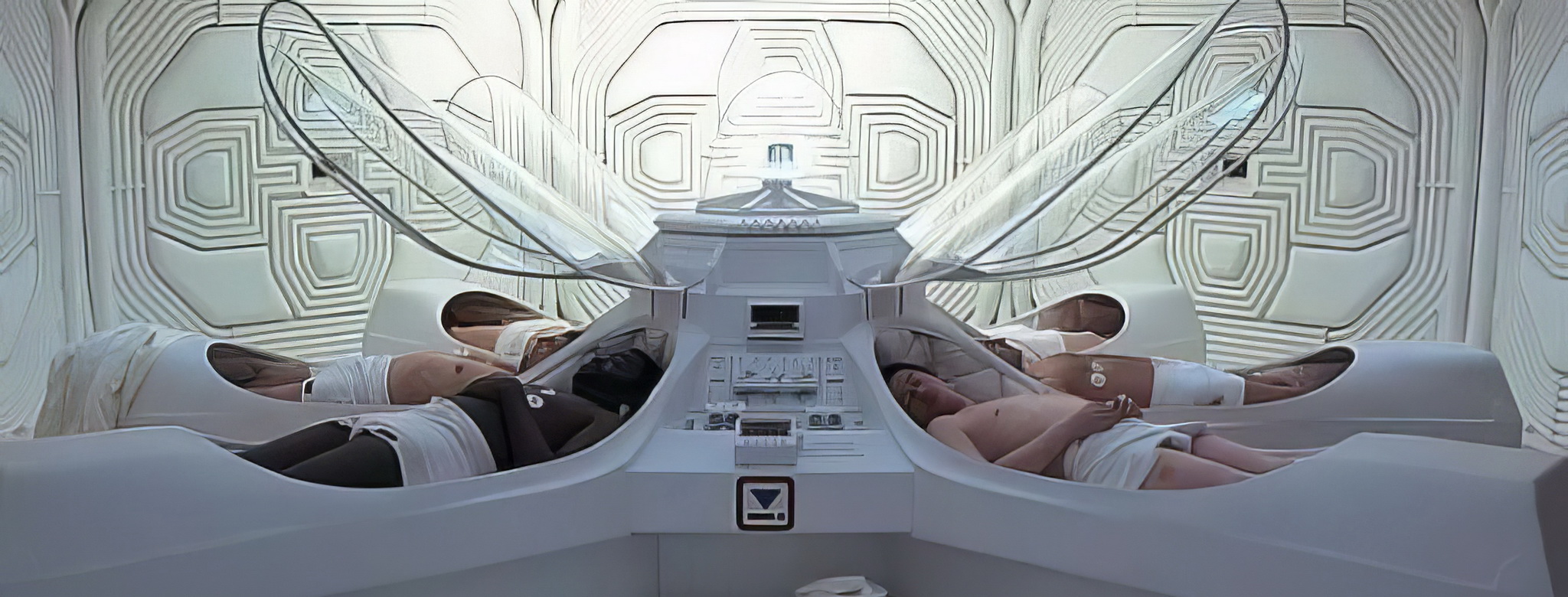
Members of Nostromo spaceship coming out of stasis in the movie, Alien
However, we have not developed a safe way to put people into stasis yet. There is much research into the science of cryogenic hibernation, but, well, let’s put it this way. I certainly won’t be putting up my hand to volunteer for it! What if it goes wrong? Are we still thinking in real time when we’re in stasis? Because that’s a bit of problem for long voyages out in deep space. While your body may be preserved, your mind would be in a virtual prison being conscious for the entire duration of the voyage which would, inevitably make you insane by the end of the trip. Stephen King’s short horror story, The Jaunt, is the best example of this going terribly wrong. In the story, passengers must be put into stasis but before the spaceship departs they are knocked out with an anaesthetic. Unfortunately, one of the families boarding the ship had a son who decided to hold his breath to avoid being knocked out to see what it would be like to be conscious. Tragically, when he got to the other end, he was declared utterly insane and taken away. I still shudder when I recall this story.
Another problem for humans is that we need food and water. This is a major problem because the more storage required for food and water means that the spaceship gets bigger which takes longer to accelerate to speeds approaching the speed of light.
Now, I did mention that if you could travel at 99.999999% of speed of light, you could reach Proxima Centauri in a few hours. Let’s assume that your spaceship had some sort of crazy propulsion system using, I assume, some sort of nuclear fusion power which can speed up that baby faster than you can blink an eye.
Not a problem, right? Just bring enough food for a few hours each way and be done with it?
Nope.
You would need over fifty years of food and water to go there and back.
Why?
You’d have to accelerate safely within the parameters of human performance. Subjecting to anything more than 1g for sustained levels of time is probably not a very good idea. Therefore, if you wanted to get to 99.999999% of the speed of light at 1g, it would take 16 of your years. And then another 16 years to decelerate. And that’s for one way.
But there’s another problem.
You would have overshot Proxima Centauri big time. From Earth’s perspective, you would have travelled more than 800 light years! 400 to accelerate to 99.999999% of the speed of light and another 400 to decelerate.
Let’s try getting up to 97% the speed of light at 1g which is considerably less time on the spacecraft than at 99.999999%. You might think that 97 is close to 99.999999, but things don’t work in a linear fashion in the world of celestial mechanics. Each additional decimal in that percentage gets harder and longer to achieve.
This time, you’d be penned up in that spacecraft for under three years one way including accelerating and decelerating. It’s not spot on, but you’d be around the distance required to arrive at Proxima Centauri.
Crudely put, if you had a spaceship with energy galore and enough food for around six years, it is theoretically possible to travel to Proxima Centauri without subjecting the crew to more than 1g. However, I’m sure there are a myriad of other complications which I’ve overlooked.
As for travelling the 2.5 million light years to Andromeda at 99.999999% speed of light, it would take 16 years to accelerate, 36 years maintaining this speed, and another 16 years to decelerate.
That’s still too long!
Someone worked out that going 99.99999992% of the speed of light accelerating at 1g and decelerating at 1g works out to be 28 years on the spaceship. How correct they are, I’m not certain, but should you decide to return to Earth, yet another 28 years, you’d be in for a shock as over five million years would have elapsed since you left!
In a nutshell, we are simply not fit to make these journeys. We could, perhaps, land on Mars or other various asteroids relatively near to us, but beyond that, I personally don’t envisage it ever happening. Heck, we haven’t even been back to the Moon, a mere quarter of a million miles, since the Apollo 17 mission back in 1972!
And Finally, What’s the Point?
Throughout most of this piece, I’ve made it clear that interstellar travel for even a small crew is impractical at best. As for colonising other planets, you’d need around two hundred carefully selected people. Think of Drax’s evil plans in the classic James Bond movie, Moonraker, in which he wanted to rid the Earth of humans and then re-colonise it again from scratch with his carefully selected young, healthy, and beautiful human specimens.

Drax’s ‘perfect’ specimens for Earth re-colonisation in Moonraker
Another scenario often encapsulated by science fiction is of the Earth dying, either from human-caused catastrophe, or though some astronomical doomsday event like an asteroid about to hit the Earth or the Sun getting a bit too big. You know. That sort of thing.
But then we get these crazy ideas that we need to move to another planet in order for the human race to survive. The first thought that hits me every time this is considered is why. Why does the human race need to survive? What supreme arrogance we must have to believe that we are the only special lifeforms in the Universe worth keeping alive. We’ve had our time. As the dinosaurs did.
Technically, this is bonkers anyway. To muster the resources required to create what’s needed for a mass exodus is not even conceivable. Even if we, somehow, managed to ‘fold’ space, like in the Dune series of science-fiction novels, or find some sort of wormhole leading to some unknown place as in the Interstellar movie, where would we go? Or work out how to exceed the speed of light with the aid of the highly theoretical tachyon particle which always travels faster than light. Or harness anti-gravity machines as depicted in Isaac Asimov’s amazing Foundation novels. We haven’t identified any exoplanets out there which are liveable. We don’t even have the technology to verify if there are any exoplanets out there worth going to.
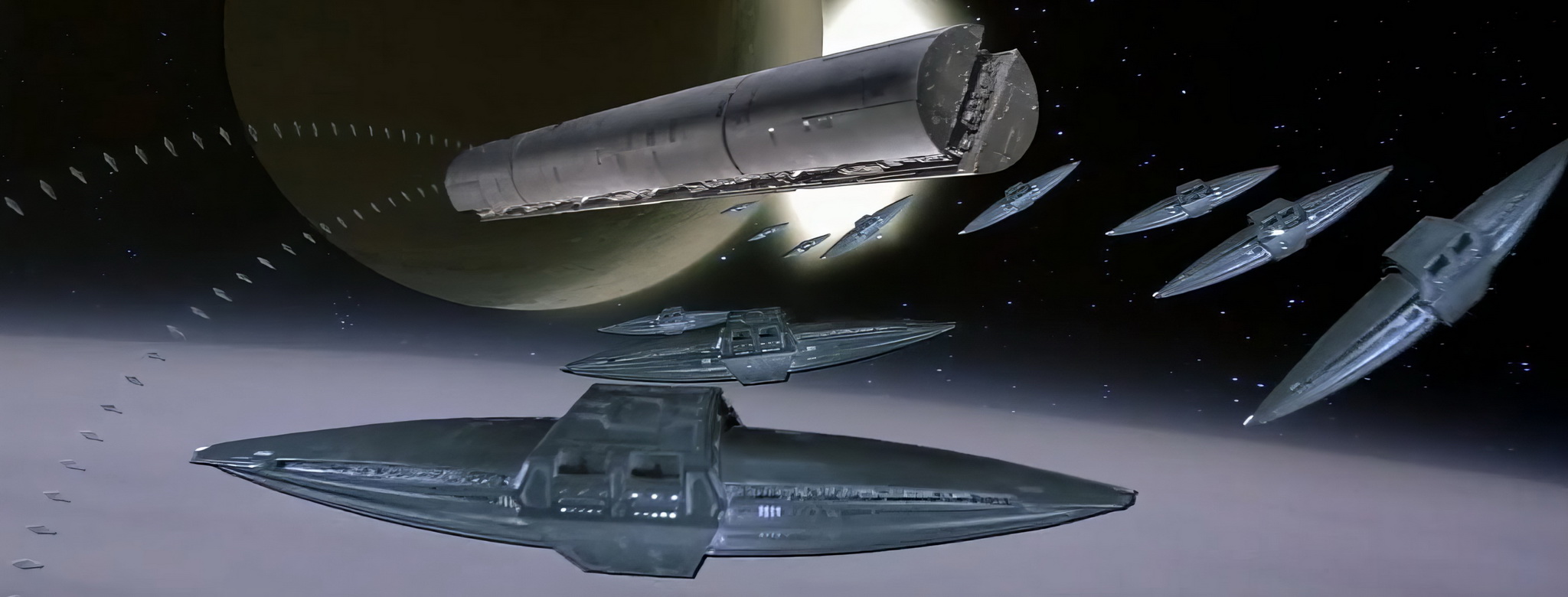
Shuttles going to the Guild’s space-fold device in David Lynch’s Dune
I’d say it’s a pretty crazy game of potluck if you ask me because, as for any planets out there worth living on, what’s the probability of finding them? I’d say it’s pretty slim.
Despite my pessimistic views on the practical aspects of space travel, I continue to support our research into getting a better picture of our solar system and beyond. We’ve had some amazing wins like landing unmanned probes in hostile conditions including Mars, Venus, and more recently, Saturn’s biggest moon, Titan, with its primordial atmosphere and methane oceans. Looking at actual photos of Titan captured me entirely, although, oddly enough, it seemed to escape the enthusiasm of the wider mainstream audience in the news.
I’d like us to land on the Moon again, if indeed, we could even do so without re-inventing the wheel. For example, do we still have the ability to build the Egyptian pyramids using today’s technology and resources? Likewise, our manned Moon landings so many decades ago tested the upper limit in terms of what we could achieve in terms of technology and manpower. A friend of mine recently said to me that if we could watch the experience of a Moon landing in full 4K resolution, it would be mind-blowing. I also think we could have a manned mission to Mars, which, I believe would be pushing today’s envelope of technical ability and human endurance.
Will the news be as monumental when man first landed on the Moon in 1969 should we ever land on Mars? I don’t know, but I’d certainly like to witness it!
And finally, from an ethical standpoint. How can we not redirect our wealth and resources into making our planet a place where none have to live out their lives in indigence, poverty, misery, and disease? Why should the human species deserve to survive if it means having to colonise another planet because we’ve plundered our own planet?

Actual surface picture of Venus from Venera 13 probe in 1982

Actual picture descending down to Titan from Huygens in 2005