Smoke, Mirrors and Tobacco Tax
Shôn Ellerton, October 5, 2026
From smoke-filled childhood journeys to Australia’s billion-dollar black market, it is social stigma, not government greed, that’s killing off the cigarette.
Cigarettes.
They’re rather filthy things in my opinion.
However, I’ve had to live with them through my childhood when staying with my now late father, who chained-smoke these things incessantly. He died not many years ago from hospital-induced pneumonia but a lifetime of cigarette smoking probably didn’t do a world of wonders for his health.
It’s extraordinary how blasé we were with cigarettes back when I was child during the 70s and 80s. I used to fly across the Atlantic from the US to the UK during the school holidays to visit my father and grandparents. He taught me many practical things in life, but I was somewhat wary of him and not entirely comfortable around his presence. Not until much later in life, that is, when he eventually ‘mellowed down’.
Aeroplanes back in those days allowed smoking, which now seems, almost incomprehensible. They had a ‘smoking’ section which was abundantly ineffectual for the remaining non-smokers in the cabin given that the ‘smoking’ section was simply a block of allocated seats towards the rear within the same air space. Didn’t matter where you sat, the cigarette smells were noxious, and for those prone to airsickness, it certainly induced it requiring frequent visits to the toilet to let out a three-dimensional belch, or more familiarly speaking, a vomit.
The last of the flights that allowed smoking on major international airlines was France and Japan and that was around 2000 or so. It took many years after to dispense of the armchair ashtrays, which did nothing more than to act as a receptable to store wads of used chewing gum. And of course, you had kids making annoying sounds with the ashtray lids because they were bored. Amusingly, China banned its passengers from smoking but not its pilots until something as late as 2019!
Getting off the plane at Heathrow was a relief because as soon as that door opened, you were greeted with a very cool blast of damp humid air which was bliss after having suffered in a small tube of second-hand cigarette smoke. The smell of kerosene, which I like because it reminds me of going on holiday, was relatively wonderful. However, Heathrow was always a bit of a dump especially with those stained carpets that had been installed during the early 70s utterly reeking because cleaning duty probably consisted of one homely woman, who probably didn’t smell very nice either, running over the carpet quickly with a Hoover that looked like it was made not much later than the Ford Model T automobile.
Cigarettes seemed to be everywhere in the UK and Europe, far more so, than the state of Colorado, which I had just took a flight from. They were in the public urinals, between the teeth of the alarmingly-quick escalators going down to the Tube trains, in overflowing ashtrays in practically every caff serving egg and chips, in street gutters, on trains and buses, on the floor of those big Black Cab taxis, and worst of all, in hotel rooms, even in rooms which were denoted ‘non-smoking’. Presumably, when the smoking rooms were all booked out, die-hard smokers flouted the rules in those days.
My father drove on the fast side and when going around corners, made me carsick during many an occasion. He didn’t slow down, but advised me to roll down the window instead. And all this time, he was chain smoking in the car throwing the fag butts out the window when it was time do light up another one. He’d ask me to ‘hold the wheel’ whilst doing 80 to 100 mph along the motorway until he lit up another one. Having little regard to what he was doing, he would comment on how lovely the green Welsh hills are, only to throw out a discarded paper cup after finishing its contents.
We stayed in a terraced house in Snowdonia in Wales and the first thing he would do is send me on an errand to the village shop, a three-minute walk, to get a couple of packs of JPS or Benson & Hedges. In those days, shopkeepers didn’t really care what age you were when buying cigarettes, especially those in the country towns. As soon as we settled in the house, out comes the cigarettes again replacing that musty but somewhat evocatively pleasant mixed smell of damp and old furniture with tobacco smoke which never seems to go away eventually turning stale and permeating every fabric in the house.
It didn’t end there either.
He had a series of cats during his life, most of which developed a cat’s version of a smoker’s cough leading most of them to an early grave. First thing you heard every morning was his persistant coughing along with all the harrowing retching sounds cats make usually with furballs! Extraordinarily, his partner, a non-smoker herself, seemed to tolerate all this. To be fair, he was eventually trained to go outside the house to smoke.
I don’t know how hard it is to quit smoking, but it seems, for many who do smoke, it’s a very hard thing to do. I think one wants to actually quit.
From the late-90s, I noticed a real reduction in smoking generally. It was becoming more of a thing that should be discouraged. The abundance of health warning adverts of developing lung cancer and/or the increasing amount of tobacco excise probably had something to do with it. During 1970, the UK manufactured around 130 billion cigarettes, and that figure had been going down slowly with each year, but dropping substantially around the year 2000, to around 50 billion, trickling to a modest 20 billion towards the 2020s. Although, a considerable number of illegal and roll-your-own sticks probably make this figure around 30 to 40 billion.
But I think social stigma has much to answer for. Many people genuinely decided it’s time to kick the habit once and for all. In California, it got ridiculous when people started to complain at smokers when they were outside in the car park smoking. Seems like everything is overboard in California.
What I find arresting is the ultra-wide variance of the price of cigarettes across the world. Ranging from a paltry $1 USD in Nigeria to a whopping $35 USD in Australia, of which most is pure unadulterated tax that goes straight into the Commonwealth’s collective pot of money called the Consolidated Revenue Fund. Essentially a pot of money that is spent by the government for anything it deems fit to spend on, including bureaucratic initiatives that most of the public think are entirely unnecessary. Thinking that all tobacco tax goes straight into health care or initiatives to stop smoking is as naïve as thinking that petrol tax goes solely into the maintenance of the roads. Some of that money will go into paying for silly little luxuries like spending $50k AUS for one carpet in the Greens Common Room in Canberra or paying $400m AUS for the unpopular and divisive Voice initiative which was voted against in a national referendum.
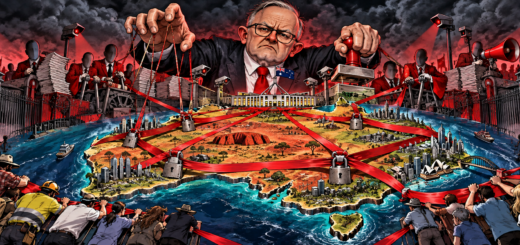
But the Australian government got greedy and raised its tobacco taxes to such high levels that annual excise revenue went from around $15 billion in 2019 to a measly $4 billion in 2025. Like straight out of an episode of Utopia, a brilliant Australian satire comedy illustrating the stupidity and inefficiencies of Australian government, the government has doggedly refused to lower excise tax on grounds that smoking would pick up in increasing numbers. However, the actual consumption of cigarettes had not fallen drastically because there has been a burgeoning black market selling cigarettes at the price most Western Europeans pay for per packet which is around $10 to $15. Even more ridiculous is the government’s response is that they need more policing, at taxpayers expense, to hunt down the illegal trade.
However, after saying all this, I am surprisingly tolerant to smoking in other ways.
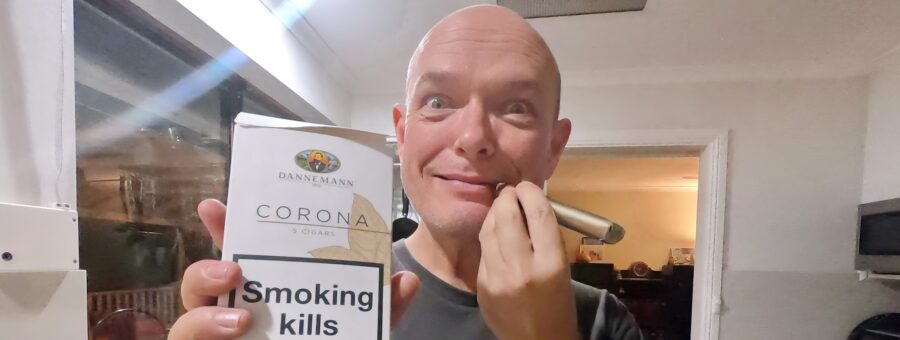
I have, on occasion, enjoyed smoking a cigar or two, although it’s very seldom that I do. Likewise, I don’t have a problem with those who might smoke a pipe, a practice that I hardly see anymore. And furthermore, I don’t have a problem with private clubs or certain establishments such as bars or pubs to allow smoking in selected areas. In some countries, like Japan, there are public areas in busy cities in which you can smoke which is sensible. But it’s down to common sense. If one is suitably far away from others, like being in the country or walking down an empty street, I don’t see a problem with the smoke itself. But the problem lies what to do with the fag butt. Most smokers, if no bin is provided, will toss it out in the open which is, not only potentially dangerous for fire reasons, but rather disgusting and gross.
The uptake of smoking has largely reduced in the Western world since the 1970s, but I’m now further convinced it is through social pressure rather than governmental initiatives, taxation, and the levy of strict penalties of growing your own tobacco.
In Australia, for example, it is strictly illegal to grow any tobacco, even if it’s for personal use. However, in the state of Oregon within the United States, you are permitted to grow your own tobacco. Much like Australia, smoking statistics have drastically dropped from the 1970s. In Oregon, around 40% of all adults smoked and has now dropped to around 10%. However, should you wish, you could grow your own little stash of tobacco.
This is ample proof that the Australian government’s motive for prohibiting personal tobacco cultivation and raising tax on cigarettes to sky-high levels is not about the health of the country.
It is pure greed and money-grabbing in a trillion-dollar debt-ridden nation that is quickly running out of money seeking every possible way to extort from its citizenry, as much money as possible to keep their politicians and their respective parties lavishly provided for.